Matt Bluemink, Bernard Stiegler: in memoriam (3am Magazine)

Matt Bluemink, Bernard Stiegler: in memoriam (3am Magazine)

81262On Thursday the 6th of August 2020 we lost one of the most unique and important philosophers of the last thirty years. To me, Bernard Stiegler was a constant source of knowledge and inspiration. He was a philosopher of technology who had answered Heidegger’s ‘Question Concerning Technology’ in a way that, in my view, perfectly diagnosed the essential dual nature of technology. To Stiegler, technics was a pharmakon. It was both the poison that affected contemporary society, and the cure through which it could be saved. It was both the external form into which we pass our knowledge, and the internal condition which makes us human. Yet what made Stiegler unique was that his work reached far beyond the limits of what might normally be considered as the ‘philosophy of technology.’ He traversed a variety of disciplines ranging from anthropology and palaeontology, to media and film theory; from cybernetics and digital communication, to political philosophy and epistemology. However, it was not just his ideas that made Stiegler so important, but his life as a whole. [continues here]

Thanks to Adalbert Saurma for the link.

Posted in Bernard Stiegler, Uncategorized | Leave a comment

Laleh Khalili and Sara Fregonese on the Beirut explosion

9781786634818-373b9167f2b8294ef094cff99d466f7f.width-800Laleh Khalili, ‘Behind the Beirut explosion lies the lawless world of international shipping‘, The Guardian (via The Gamming – which has an important note about the title)

Her book Sinews of War and Trade was published by Verso earlier this year. See also this interview about the work.

9781780767147

Sara Fregonese, ‘The port of Beirut: vital, historic centre of a complex city‘ (The Conversation)

Update: a longer and updated piece on this topic is here.

Sara’s book War and the City: Urban Geopolitics in Lebanon was published by Bloomsbury late last year.

Update 2: Loubna El Amine, Clearing the Rubble: Lebanon’s Future (London Review of Books)


Posted in Uncategorized, urban/urbanisation | 1 Comment

Books received – Mauss, Davidson, Dubuisson, Schrift, Sartre, Hannah, Derrida, Prideaux

IMG_3453.jpg

Mainly some books from Routledge in recompense for review work, including Matthew Hannah, Direction and Socio-Spatial Theory, but also Alastair Davidson’s Antonio Gramsci: Towards an Intellectual BiographyTel Quel 17 – to which Foucault contributed, Derrida’s Le calcul des langues, and Sue Prideaux’s Strindberg: A Life.

Posted in Claude Lévi-Strauss, Friedrich Nietzsche, Jacques Derrida, Jean-Paul Sartre, Michel Foucault, Uncategorized | Leave a comment

Robert Boncardo on the sixtieth anniversary of Jean-Paul Sartre’s Critique of Dialectical Reason

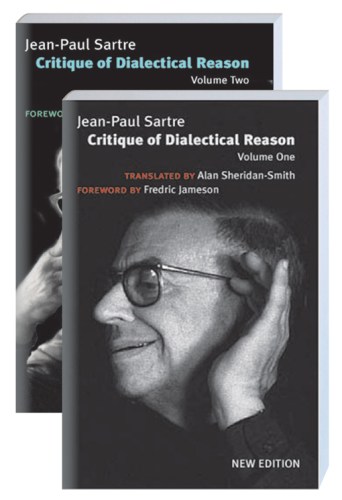
9781844673957-frontcover-4f156ab577843ef672320414358f8001Robert Boncardo on the sixtieth anniversary of Jean-Paul Sartre’s Critique of Dialectical Reason at the Verso blog.

Celebrating its sixtieth birthday this year, and enjoying a new print run thanks to Verso Books, the first volume of Jean-Paul Sartre’s Critique of Dialectical Reason remains an enigma. Sartre is incontestably one of the 20th century’s most famous thinkers. Yet the Critique is perhaps the biggest flop in all of modern French philosophy. While very few people might have actually read Being and Nothingness cover to cover, it at least has a place on a large number of readers’ bookshelves. By contrast, almost no-one owns a copy of Sartre’s Critique. Should anyone bother engaging with its eight-hundred pages of nearly impenetrable prose today? I think so. In fact, I believe that the Critique’s insights into self, society and struggle all remain to be discovered and digested, in a world where its lessons are more vital than ever. What follows is a brief tour of the book’s main landmarks, which will hopefully help more readers explore this unfamiliar continent of Sartrean thought.

Posted in Jean-Paul Sartre, Uncategorized | Leave a comment

Mitchell Dean on Foucault’s Last Decade; Peter Beilharz on Foucault: The Birth of Power in Thesis Eleven

Two interesting reviews of my books in Thesis ElevenMitchell Dean reviews Foucault’s Last Decade and Ben Golder’s Foucault and the Politics of Rights; and Peter Beilharz reviews Foucault: The Birth of Power. Both reviews require subscription, unfortunately.

FLD coverDean is generous in his praise, but also points out some things the book does not do. A couple of passages should give an indication of both arguments:

A condition of answering these questions is that we should know what he said. Stuart Elden’s book presents itself as a detailed intellectual history of his project of a history of sexuality that occupied much, but not all, of his last decade. It is an exhaustive and dense account of everything Foucault said and wrote during this time, including material still unpublished, and is based on prodigious research. As a kind of advanced intellectual primer, it works very well, particularly for the, now large, Foucauldian audience. One can follow, for instance, the different plans for the multi-volume History of Sexuality from 1976, when the first volume was published, to 1984, when the second and third finally appeared. There are long and central trajectories followed here that are reformulated and recast, particularly the genealogy of confession. There are others that are less central but emerge and are transformed in different places and form part of Foucault’s vocabulary…

Elden’s book is thus a model of erudition, addressed to the converted, and stylistically makes little concession to undecided and less informed readers. It reports on Foucault, rather than making use of him in any sense, and thus might have the unintended effect of contributing to his sacralisation. It is only an intellectual history in the narrowest sense of an almost purely textual one that barely considers Foucault’s work in its context, its relation to its immediate interlocutors, how it responds to events, political movements, and so forth. It brings into focus what the work says but not what Foucault is doing in that saying, if I can put it that way. Elden undertakes an important task, but it is only a beginning in understanding what Foucault meant and what this meaning might be for us today, at our very different moment.FBP cover
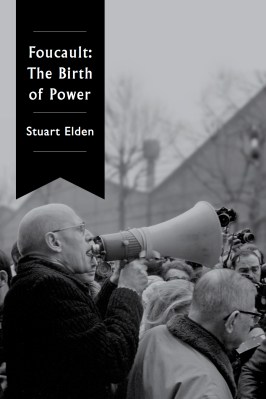
Beilharz’s review is very positive, noting the archival approach and the process of work. It also makes a nice comparison to a great novel and film.

The quantum shift here is towards the archive. Elden works at a level of detail that is astonishing, so deep is it in nuance and insight. This also makes his a difficult book to review, given our incapacity to follow it step by step, like the imaginary map of the world that is one to one. The scholarship is forensic, painstakingly given to detail, and also has a heightened sense of its own contingency. For there are always more archives…

There is much in this book outside Discipline and Punish, of course: madness, illness, the state, the normality of civil war as it inhabits the interstices of civil society; and underneath all this, so to speak, the architecture of space, and the legacies of the Greeks…

How does the logic of Elden’s practice reflect or refract this persona? Foucault’s self- characterizing claims are appealing, even if they are less than entirely convincing. He was also a scholar, of most serious intent. And he was also, in this moment, politically active, and committed to team work as well as to lobbing the odd solo Molotov. Watching Elden at work is intriguing. What is this process? It is as though in reading his book we are watching a movie, or a movie about a movie – The Name of the Rose?

The logic of Elden’s prose and persona is that we are only at the beginning of the task, if our purpose is to understand Michel Foucault. Brian [Bernard] Harcourt does not oversell when he says of this book that ‘it is the perfect reading companion to Foucault’s “power- knowledge” period’. We can look forward to the further work that follows, as to the spectacle of watching the scholar follow the scholar.

My thanks to Mitchell Dean and Peter Beilharz for taking the time to engage with this work. More reviews and other information about these two books, and the two forthcoming ones on the first parts of Foucault’s career, can be found here.

Posted in Foucault's Last Decade, Foucault: The Birth of Power, Michel Foucault, Uncategorized | 1 Comment

Video and audio recordings of Hannah Arendt

Samantha Rose Hill (@Samantharhill) shared these on Twitter – a really useful resource.

UpdateL there is some useful discussion at Aphelis

Recordings of Hannah Arendt:

with Joachim Fest https://t.co/3sOLQtVzPC

On Heidegger https://t.co/3myge0R7ZP 

On Brecht https://t.co/r7iHPVO0Pa

On Power & Violence https://t.co/b3MPsHPUQk

with Richard Errera: https://t.co/XSR0rWmhcl

with Günter Gaus: https://t.co/RHu7dii5oz

Posted in Hannah Arendt, Uncategorized | Leave a comment

Bernard Stiegler (1952-2020)

Sorry to hear the news of the death of Bernard Stiegler. There is a brief note in Libération. I only met him once, at the Association for Philosophy and Literature/Theory, Culture & Society conference in Klagenfurt, Austria last year. His keynote from that conference can be seen here.

and his dialogue with Achille Mbembe at the same conference here:

France Culture has five lectures here.


Posted in Achille Mbembe, Bernard Stiegler, Uncategorized | Leave a comment

Bradley Garrett, Bunker: Building for the End Times – Allen Lane, August 2020 (and Guardian article)

Now updated with a link to a piece by Garrett in The Guardian – https://www.theguardian.com/lifeandstyle/2020/aug/01/3m-price-tag-inside-luxury-doomsday-bunker

stuartelden's avatarProgressive Geographies


imageBradley Garrett, Bunker: Building for the End Times – Allen Lane, August 2020

Update: see also this piece in The Guardian

Bunker is an extraordinary achievement; a big-thinking, deep-diving, page-turning study of fear, privilege and apocalypse told through the space of the bunker. Garrett has written a gripping, grim, witty work of geography and ethnography, which he completed – with eerie timeliness – in the first weeks of the COVID pandemic. A book about prepping and prognostication, then, which had already foretold its own future’ Robert MacFarlane

Today, the bunker has become the extreme expression of our greatest fears: from pandemics to climate change and nuclear war. And once you look, it doesn’t take long to start seeing bunkers everywhere.

In Bunker, acclaimed urban explorer and cultural geographer Bradley Garrett explores the global and rapidly growing movement of ‘prepping’ for social and environmental collapse, or ‘Doomsday’. From the…

View original post 83 more words

Posted in Uncategorized | Leave a comment

Hilary Angelo, How Green Became Good: Urbanized Nature and the Making of Cities and Citizens – University of Chicago Press, February 2021

AngeloHilary Angelo, How Green Became Good: Urbanized Nature and the Making of Cities and Citizens – University of Chicago Press, February 2021

As projects like Manhattan’s High Line, Chicago’s 606, China’s eco-cities, and Ethiopia’s tree-planting efforts show, cities around the world are devoting serious resources to urban greening. Formerly neglected urban spaces and new high-end developments draw huge crowds thanks to the considerable efforts of city governments. But why are greening projects so widely taken up, and what good do they do? In How Green Became Good, Hillary Angelo uncovers the origins and meanings of the enduring appeal of urban green space, showing that city planners have long thought that creating green spaces would lead to social improvement. Turning to Germany’s Ruhr Valley (a region that, despite its ample open space, was “greened” with the addition of official parks and gardens), Angelo shows that greening is as much a social process as a physical one. She examines three moments in the Ruhr Valley’s urban history that inspired the creation of new green spaces: industrialization in the late nineteenth century, postwar democratic ideals of the 1960s, and industrial decline and economic renewal in the early 1990s. Across these distinct historical moments, Angelo shows that the impulse to bring nature into urban life has persistently arisen as a response to a host of social changes, and reveals an enduring conviction that green space will transform us into ideal inhabitants of ideal cities. Ultimately, however, she finds that the creation of urban green space is more about how we imagine social life than about the good it imparts. 

Posted in Uncategorized, urban/urbanisation | 1 Comment

Books received – Dumézil, Lévi-Strauss, Mountz, Balzac

IMG_3445Some recently published or reprinted books from University of Minnesota Press in recompense for review work, including Alison Mountz, The Death of Asylum: Hidden Geographies of the Enforcement Archipelago and a new translation of Balzac’s Lost Illusions, and some second-hand books, mainly in relation to ongoing work on Foucault in the 1960s. One of these is the French translation of Heliana de Barros Conde Rodrigues, Michel Foucault au Brésil: Présence, effets, résonances – originally published in Portuguese. I was also sent a copy of Matthew Hart, Extraterritorial: A Political Geography of Contemporary Fiction by the publisher.

Posted in Boundaries, Claude Lévi-Strauss, Georges Dumézil, Michel Foucault, The Archaeology of Foucault, Uncategorized | Leave a comment