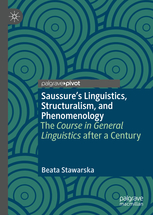
Beata Stawarska, Saussure’s Linguistics, Structuralism, and Phenomenology: The Course in General Linguistics after a Century – Palgrave, 2020 and link to discussion

Beata Stawarska, Saussure’s Linguistics, Structuralism, and Phenomenology: The Course in General Linguistics after a Century, Palgrave, 2020

There is a discussion at New Books Network

This is the first English-language guidebook geared at an interdisciplinary audience that reflects relevant scholarly developments related to the legacy and legitimacy of Ferdinand de Saussure’s Course in General Linguistics (1916) today. It critically assesses the relation between materials from the Course and from the linguist’s Nachlass (works unpublished or even unknown at Saussure’s death, some of them recently discovered). This book pays close attention to the set of oppositional pairings: the signifier and the signified, la langue (language system) and la parole (speech), and synchrony and diachrony, that became the hallmark of structuralism across the humanities. Sometimes referred to as the “Saussurean doctrine,” this hierarchical conceptual apparatus becomes revised in favor of a horizontal set of relations, which co-involves speaking subjects and linguistic structures. This book documents the continued relevance of Saussure’s linguistics in the 21st Century, and it sheds light on its legacy within structuralism and phenomenology. The reader can consult the book on its own, or in tandem with the 1916 Course.

Thanks to dmf for the link.

Posted in Uncategorized | 1 Comment

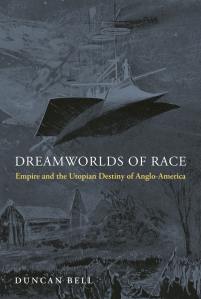
Duncan Bell, Dreamworlds of Race: Empire and the Utopian Destiny of Anglo-America – Princeton University Press, August 2020

Duncan Bell, Dreamworlds of Race: Empire and the Utopian Destiny of Anglo-America – Princeton University Press, August 2020

Between the late nineteenth century and the First World War an ocean-spanning network of prominent individuals advocated the unification of Britain and the United States. They dreamt of the final consolidation of the Angloworld. Scholars, journalists, politicians, businessmen, and science fiction writers invested the “Anglo-Saxons” with extraordinary power. The most ambitious hailed them as a people destined to bring peace and justice to the earth. More modest visions still imagined them as likely to shape the twentieth century. Dreamworlds of Race explores this remarkable moment in the intellectual history of racial domination, political utopianism, and world order.

Focusing on a quartet of extraordinary figures—Andrew Carnegie, W. T.Stead, Cecil J. Rhodes, and H. G. Wells—Duncan Bell shows how unionists on both sides of the Atlantic reimagined citizenship, empire, patriotism, race, war, and peace in their quest to secure global supremacy. Yet even as they dreamt of an Anglo-dominated world, the unionists disagreed over the meaning of race, the legitimacy of imperialism, the nature of political belonging, and the ultimate form and purpose of unification. The racial dreamworld was an object of competing claims and fantasies. Exploring speculative fiction as well as more conventional forms of political writing, Bell reads unionist arguments as expressions of the utopianism circulating through fin-de-siècle Anglo-American culture, and juxtaposes them with pan-Africanist critiques of racial domination and late twentieth-century fictional narratives of Anglo-American empire.

Tracing how intellectual elites promoted an ambitious project of political and racial unification between Britain and the United States, Dreamworlds of Raceanalyzes ideas of empire and world order that reverberate to this day.

Posted in Uncategorized | Leave a comment

The Complete Works of Friedrich Nietzsche Vol 9 – The Case of Wagner / Twilight of the Idols / The Antichrist / Ecce Homo / Dionysus Dithyrambs / Nietzsche Contra Wagner – Stanford University Press, January 2021

The Complete Works of Friedrich Nietzsche Vol 9 – The Case of Wagner / Twilight of the Idols / The Antichrist / Ecce Homo / Dionysus Dithyrambs / Nietzsche Contra Wagner – Stanford University Press, January 2021

The latest volume in the series.

The year 1888 marked the last year of Friedrich Nietzsche’s intellectual career and the culmination of his philosophical development. In that final productive year, he worked on six books, all of which are now, for the first time, presented in English in a single volume. Together these new translations provide a fundamental and complete introduction to Nietzsche’s mature thought and to the virtuosity and versatility of his most fully developed style.

The writings included here have a bold, sometimes radical tone that can be connected to Nietzsche’s rising profile and growing confidence. In The Antichrist, we are offered an extended critique of Christianity and Christian morality alongside blunt diagnoses of contemporary Europe’s cultural decadence. In Dionysus Dithyrambs we are presented with his only work composed exclusively of poetry, and in Twilight of the Idols we find a succinct summary of his mature philosophical views. At times the works are also openly personal, as in The Case of Wagner, which presents Nietzsche’s attempt to settle accounts with his former close friend, German composer Richard Wagner, and in his provocative autobiography, Ecce Homo, which sees Nietzsche taking stock of his past and future while also reflecting on many of his earlier texts.

Scrupulously edited, this critical volume also includes commentary by esteemed Nietzsche scholar Andreas Urs Sommer. Through this new collection, students and scholars are given an essential introduction to Nietzsche’s late thought.

Thanks to Chathan Vemuri for the link.

Posted in Friedrich Nietzsche | Leave a comment

Important pieces on the dangers of reopening UK campuses in September – updated

In the UK, the next academic year begins in September or early October. While most universities have said lectures will be delivered online, they seem to be keen to have some face-to-face teaching of smaller classes. Some important pieces are now being written saying that all teaching – perhaps except for some lab or practice-based classes – should be done online. Experience in the US, where teaching starts earlier in the year, seems to suggest this is necessary.

[updated – new links added at end of list]

Warwick UCU, Five Red Lines Redux: Move Fall Teaching Online

Jim Dickinson, A month to go, and still lots of questions to answer (WONKHE)

Independent Sage, Behaviour Group Consultation Statement on Universities in the context of SARS-CoV-2

– David Batty, Make Covid-19 tests compulsory for students, say scientists (The Guardian)

– Jim Dickinson, Universities get some Indie SAGE advice on reopening campuses in September (WONKHE)

– Anna McKie University teaching should stay remote, says Independent Sage (THES)

Andrew Chitty, Felicity Callard, Warren Pearce, Why universities must move all teaching online this autumn (USS briefs) #USSbriefs99

Covid-19 Open Letter to the University of Essex regarding plans to return to face-to-face teaching in Autumn: Keep Teaching Online! (open letter to be signed by Essex staff only, but the text is interesting)

Steven Fielding, UK universities’ promise of face-to-face teaching is risking academics’ health (The Guardian)

David Kernohan, The start of term is not just a problem for universities (WONKHE)

Update: some US-specific experience is discussed by CNN, especially the section ‘College campuses become new hotspots’ and from Jordan Schachtel here.

Update 2: Charles Knight, Your advanced warning – the possible crisis in student experience (KnighTime)

Devi Sridhar, Strict rules need to be observed as universities return (The Scotsman)

Update 3: letter from UCU St Andrews to managers

Martin Chitty, Staff demand 24/7 face coverings for everyone inside Scottish universities “in interests of safety” (The Herald)

Update 30 August:

UK university reopenings risk ‘public health crisis’, academics warn (The Guardian)

Coronavirus: University return ‘could spark Covid avalanche’ (BBC News)

Update 2 Sept:

Jonathan Wolff, As universities scramble to protect their own interests, inequalities will magnify (The Guardian)

Gavin Yamey and Rochelle P Walensky, Covid-19: re-opening universities is high risk (BMJ – open access)

Update 3 Sept:

What does COVID-19 mean for universities? The New Social Contract: A 10-part podcast series by Impact Studios

Jim Dickinson and David Kernohan, Scotland’s universities get new Covid guidance – but is it too late?(WONKHE)

I will update this post if I find more pieces; happy to have suggestions in comments.

A lot more on covid-19 can be found here – Geographers, sociologists, philosophers etc. on covid-19

Posted in teaching, Universities | 6 Comments

Scott Lash – Technics of Memory and Life: Bernard Stiegler in Memoriam in Theory, Culture & Society; Stuart Jeffries obituary in The Guardian

Scott Lash – Technics of Memory and Life: Bernard Stiegler in Memoriam in Theory, Culture & Society

Stuart Jeffries has an obituary in The Guardian

Update: Sam Kinsley has a tribute at Spatial Machinations

Posted in Uncategorized | Leave a comment

Stuart Elden, ‘Terrain, Politics, History’ – Dialogues in Human Geography lecture now available in journal

Last year I gave the Dialogues in Human Geography lecture at the Royal Geographical Society-Institute of British Geographers conference in London. It is now available in the journal as ‘Terrain, Politics, History‘ – if you can’t access through an institution then contact me.

This article is based on the 2019 Dialogues in Human Geography plenary lecture at the Royal Geographical Society. It has four parts. The first discusses my work on territory in relation to recent work by geographers and others on the vertical, the volumetric, the voluminous, and the milieu as ways of thinking space in three- dimensions, of a fluid and dynamic earth. Second, it proposes using the concept of terrain to analyse the political materiality of territory. Third, it adds some cautions to this, through thinking about the history of the concept of terrain in geographical thought, which has tended to associate it with either physical or military geography. Finally, it suggests that this work is a way geographers might begin to respond to the challenge recently made by Bruno Latour, where he suggests that ‘belonging to a territory is the phenomenon most in need of rethinking and careful redescription; learning new ways to inhabit the Earth is our biggest challenge’. Responding to Latour continues this thinking about the relations between territory, Earth, land, and ground, and their limits.

The piece develops some work I’ve previously done on territory, volume and terrain, and tries to discuss a range of the work being done by others in related areas. There will be some responses to the article in the journal too in time, to which I will write a reply. 

Posted in Bruno Latour, Politics, terrain, Territory | Leave a comment

Louise Amoore, “Why ‘Ditch the algorithm’ is the future of political protest”, The Guardian

Louise Amoore, “Why ‘Ditch the algorithm’ is the future of political protest“, The Guardian

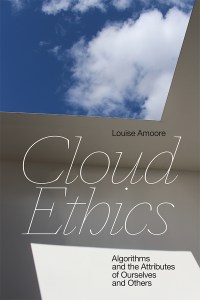
I was away last week, and followed the news of A-level results, GCSEs, BTECs and the impact on students and universities from a distance. Whether or not the specifics of that concern you, this piece, by Louise Amoore, is well worth a read. Her book Cloud Ethics: Algorithms and the Attributes of Ourselves and Others was published by Duke University Press earlier this year. The introduction is open access here.

Posted in Louise Amoore, Uncategorized | Leave a comment

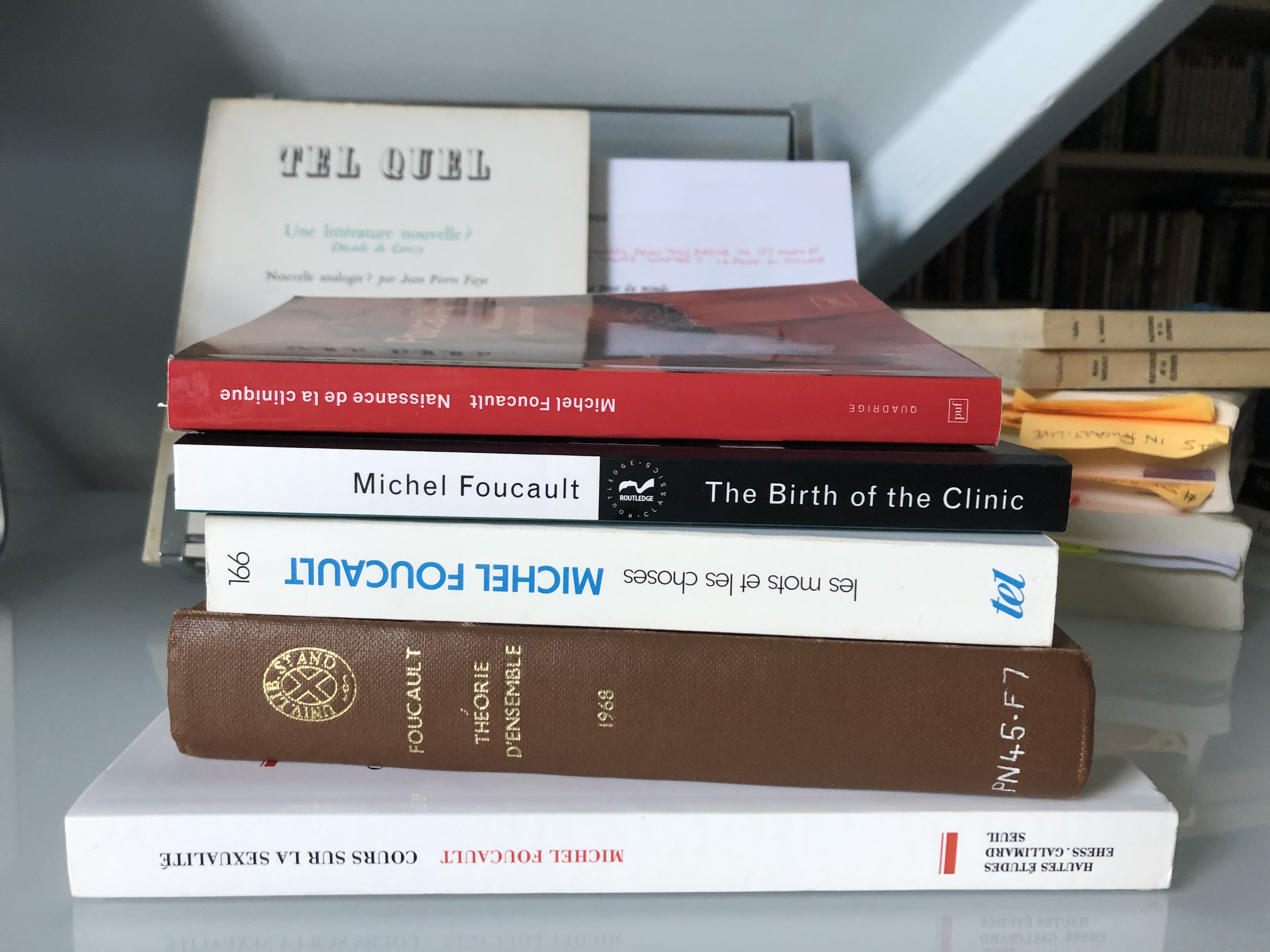
The Archaeology of Foucault update 2: The Birth of the Clinic, a trip to Paris, working on courses on Sexuality and Les mots et les choses

IMG_3457.jpg

While I continue to find focus a challenge as the world lurches from one crisis to another, I’ve been doing various bits of work for this book on Foucault’s work in the 1960s.

I continued work on the comparison of the first and second editions of Naissance de la clinique. I now have a completely annotated version of the text, with all the changes, large and small, marked up. The next stage was working through the English translation The Birth of the Clinic, seeing how Sheridan got from the French to the English. This is not yet a question of how he translated, but of what he translated. Given that Sheridan switches between editions, without any obvious reason, there are places where his English matches neither text published by Foucault. But in doing this initial comparison I realised that the most recent edition of the English translation has different pagination from the earlier one with the same press. It is entirely possible other editions have different page numbers again.

Once travel without quarantine became possible, I did make a trip to Paris, which was mainly to complete the archival work for The Early Foucault, but also to do a little for this book. It was a more complicated process to use the libraries, as might be expected, but once you got past the facemasks, sanitiser and spaced out seating, it was pleasingly familiar.

I went over the Lille manuscripts again, particularly the one on Binswanger which is due to be published in January 2021. This is a delayed publication, and so I’ve had to complete the work based on the manuscript, rather than the published text. I also went back through Foucault’s course on anthropology and the manuscript on Psychology and Phenomenology – both also due to be published at some point. I also had one day at the British Library, which had also just reopened. There I was able to check the last few things for The Early Foucault, at least until I get reader reports on the manuscript. I’d hoped to get back to Paris later this summer, but just a couple of days after I got back the quarantine was reintroduced for Spain, and now they have reintroduced quarantine for France too. So, I’ve had to cancel the trip in September, and not sure when I can get back next.

In a blog post in July I mentioned a recent publication of some letters from Père Festugière to Foucault, which was a reference to add to The Early Foucault, but which has also given me a line to follow for the future. Festugière’s papers are at the Bibliothèque du Saulchoir in Paris, where Foucault worked in the final years of his life. I’ve never had a reason to use that library, though this might give me that.

I’ve also been working on the two sexuality courses from Clermont-Ferrand in 1964 and Vincennes in 1969 which were edited by Claude-Olivier Doron and published in 2018. They are forthcoming in English translation by Graham Burchell with Columbia University Press. Initially my work on the courses will be for a co-authored review, but there will be a longer discussion in this book. Naturally most of what Foucault says about sexuality is in the 1970s and 1980s, but there are traces of this work in the 1960s. As his biographers and others point out, the 1961 preface to the History of Madness already anticipates a study of sexuality. Eribon also quotes Gérard Lebrun who recalls a conversation in 1965 where Foucault said this would be the next project after Les mots et les choses [The Order of Things]. These courses fill in a lot of detail about how that project might have been conducted in the 1960s, instead of how it actually was a decade later.

Following up on the Lebrun reference, and looking a bit more into his work led naturally to Foucault’s 1965 visit to Brazil, where he was invited by Lebrun, and where this conversation took place. While the Paris trip was mainly for The Early Foucault, I did take another look at Foucault’s first course in Brazil, in late 1965, where he presented material which appeared in Les mots et les choses the following year. It’s a very full manuscript which looks in part like an early draft of the book itself. There are some little clues in the manuscript that help with dating, though there are still a few questions I have. Most of the content of the published book is there, but not some of the most famous material. In doing this work, I remembered that Foucault published a variant of Chapter 2 shortly before the book itself, both in French and English translation in Diogène/Diogenes. The English translation is not the same as the one that appeared in the book a few years later, and the French text is also different. I didn’t think it was very different, but I made a textual comparison of the two versions and it opened up a small issue that I think is worth exploring further.

Foucault’s time in Brazil has begun to be discussed in secondary literature recently, so there are some interesting things to follow up on here, even though perhaps the most interesting visits were in the 1970s and outside the remit of this book. I did discuss his 1970s courses in Brazil in Foucault: The Birth of Power and Foucault’s Last Decade, but really on the basis of published texts and archival sources, rather than more biographical material. But there are some interesting stories about his time there that can be further explored.

I have a host of small references to follow up, as and when I can get back to various libraries. A lot of the work at the moment is trying to source various texts, plan out chapters and put things in place. Most recently I’ve begun exploring Foucault’s links to the Tel Quel journal. I expect that writing time is going to be limited in the new term, and so I think having a long list of small things to do might be helpful. Even if I can only do one little task a day, cumulatively these should add up to a feeling of slow progress.

One other thing has been the revision, and most recently the proofs, for an article entitled ‘Foucault as Translator of Binswanger and von Weizsäcker’. The piece should be online soon, and in time will be part of a theme issue of Theory, Culture and Society on ‘Foucault before the Collège de France’, which I’m co-editing with Daniele Lorenzini and Orazio Irrera. I’ll post a link when the piece is available, and when any of the other papers are online.

A little more on this book is here, and updates for The Early Foucault here. A list of the resources on this site relating to Foucault – bibliographies, audio and video files, some textual comparisons, some short translations, etc. – can be found here. The earlier books Foucault: The Birth of Power and Foucault’s Last Decade are both available from Polity.

Posted in Ludwig Binswanger, Michel Foucault, The Archaeology of Foucault, The Early Foucault | 4 Comments

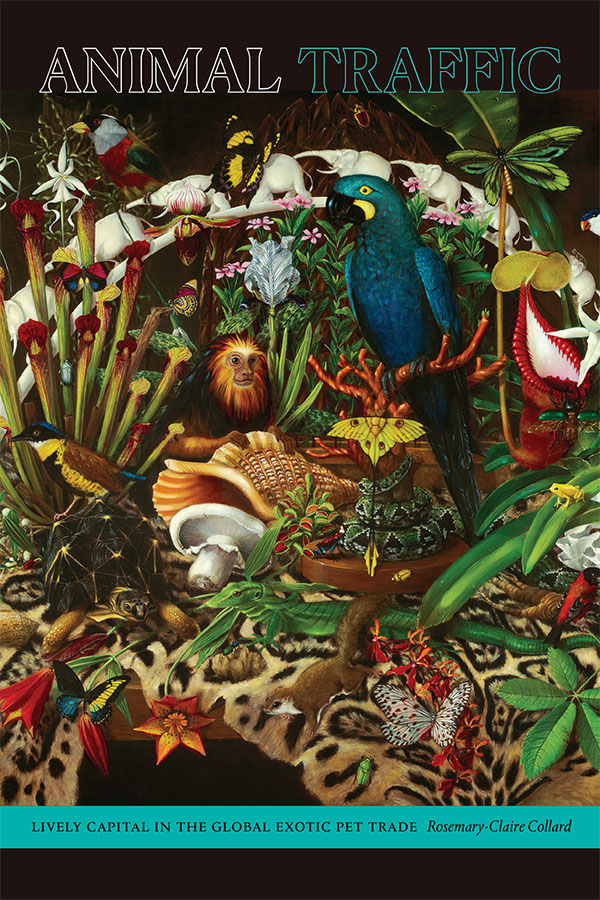
Rosemary-Claire Collard, Animal Traffic – Duke University Press, Sept 2020 (open access introduction + New Books discussion)

978-1-4780-1092-0_prRosemary-Claire Collard, Animal Traffic: Lively Capital in the Global Exotic Pet Trade – Duke University Press, September 2020. The Introduction is open access here.

Update: there is a discussion on the New Books podcast here.

Parrots and snakes, wild cats and monkeys—exotic pets can now be found everywhere from skyscraper apartments and fenced suburban backyards to roadside petting zoos. In Animal Traffic Rosemary-Claire Collard investigates the multibillion-dollar global exotic pet trade and the largely hidden processes through which exotic pets are produced and traded as lively capital. Tracking the capture of animals in biosphere reserves in Mexico, Guatemala, and Belize; their exchange at exotic animal auctions in the United States; and the attempted rehabilitation of former exotic pets at a wildlife center in Guatemala, Collard shows how exotic pets are fetishized both as commodities and as objects. Their capture and sale sever their ties to complex socio-ecological networks in ways that make them appear as if they do not have lives of their own. Collard demonstrates that the enclosure of animals in the exotic pet trade is part of a bioeconomic trend in which life is increasingly commodified and objectified under capitalism. Ultimately, she calls for a “wild life” politics in which animals are no longer enclosed, retain their autonomy, and can live for the sake of themselves.

“This is an immensely important book for anybody concerned with capitalist natures and traffics in the nonhuman. Combining scrupulous fieldwork with stunning theorizations of ‘lively capital’, Collard adapts Marxist and feminist thought to the double task of analyzing and contesting a global trade in exotic pets. By following how wild-caught species get made into thinglike forms of capital, this book spurs a profound rethinking of commodified and noncommodified life, fetishism, enclosure, and social-ecological reproduction.” — Nicole Shukin, author of Animal Capital: Rendering Life in Biopolitical Times

Animal Traffic brings the spaces and circuits of the exotic pet trade to life, casting light on an important aspect of defaunation in the tropics and an underappreciated way that animals are being commodified. Rosemary-Claire Collard presents rich ethnographic accounts of key sites of the exotic pet trade and weaves these together with a compelling discussion of the values, practices, and complications involved in reducing wild animals to ‘lively capital’ as well as the great barriers to decommodifying animals after their lives have been wrested from them. This is a moving and beautifully written book and a major contribution to the fields of critical animal studies, political ecology, and biodiversity conservation.” — Tony Weis, author of The Ecological Hoofprint: The Global Burden of Industrial Livestock

Posted in Uncategorized | 1 Comment

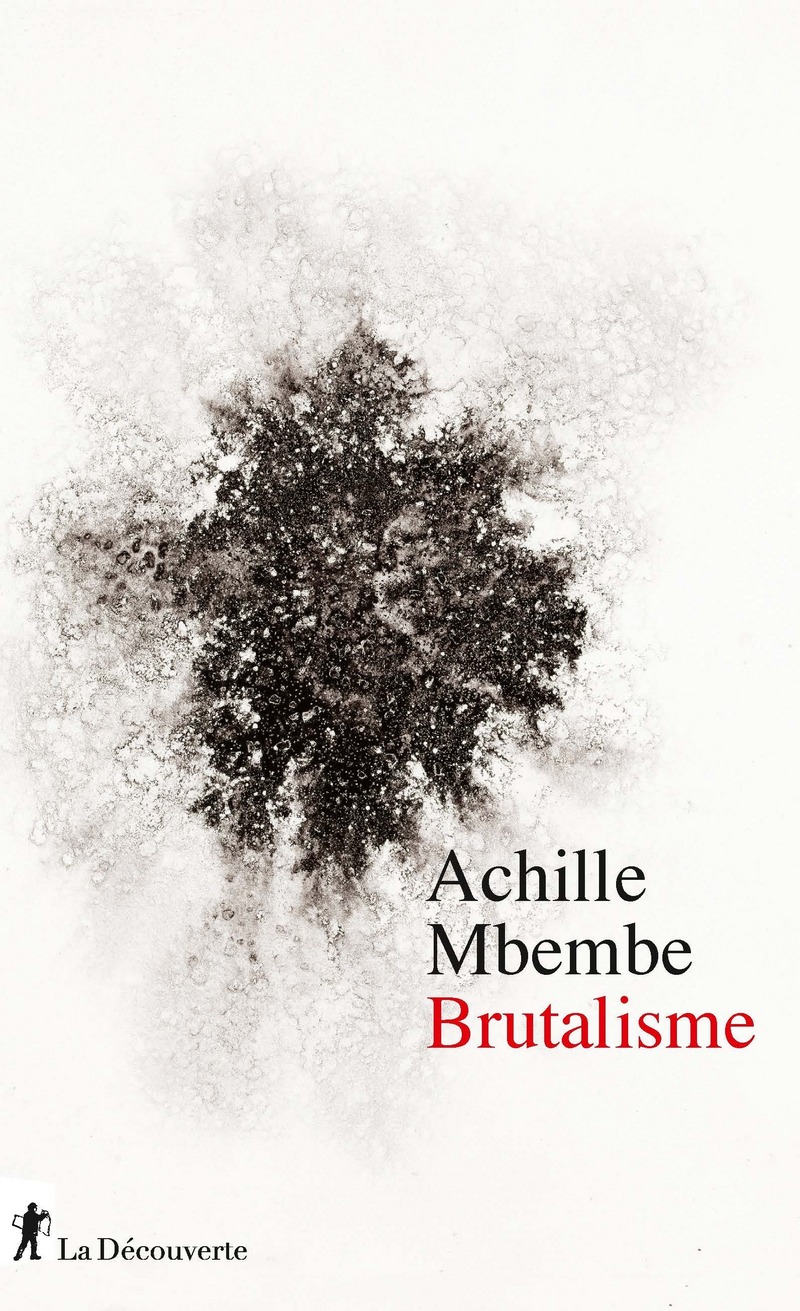
Joseph Confavreux interviews Achille Mbembe about Brutalisme at New Frame

9782348057496Joseph Confavreux interview with Achille Mbembe about Brutalisme at New Frame


Posted in Achille Mbembe, Uncategorized | Leave a comment