Foucault Studies: Discipline and Punish Today (2017)

Posted in Uncategorized | Leave a comment

Open letter on precarious and short-term contracts

Open letter on precarious and short-term contracts

You can read the full text of the letter here.

Monkey's avatarFeminist Philosophers

We write as members (existing staff, students, and graduates) of UK humanities departments to object to the proliferation of precarious short-term teaching contracts across UKHE institutions. As the UCU has reported, nearly half of UK universities now use zero-hours contracts to deliver teaching, and more than two-thirds of research staff are on fixed term contracts.

We recognise the need for short-term contracts in limited contexts; we also recognise that such contracts can sometimes provide early career academics with useful experience on the road to more permanent positions; however, this can only be the case if such contracts are not precarious, and if the temporary staff members are treated ethically.

A ‘precarious’ short-term contract may:

– last less than 12 months and/or be less than 1.0 FTE
– require an appointee to undertake a full teaching load with no paid time allocated to research
– require an appointee to take the…

View original post 62 more words

Posted in Uncategorized | Leave a comment

Adventures in Phenomenology: Gaston Bachelard – forthcoming with SUNY Press

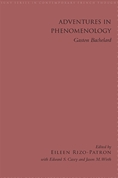
63588_covAdventures in Phenomenology: Gaston Bachelard, edited by Eileen Rizo-Patron, Edward S. Casey and Jason M. Wirth – forthcoming with SUNY Press. Currently listed only as an expensive hardback, hopefully a paperback edition will follow.

Like Schelling before him and Deleuze and Guattari after him, Gaston Bachelard made major philosophical contributions to the advancement of science and the arts. In addition to being a mathematician and epistemologist whose influential work in the philosophy of science is still being absorbed, Bachelard was also one of the most innovative thinkers on poetic creativity and its ethical implications. His approaches to literature and the arts by way of elemental reverie awakened long-buried modes of thinking that have inspired literary critics, depth psychologists, poets, and artists alike. Bachelard’s extraordinary body of work, unduly neglected by the English-language reception of continental philosophy in recent decades, exhibits a capacity to speak to the full complexity and wider reaches of human thinking. The essays in this volume analyze Bachelard as a phenomenological thinker and situate his thought within the Western tradition. Considering his work alongside that of Schelling, Husserl, Bergson, Buber, Heidegger, Merleau-Ponty, Gadamer, Deleuze, and Nancy, this collection highlights some of Bachelard’s most provocative proposals on questions of ontology, hermeneutics, ethics, environmental politics, spirituality, and the possibilities they offer for productive transformations of self and world.

Posted in Edward Casey, Gaston Bachelard, Uncategorized | 2 Comments

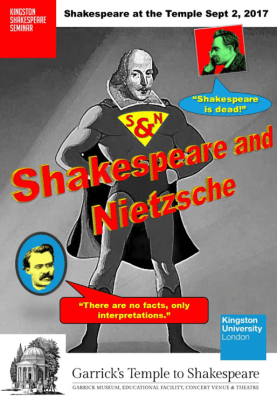
Shakespeare and Nietzsche, Garrick’s Temple, September 2nd 2017

untitled.pngShakespeare and Nietzsche, Garrick’s Temple, September 2nd 2017

On Saturday September 2, 2017 Shakespeare at the Temple -symposium returns to Garrick’s Temple with a fourth event, this time on Shakespeare and Nietzsche with talks by Katie Brennan, Paul Kottman, Bjorn Quiring, Tracy Strong and Scott Wilson.

There will be a concert following the event (optional) which will be a rare opportunity to hear compositions by Nietzsche himself, together with the music by Wagner and others that inspired him, performed under the direction of Chantal Schutz.

Tickets are £20 for the symposium (incl. lunch at the Bell Inn) and/or £10 for the concert. All proceeds go to supporting the Temple. Book at Eventbrite.

Posted in Conferences, Events, Friedrich Nietzsche, Uncategorized, William Shakespeare | Leave a comment

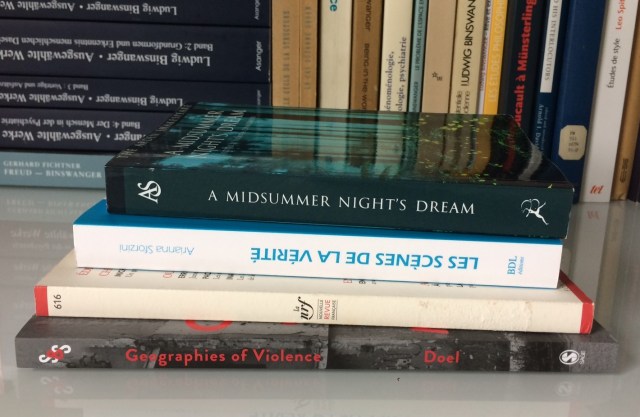
Books received – Shakespeare, Sforzini, Foucault, Doel

The latest volume of the Arden Shakespeare, Arianna Sforzini’s Les Scènes de la Vérité: Michel Foucault et le Théâtre, the issue of NRF with a previously unpublished piece by Foucault, and Marcus Doel’s Geographies of Violence. Doel’s book is the latest volume in the Society and Space book series.

Posted in Books, Michel Foucault, William Shakespeare | 2 Comments

David Beer discusses Metric Power on the New Books in Critical Theory podcast

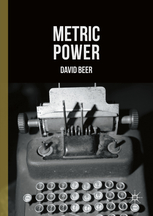
9781137556486David Beer discusses Metric Power on the New Books in Critical Theory podcast with Dave O’Brien.

How do metrics rule the social world? In Metric Power (Palgrave Macmillan, 2016) David Beer, Reader in Sociology at the University of York, outlines the rise of the metric and the role of metrics in shaping everyday life. The book outlines the core theoretical concepts, such as neo-liberalism, bio-power, and bio-politics, alongside the characteristics themes of metric power, including practices of making (in)visible, the social life of methods and data, and questions of agency. These theoretical discussions are set against the broad backdrop of the rise of big data, corporate power, social media, and algorithm based decision making. Metric Power is located within the study of broader social inequalities, meaning the book makes important reading for anyone concerned with how our daily experiences of technologies, organisations, and social institutions, are shaped, unequally, by the power of metrics.

Posted in Uncategorized | 2 Comments

Michel Foucault e as insurreições: é inútil revoltar-se?

5d904f_9fcfafa3c0f04c56a94cc3a1919081ba-mv2_d_2478_3501_s_4_2Michel Foucault e as insurreições: é inútil revoltar-se?, Margareth Rago, Sílvio Gallo (orgs.).

Thanks to Marcelo Hoffman for the link to this collection, who says that many of the contributors will also be contributing to the next issue of the Carceral Notebooks.

O X Colóquio Internacional Michel Foucault, realizado na Universidade Estadual de Campinas (Unicamp) entre 24 e 27 de outubro de 2016, teve como proposta de reflexão as revoltas, as resistências e as insurreições na filosofia desse pensador. Procurou discutir a dimensão da liberdade, da desobediência e das lutas em suas reflexões, na contramão das leituras simplificadoras, para não dizer ressentidas, que se satisfazem em enquadrar sua filosofia como antiemancipacionista, isto é, como incapaz de fornecer saídas, a despeito das brilhantes análises sobre o exercício do poder na vida cotidiana.
Assim, este livro, organizado a partir de um conjunto de textos especialmente escritos para o evento e devidamente revistos por seus respectivos autores, nos apresenta um amplo panorama do pensamento de Michel Foucault e derivações dele para pensar nossas questões contemporâneas.


Posted in Uncategorized | Leave a comment

European citizens want information on migration – not higher walls

Nick Vaughan-Williams and Georg Löfflmann in The Conversation

politicsreconsidered's avatarPolitics Reconsidered

Written by Professor Nick Vaughan-Williams and Dr. Georg Löfflmann for The Conversation.

Fortress Europe: Macdeonian soldiers patrol the Greek border. Georgi Licovski/EPA

Despite being bombarded with headlines about the “migrant crisis” facing Europe, little is really known about how European citizens perceive and experience migration in their daily lives. As part of our ongoing research we’ve found that rather than linking “irregular” migration with fears of terrorism, EU citizens have a more nuanced position on border security. The people we’ve interviewed rejected both border walls and open borders as political solutions to the issue of migration into Europe.

Tougher border security has been a key pillar of the way the EU has responded to the increase in migration since 2015. But our findings contradict the European Commission’s argument that there is a “powerful consensus” among EU institutions and public opinion on the need to enhance border security in response to…

View original post 782 more words

Posted in Uncategorized | 2 Comments

Helen Sword in the Times Higher Education on academic writing

9780674737709I’ve mentioned Helen Sword’s book Air & Light & Time & Space: How Successful Academics Write here before. There is a short discussion on this theme from her in the Times Higher Education.

How do successful academics write, and how do they learn to write? What are their daily routines, their formative experiences, their habits of mind? What emotions do they associate with their academic writing? And where do they find the “air and light and time and space”, as the poet Charles Bukowski put it, to get their writing done? These were among the questions that I asked as part of a research project that eventually took me to 45 universities in 15 countries.

Feedback from more than 1,300 academics, PhD students and other researchers from across the disciplines revealed that successful writing is built on a complex and varied set of attitudes and attributes, including behavioural habits of discipline and persistence, artisanal habits of craftsmanship and care, social habits of collegiality and collaboration and emotional habits of positivity and pleasure. [more here]

Posted in Uncategorized | Leave a comment

What Kind of People Do We Want to Be? David Harvey on the Right to the City

Sandro Mezzadra and David Harvey discuss the right to the city in Bologna.

Posted in Uncategorized | 2 Comments