Books received – Foucault, Hollis, Rudwick, Maier

IMG_1880.JPG

Charles Maier’s Once Within Borders: Territories of Power, Wealth, and Belonging since 1500Martin Rudwick’s Earth’s Deep History, Gavin Hollis, The Absence of America: The London Stage 1576-1642 and two by Foucault – the recent reedition of his essay Sept propos sur le septième ange and a 1964 reprint of the 1961 edition of his Histoire de la folie. Hollis was sent as I’m on the editorial board of the series; Rudwick was pre-ordered in recompense for review work earlier this year. I found a cheap (and a bit tatty) version of Foucault’s book, so thought I’d get it as a reading copy – I have a much better-preserved version which I found earlier this year in Paris.

Posted in Michel Foucault, Territory, The Early Foucault, Uncategorized | 1 Comment

Interview with Sylvère Lotringer in Purple Magazine

Interview with Sylvère Lotringer about Semiotext(e), his quite amazing networks, and his background in Purple Magazine.

Posted in Uncategorized | Leave a comment

Urban Environments Research Network website now live

The Urban Environments Research Network website is now live:

Cities are made from stone and glass, concrete and brick. City streets present a succession of shapes, signs and populations. As an assemblage, the city’s built qualities are the most readily apparent, and these manifest both as tangible objects and things (concrete roads, glass windows, advertising billboards, sandstone buildings) and as a kaleidoscope of images communicating the identity of the space as ‘urban’. The character of urban space depends also on experiences, memories and understandings, which might result in locations being categorized as safe, fun, noisy, peaceful or risky. Moreover, it is constituted as much through the architecture of law and policy, as through thoroughfares, buildings and bridges.

The Urban Environments Research Network was founded by Professor Alison Young at the University of Melbourne and brings together researchers and practitioners interested in how law, architecture and experience shape contemporary urban space.

Our research engages with contemporary dilemmas in law, criminology, art, geography, architecture and urban planning, around issues of social decline, gentrification, ‘touristification’, neo-bohemia, hybrid spaces, privatisation of public space, securitization of urban environments, ‘precinctization’, and adaptive uses of space such as skateboarding, graffiti and street art.

We invite you to explore this site, where you can find details about our network, past and present projects, publications and upcoming events.

they also have a Twitter feed @UEnvironments

Posted in Uncategorized, urban/urbanisation | 1 Comment

The Arts of Spinoza + Pacific Spinoza, Auckland, 26-28 May 2017

The Arts of Spinoza + Pacific Spinoza

Interstices Under Construction symposium, 26-28 May 2017

Auckland University of Technology and University of Auckland, New Zealand

Plenaries / keynotes include:

Moira Gatens, Challis Professor of Philosophy, University of Sydney

Michael LeBuffe, Baier Chair, Early Modern Philosophy, University of Otago

Susan Ruddick, Professor, Geography & Planning, University of Toronto

Anthony Uhlmann, Professor, Writing and Society, University of Western Sydney

Plenary panel

Jacob Culbertson, Visiting Assistant Professor, Anthropology, Haverford College

Albert Refiti, Senior Lecturer, Spatial, Auckland University of Technology

Carl Te Hira Mika, Tuhourangi, Ngati Whanaunga, Senior Lecturer, Education, University of Waikato

By Skype

Beth Lord, Reader, Philosophy, University of Aberdeen

Peg Rawes, Professor, Architecture, Bartlett, University College London

We invite scholarly submissions on the philosophy of Benedict de Spinoza (1632-1677), for a special issue ofInterstices journal and the annual Interstices symposium to be held in Auckland, New Zealand, 26-28 May 2017. Full details here.

Posted in Baruch Spinoza, Conferences, Uncategorized | Leave a comment

Emma Rice and Shakespeare’s “Globe’s future artistic direction”

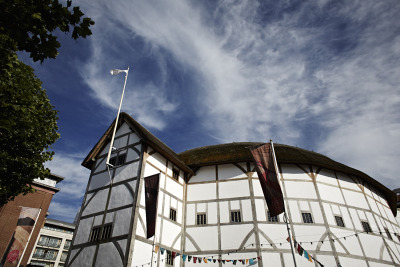
Globe.jpgEmma Rice became the artistic director of Shakespeare’s Globe in April 2016. Just six months later the theatre has issued a statement on ‘the Globe’s future artistic direction‘. The summary is that Rice will leave the post after two years. The Globe was founded to produce plays in conditions more akin to Shakespeare’s time than modern theatres, and was intended to be a place of performance and of research. I saw several plays there in the term of previous artistic director, Dominic Dromgoole, and all the productions since Rice took over. I never saw a Mark Rylance-era production live, but have seen a few on film.

The comments below the announcement showcase the polarising views over Rice’s time. She challenged many of the Globe’s traditions – amplification, pre-recorded music, lighting, stage design and tone of production. This upset many people, but entranced others. I have mixed feelings. Her own production of A Midsummer Night’s Dream was quite good, and the plays she commissioned there were variable. Macbeth was poor, but Innogen (a renamed Cymbeline) was consistent to its own vision, and while I expected I would dislike it, it worked quite effectively. The Taming of the Shrew, which is a play I know much less well, was updated to the Easter 1916 uprising in Ireland. I went to this with Steve Mentz who provides a really good discussion of it, and Macbeth, at his blog. Not all of the previous productions I’ve seen there, to my mind, worked. In the previous summer season I really enjoyed King John and The Merchant of Venice, thought Richard II and As You Like It were okay, and Measure for Measure was trying to be too funny, too much of the time, for such a dark play.

I certainly don’t want to see, and much less fix, theatre in a museum. But the Globe, at its best, wasn’t that. There are many other places where modern, challenging, disruptive versions of Shakespeare’s plays can be produced, and I often go and enjoy them in just such venues. The theatre is within a short walk of many others that regularly perform Shakespeare – the National, the Old Vic, the New Vic… But I also appreciated the chance to see plays performed in a different, pseudo-traditional way. Rice changed that, for good and bad, at the Globe. At a recent conference I heard some more worrying things about the physical, infrastructural changes to the theatre that had occurred as a result of the installation of new technology. That non-reversible break with the fabric of the theatre is far more concerning than a few productions that are not to everyone’s taste.

I certainly wasn’t intending to miss future productions by her and her colleagues, and will try to get to as many of those in her remaining time as I can. I’m intrigued to see who they pick next. As many commentators have pointed out, why did they select Rice, if they are now going to speed up her departure for doing what it is clear she always intended to do, and which her track-record demonstrates was what she was good at? I’m actually a little disappointed they didn’t give her a bit more time.

Posted in Uncategorized, William Shakespeare | 1 Comment

Complete audio recordings of the Early Modern Literary Geographies conference

earlymodgeog-1The complete audio recordings of the  Early Modern Literary Geographies conference are now  available on Soundcloud and iTunes. They include a better recording of my talk on ‘Denmark, Norway, Poland: Regional Geopolitics in Hamlet‘, and talks by Tiffany Stern, Andrew McRae, Julia Reinhard Lupton, Mary Floyd-Wilson and others.

Experts in the literature, history, geography, and archaeology of 16th- and 17th-century Britain examine four key geographic sites—body, house, neighborhood, and region—to illuminate the important spatial structures and concepts that define the early modern engagement with the world. The conference was held at The Huntington on Oct. 14–15, 2016.

There is a short discussion of the rationale for the conference here.

Posted in Conferences, Shakespearean Territories, Uncategorized, William Shakespeare | Leave a comment

Network of Concerned Geographers – petition about US geography and the military

NCG_logo_1.jpgNetwork of Concerned Geographers – I’ve just signed this letter and hope others do too.

We, the undersigned, the Network of Concerned Geographers (NCG), are concerned about the growing involvement of the US military in the discipline of geography.

The letter registers concern and suggests the Association of American Geographers establish a commission to review links, on the model of the one done by the American Anthropological Association. See full statement here.

Posted in Politics, Uncategorized, Universities | 4 Comments

1967 + 50: The Age of Grammatology « London Graduate School

Link to a conference next year on Derrida’s Of Grammatology.

Peter Gratton's avatarPHILOSOPHY IN A TIME OF ERROR

View original post

Posted in Uncategorized | Leave a comment

Westminster Law and the Senses – Taste, Smell and Touch

Westminster Law and the Senses – Taste, Smell and Touch – all available to download as pdfs.

The series is dedicated to the study of law and the senses, aiming to reflect critically on how law deals with senses, how law senses, and how law makes sense. This involves thinking, discussing and questioning the sound of law, the tactile encounter with its forms, its bitter/sweet taste, its pungent smell, its perspectival gaze.

What is the relationship of law to the senses? In a sense, law, the anaesthetic par excellence, is constantly engaged in numbing the senses into commonsense; manipulating, channelling and controlling the sensible; inserting properties and forbidding contacts; dissimulating violence, regulating sounds and defining taste.

However, senses are not static. Rather, they are shifting and elusive qualities, constantly reshuffled by socio-cultural and technological changes, always dislocating Law’s normativity towards new potentialities. In this other sense, Law emerges from the senses, and whereas senses are a constant arena of legal machinations, they are also Law’s constant blind spot and inescapable excess. Is there then a legal sensing, an illegal sensing, or even perhaps a sensing beyond the Law? How does Law sense? Can Law hear, taste, smell, touch, see? Can Law indulge in sensual pleasures, or is it confined to the anaesthetic arena of common sense? Can senses be a tool to use, know and study Law better? Would this make Law more ‘sensible’, or instead more suffocating?

The Law and Senses gathers trans-disciplinary contributions which aim to critically investigate the sensing of law, the capacity for law to (make) sense, and the possibility for Law to sense differently. The series encompasses five issues, Taste, Smell, Hearing, Touch and Vision, followed by further issues on synaesthesia, sixth sense, sense and sensuality and so on..

Posted in Uncategorized | 2 Comments

Giving Life to Politics – conference on work of Adriana Cavarero, Brighton, 19-21 June 2017

Giving Life to Politics – conference on work of Adriana Cavarero

Date and Venue: 19th-21st June 2017, Centre for Applied Philosophy, Politics and Ethics, University of Brighton

Keynote speakers: Adriana Cavarero, Judith Butler, Bonnie Honig

Deadline for abstract submission: 28th February 2017

Conference Fee: £200 / £100 (concession/unwaged – limited places)

This three-day conference is a sustained engagement with, and celebration of, the life work of Italian feminist philosopher Adriana Cavarero. It also marks the publication of her most recent text Inclinations: A Critique of Rectitude (Stanford University Press, 2016).

Full details here

Posted in Adriana Cavarero, Judith Butler, Uncategorized | Leave a comment