
Léopold Lambert and Michael Woods’s keynotes from Warwick Political Spaces workshop (audio) – via Warwick Political Geography.
Update: a few images from the first of these lectures are here.
Léopold Lambert and Michael Woods’s keynotes from Warwick Political Spaces workshop (audio) – via Warwick Political Geography.
Update: a few images from the first of these lectures are here.
 Review essay on Kostas Axelos, An Introduction to a Future Way of Thought: On Marx and Heidegger by Cameron Duncan in PhaenEx. Both the essay and the book are available open access. Here’s one key paragraph from the review.
Though not well-known in English language scholarship, Axelos is in many respects the most imaginative reader of Marx and Heidegger. His approach is not to look backwards to reconcile the key differences between the two, but instead to draw on their parallels to describe the dawning planetary epoch characterized by a synthesizing of capitalism and technology. Stuart Elden, the editor and author of the introduction to Future Thought, is the biggest advocate of Axelos in the English-speaking world. His introduction provides an overview of many of Axelos’ core concepts. He also provides a bibliography of all of Axelos’ work available in English. A key figure in the French intellectual world, Axelos wrote nineteen books and numerous articles on Marxism heavily influenced by Heidegger. His thought has had a tremendous impact across European intellectual culture. However, he has been left out of English-speaking scholarship due to the lack of translations. His 1961 doctoral dissertation, Alienation, Praxis, and Techné in the Thought of Karl Marx, was translated by Roland Bruzina in 1976 and, until now, served as the sole full-length example of his work available in English. The present translation of Future Thought anticipates the unique vocabulary of Axelos’ later work. This provides a glimpse into the development of Axelos’ thought as it relies on but, ultimately, breaks away from strict readings of Marx and Heidegger. It gives the broad outlines of the conditions under which the “productive dialogue with Marxism” (Heidegger, “Humanism” 243), that Heidegger hinted at in his “Letter on Humanism”, may be possible. Axelos’ position is clearly that if Heidegger and Marx are in dialogue, their conversation is about the global reach of technology and capitalism.
This looks an interesting study – great subtitle too.
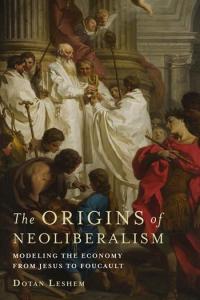 Dotan Leshem, The Origins of Neoliberalism: Modeling the Economy from Jesus to Foucault, Columbia University Press, 2016
Dotan Leshem recasts the history of the West from an economic perspective, bringing politics, philosophy, and economics closer together and revealing the significant role of Christian theology in shaping economic and political thought. He begins with early Christianity’s engagement with economic knowledge and the influence of this interaction on politics and philosophy. He then follows the secularization of economics in liberal and neoliberal theory, showing it to be a perversion of earlier communitarian tradition. Only by radically relocating the origins of modernity in late antiquity, Leshem argues, can we confront neoliberalism.
Introduction: Economy Before Christ
1. From Oikos to Ecclesia
2. Modeling the Economy
3. Economy and Philosophy
4. Economy and Politics
5. Economy and the Legal Framework
6. From Ecclesiastical to Market Economy
ABOUT THE AUTHOR
Dotan Leshem is senior lecturer…
View original post 17 more words
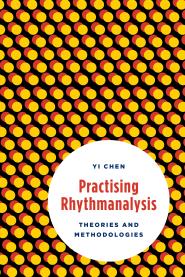 Yi Chen, Practising Rhythmanalysis: Theories and Methodologies – forthcoming this autumn.
This book explores rhythmanalysis as a philosophy and as a research method for the study of cultural historical experiences. It formulates ‘rhythm’ as a critical concept which is defined in dialogic relationships to intellectual traditions, yet introducing unique philosophical positions that serve to re-think ways of conceiving and addressing cultural political issues.
Engaging with the notion of ‘conjunctural shift’, which for Stuart Hall captures the ruptured social landscape of Britain in the 1970s, the book then puts the method of rhythmanalysis to work by testifying the changing cultural experiences in rhythmic terms. This particular rhythmanalytical project instantiates while opening up ways of using rhythmanalysis for exploring cultural historical experiences.
Four books received in recompense for review work for Polity – Peter Sloterdijk’s Selected Exaggerations, Klaus Dodds and Mark Nuttall’s The Scramble for the Poles, and two older translations by Arlette Farge .
.
Three interesting pieces on work patterns – one on how to work alone (99u), one on what can actually be done in the academic summer (Daily Nous); and on making a realistic plan (Jo VanEvery).
 Reece Jones, Violent Borders: Refugees and the Right to Move – out in October from Verso.
Forty thousand people died trying to cross international borders in the past decade, with the high-profile deaths along the shores of Europe only accounting for half of the grisly total.
In Violent Borders, Reece Jones argues that these deaths are not exceptional, but rather the result of state attempts to contain populations and control access to resources and opportunities. ‘We may live in an era of globalization,’ he writes, ‘but much of the world is increasingly focused on limiting the free movement of people.’ In Violent Borders, Jones travels the border regions of the world, documenting the billions of dollars spent on border security projects, and their dire consequences for the majority of the people in the world. While the poor are restricted by the lottery of birth to slums and the aftershocks of decolonization, the wealthy travel freely, exploiting pools of cheap labour and lax environmental regulations. With the growth of borders and resource enclosures, argues Jones, the deaths of migrants in search of a better life are intimately connected to climate change, the growth of slums, and the persistence of global wealth inequality.
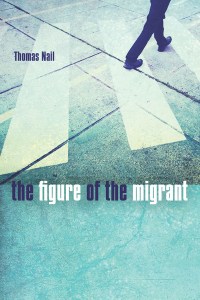 Roundtable on Thomas Nail, The Figure of the Migrant. Robin Celikates, Daniella Trimboli, Sandro Mezzadra, Todd May, Ladelle McWhorter, Andrew Dilts, and Adriana Novoa discuss the book with Nail and Mark William Westmoreland in Phaenex (open access).
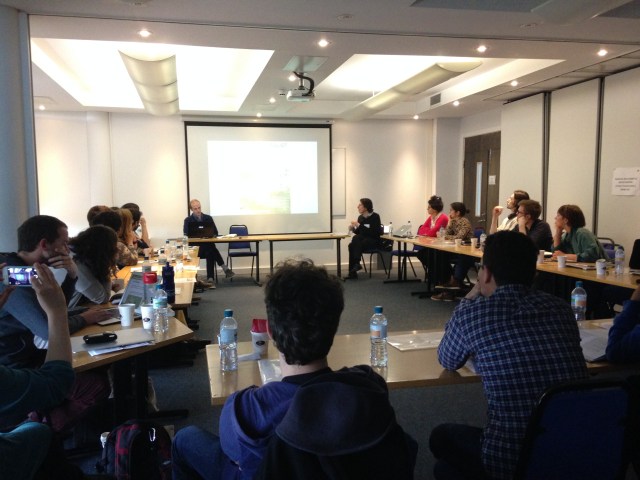
The organisers of the Warwick Political Spaces workshop look back on events here, with a number of photos.
The Magus of Messkirch – Martin Heidegger documentary in German with English subtitles.


