Peter Sloterdijk, Critique of Cynical Reason reissued by Verso

critique_of_cynical_reason-max_221-e047db132a80d54446069e0101908809.pngPeter Sloterdijk’s first major work Critique of Cynical Reason, translated by Michael Eldred, has been reissued by Verso.

When it was first published in West Germany, this book provoked both critical acclaim and widespread consternation, especially among the 1960s generation whose hopes for social change had crumbled and faded. Cynicism, so central to the mood of a generation and the source of much of the antirationalist impulse visible in all Western countries, has remained submerged throughout the debate about modernity and postmodernity. Sloterdijk’s investigation of the role of cynicism in the postmodern 1970s and 1980s finds it to be the dominant mode in contemporary culture and in personal and institutional settings.Sloterdijk defines cynicism as ‘enlightened false consciousness’, a sensibility which is ‘well off and miserable at the same time’, able to function in the workaday world yet assailed by doubt and paralysis. Oscillating provocatively between Frankfurt and Paris and between a number of different styles and modes of expression, the Critique of Cynical Reason is a philosophical pastiche which offers, in the words of Andreas Huyssen, ‘a postmodernism of resistance.’

I’ve added a link to my piece on Where to start with reading Peter Sloterdijk? – the Critique is a decent place to begin, but there are lots of ways to go from there. I’ve also made a few other updates to that list.
Posted in Peter Sloterdijk, Uncategorized | Leave a comment

Sara Ahmed interviews Judith Butler in Sexualities (open access)

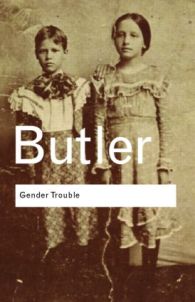
9780415389556Sara Ahmed interviews Judith Butler in Sexualities (open access) – the interview is mainly about Gender Trouble.

Posted in Judith Butler, Sara Ahmed, Uncategorized | 1 Comment

Noel Castree’s tribute to Doreen Massey in Progress in Human Geography

A tribute to Doreen Massey‘ by Noel Castree in Progress in Human Geography (open access). The complete list of all the tributes I know about is here.

Posted in Doreen Massey, Uncategorized | Leave a comment

New Associate Editor position at Political Geography

Political Geography looking for a new associate editor.

philsteinberg's avatar

Political Geographypolgeogis looking for a new associate editor, to begin this July. The position, made possible by James Sidaway stepping down after 12 years as associate editor, is broadly worded to cover the breadth of the subdiscipline. However we will look especially favourably on associate editor candidates with expertise in political theory and critical IR/security studies or political ecology, regardless of their disciplinary foundation, as well as candidates who expertise outside the English-language tradition.

For more details, please see the full announcement.

Please note that applications are due no later than 1 May 2016.

View original post

Posted in Uncategorized | Leave a comment

David Harvey Production of Capitalist Spaces

David Harvey speaks at Harvard’s Graduate School of Design.

dmf's avatarDeterritorial Investigations


“It is David Harvey’s contention that the production of space, especially the distribution and organization of the territory, constitutes a principal aspect of capitalist economies. His writings on this theme have contributed to the ongoing political debate on globalization and on the different spatial strategies associated to global processes. A foundation of Harvey’s intellectual project is his “close reading” and interpretation of Karl Marx’s Capital, which he has taught and read for decades and documented in his Companion to Marx’s Capital (2010). But Harvey’s work is distinguished by the way he has brought Marxism together with geography with productive results for each discipline. For instance, he has approached the overaccumulation of capital by way of its reflection in spatial expansion in order to demonstrate its causative role. His book Limits to Capital (1982), which traces this argument, is a mainstay of the contemporary understanding of capitalism’s perennial economic crises (among…

View original post 133 more words

Posted in Uncategorized | 1 Comment

Live and let die: did Michel Foucault predict Europe’s refugee crisis? (2016)

Stephane Baele on the refugee situation in Europe.

Clare O'Farrell's avatarFoucault News

Stephane J Baele, Live and let die: did Michel Foucault predict Europe’s refugee crisis?, The Conversation, February 25, 2016

In March 1976, philosopher Michel Foucault described the advent of a new logic of government, specific to Western liberal societies. He called it biopolitics. States were becoming obsessed with the health and wellbeing of their populations.

And sure enough, 40 years later, Western states rarely have been more busy promoting healthy food, banning tobacco, regulating alcohol, organising breast cancer checks, or churning out information on the risk probabilities of this or that disease.

Foucault never claimed this was a bad trend – it saves lives after all. But he did warn that paying so much attention to the health and wealth of one population necessitates the exclusion of those who are not entitled to – and are perceived to endanger – this health maximisation programme.

Biopolitics is therefore the…

View original post 41 more words

Posted in Uncategorized | Leave a comment

Foucault, About the Beginning of the Hermeneutics of the Self: Lectures at Dartmouth College reviewed at NDPR

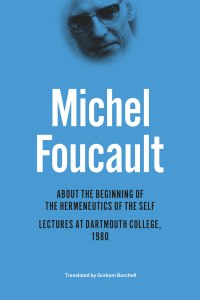
9780226188546.jpgMichel Foucault, About the Beginning of the Hermeneutics of the Self: Lectures at Dartmouth College, 1980 is reviewed at NDPR.

Posted in Michel Foucault, Uncategorized | Leave a comment

9 Critical Theory books that came out in March 2016

Another useful roundup from critical-theory.com – Guattari, Agamben, and more…

march-2016-critical-theory-books-672x372.png

Posted in Felix Guattari, Giorgio Agamben, Uncategorized | 2 Comments

No joke – Foucault’s Last Decade is officially published today

0745683924Foucault’s Last Decade is officially published today. The date is mere coincidence. If you order direct from Wiley – Polity’s distributor – then the book should be sent now. Other online retailers will be getting copies shortly. Thank you to everyone who has followed this project from its inception to completion.

Foucault: The Birth of Power, which looks at the work from 1969-75, and so acts as a kind of prequel, should be out in early 2017 – the full manuscript is currently under review.

Posted in Foucault's Last Decade, Foucault: The Birth of Power, Michel Foucault, Uncategorized | 2 Comments

Academic Exam Questions – JOUR 101: Academic Journal Protocols

JOUR 101: Academic Journal Protocols

Answer all questions. Please.

Time allowed: four weeks. Six will be fine, actually, and to be honest, any time that suits you in the next three or four months will probably have to do. Just please do take the exam and send us your answers.

Part A: Referees

1. Provide an explanation, utilising a wide range of reasons, for why you have not delivered the referee report you agreed on time. Inventiveness of excuses may score extra points.

2. Critically assess why your guess that this author was, probably, a referee for your failed grant application two years ago led you to write a report of this animosity.

3. Three months ago you suggested that a paper was returned to the author with a ‘revise and resubmit’ decision. Why are you now unwilling to review the revision?

Part B: Authors

4. In 2013 your paper was conditionally accepted, subject to revisions. Please provide a justification for your decision not to actually make those revisions, nor to withdraw the paper from the journal.

5. To what extent was your decision not to resubmit your manuscript a reflection on referee E’s comments?

6. Critically discuss the difference between a) agreeing to do a book review, receiving the book, and not delivering the review; and b) theft.

Posted in Universities | Tagged | 1 Comment