
 Two (poor quality) second-hand Shakespeare books and the last of the Oxford sale books I’d ordered, plus the first volume of Heidegger’s lectures from the Gesamtausgabe.
Two (poor quality) second-hand Shakespeare books and the last of the Oxford sale books I’d ordered, plus the first volume of Heidegger’s lectures from the Gesamtausgabe.
A number of recent and not-so-recent books from Verso after I wrote a report for them. 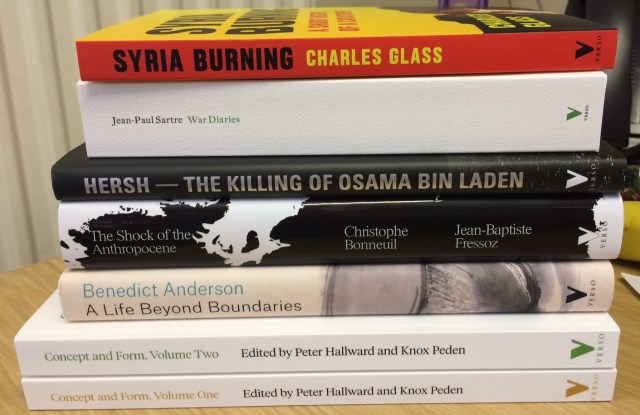
 Graham Harman, Dante’s Broken Hammer, forthcoming in October 2016 from Repeater Books. His Immaterialism: Objects and Social Theory recently appeared with Polity.
In this book the founder of object-oriented philosophy transforms one of the classic poets of the Western canon, Dante Alighieri, into an edgy stimulus for contemporary continental thought. It is well known that Dante’s poetic works interpret love as the moving force of the universe: as embodied in his muse Beatrice from La Vita Nuova onward, as well as the much holier persons inhabiting Paradiso. Likewise, if love is the ultimate form of sincerity, it is easy to interpret the Inferno as a brilliant counterpoint of anti-sincerity, governed by fraud and blasphemy along with the innocuous form of fraud known as humor (strangely absent from all parts of Dante’s cosmos other than hell). In turn, the middle ground of Purgatorio is where Harman locates Dante’s clearest theory of sincerity. Yet this is only the beginning. For while Dante provides a suitable background for the metaphysics of commitment found in such later thinkers as Pascal, Kierkegaard, Sartre, and Badiou, he also provides even more important resources for overcoming two centuries of philosophy shaped by Immanuel Kant.
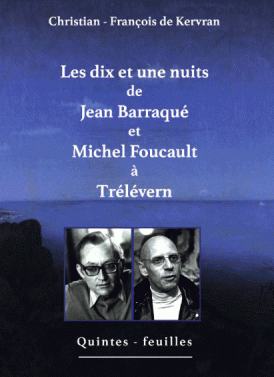 This looks a curious new book on the very early Foucault – Christian-François de Kervran, Les dix et une nuits de Jean Barraqué et Michel Foucault à Trélévern.
Au printemps 1952 le philosophe Michel Foucault et Jean Barraqué, compositeur de musique sérielle, passent onze nuits au bord de mer dans le village de Trélévern (Côtes-du-Nord). Ils sont jeunes, respectivement vingt-six et vingt-quatre ans et encore inconnus.
En 1951 Foucault a été reçu à l’agrégation de philosophie. En 1952 il obtient un diplôme de psychologie pathologique. Barraqué vient d’achever l’écriture de sa Sonate pour piano commencée deux années auparavant.
Barraqué est pratiquement un enfant du pays et il fait découvrir sa Bretagne au poitevin Foucault. Ils sont amis depuis quelques mois seulement. La liaison, passionnelle et orageuse, de ces deux écorchés, dont ce texte fait résonner quelques échos, durera jusqu’en 1956, Barraqué prenant l’initiative de la rupture.
D’après documents et témoignages familiaux, l’auteur, tout en restituant les pompes et les œuvres de ce coin de Bretagne au tout début des années 50, fait valoir les paris idéologiques et culturels, entre doutes et espoirs, des jeunes Foucault et Barraqué, qui, malgré leur actuelle différence de notoriété, deviendront tous deux d’importants novateurs dans la pensée et dans l’art du XXe siècle.Christian-François de Kervran est le pseudonyme d’un universitaire et essayiste, fin connaisseur de la Bretagne et de son folklore. Il a publié des études sur poètes et romanciers de l’Ouest, entre autres Tristan Corbière, Max Jacob et Henri Queffélec.
While I had made some changes to the manuscript after submission, and again after receiving the reports, on Sunday evening I finished four long days of thoroughly revising the text and resubmitted it to the publisher.
Just as I was beginning the review process for the second book I received a very nice letter from Daniel Defert, Foucault’s long-term partner, saying how much he’d liked Foucault’s Last Decade. This was obviously a wonderful thing to receive, and gave me a great motivation to finish up this second study.
The key changes are to the Introduction, which is restructured and some parts extensively revised. I wrote a bit about the work here and here. I think the Introduction now more clearly sets up the argument, approach and sources of the work. I also made lots of changes through the text, and added some sentences to the Conclusion. While the reports had been overwhelmingly positive about the book, I took this opportunity to go through the text thoroughly and to address any remaining concerns.
The resubmitted manuscript is just over 94,000 words – so about 8,000 words shorter than Foucault’s Last Decade. It is comprised of six chapters – Measure, Inquiry, Examination, Madness, Discipline, Illness – a substantial Introduction and a briefer Conclusion. The Conclusion, as well as closing off this book, also opens the way to Foucault’s Last Decade, though the two books can be read independently. The Introduction highlights some key themes from Foucault’s work in the 1960s – his time in Tunisia and at Vincennes, the writing of The Archaeology of Knowledge and the early drafts of that text, and three key themes of 1960s work: archaeology, literature and political work on madness and medicine beyond History of Madness and Birth of the Clinic. If, in time, I write a book on Foucault in the 1960s, these will be key issues to explore there.
Foucault: The Birth of Power is projected for publication in January 2017. Given the timescale for the production of Foucault’s Last Decade this is about right – compared to other publishers I’ve worked with, Polity are quite fast. But no Anglophone publisher seems comparable to Foucault’s experience with Gallimard – he delivered one manuscript in August and it was out by the end of the year…
I also spent some time revising my book chapter on Farge and Foucault’s Le désordre des familles, which will be the last Foucault-related work I am doing for a while. I will be speaking about the books at an internal Warwick conference in June, and giving a much developed version of my paper on ‘Foucault and Shakespeare’ in Memphis in September, but those are on the basis of already completed work. The next work, long the ‘next project’ and sometimes conducted in parallel to this Foucault work, will be on Shakespeare.
The first update on the writing of Foucault’s Last Decade was in July 2013. I had done a lot of work on Foucault’s courses, over several years, which fed into this project, but July 2013 was when I first began working on this as a book. Now, almost three years later, two books are complete. The second came together much quicker, but that was in large part because so much of it was written when it was still intended to be part of the first. My update from April 23 2015 on the splitting of the work into two books explains what happened in more detail.
Here’s the full contents (the actual table of contents will likely just have the chapter titles, not sections):
Foucault: The Birth of Power
Introduction: Out of the 1960s
Conclusion: Towards Foucault’s Last Decade
I recently published an essay at Berfrois which discusses both Foucault’s Last Decade and The Birth of Power, both in terms of its content and the research process that I followed. An excerpt from Chapter Six of the manuscript was published by Viewpoint: “The Biopolitics of Birth: Michel Foucault, the Groupe Information Santé and the Abortion Rights Struggle”. Both texts are open access.
Audio and video recordings relating to these books are here; and a full list of the updates I’ve been posting on the process of writing here. Some translations, bibliographies, scans and links are available at Foucault Resources.
Foucault’s Last Decade is now available worldwide.
A pile of volumes in the Oxford Shakespeare series -there was a sale on, so I picked up a number of ones I didn’t already have that will inform work over the next few months.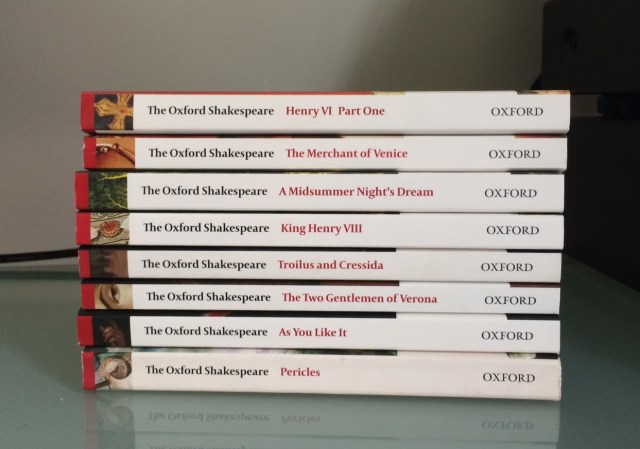
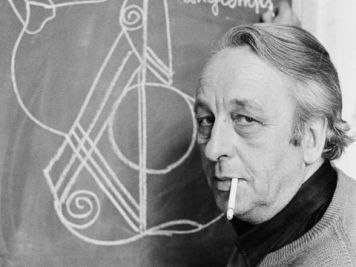 The LA Review of Books has a theme section on Althusser – which includes a new translation of a lecture on Rousseau from 1972, and six essays including ones by Nina Power, Jason Barker and Richard Seymour. The whole Rousseau course from the ENS is forthcoming in translation from Verso in 2017.
The revised manuscript of Foucault: The Birth of Power has been resubmitted. The desk is clear again… Full update tomorrow.

 The Arts of Logistics, 3 & 4 June 2016 Queen Mary University of London
Keynotes: Deborah Cowen & Alberto Toscano
“The Arts of Logistics” brings together scholars, activists, and artists from across the humanities and social sciences to interrogate how social movements and the arts respond to a world remade by logistics. Long an important topic for economists, management theorists, and sociologists, logistics is only recently emerging as an object of substantive study by artists and researchers in the humanities. Thus, this conference seeks to further define scholarly, political, and artistic conversations on the nexus of political economy, anti-capitalist struggle, and art.
Come and join for presentations in disciplines such as human geography, art history, architecture, literature, performance and critical theory. In additions to keynote and panel presentations, there will be a book launch and reception.
Free but registration required.
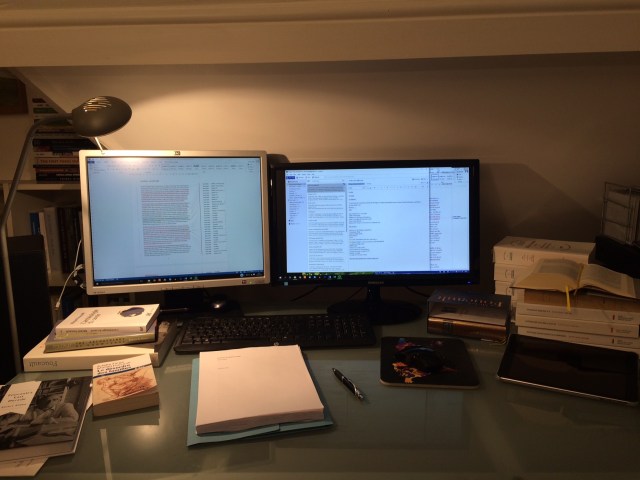
Another long day revising Foucault: The Birth of Power. Further work restructuring the introduction and some rewriting, and a bit more tweaking in the conclusion. Some of this is undoing the work done over the past couple of days and trying again. Moments when you wonder why something is where it is, move it, delete it or rework it, and then a few pages later realise exactly why it was like that. So, retrace the steps and revise again. It’s a couple of months since I submitted the manuscript, and while I can remember the content well, the detailed architectonic is – at least for me – harder to keep in mind when I’m not working on it so intensely. I’ve now printed a complete clean version of the manuscript, for a read through on paper. I only do this at a very late stage – this is only the third time in total – and I find I always see things on a page that I don’t on a screen. It’s also good to get a break from the computer, though I did manage a decent bike ride today too.
I’ll read it tomorrow and see where I am then. I’m also revising my book chapter on Farge and Foucault’s Le désordre des familles, following some comments from Nancy Luxon, the editor of Archives of Infamy (the companion volume to the forthcoming English translation).

