Michel Foucault, Discours et vérité précédé de La parrêsia (Feb 2016)

2711626563Michel Foucault, Discours et vérité précédé de La parrêsia will appear with Vrin in February 2016. This is a critical French edition of the English language lectures on parresia delivered at Berkeley in the autumn of 1983, previously published as Fearless Speech. This edition corrects some of the transcription errors in that volume and provides a full critical apparatus. It is also the first time they have appeared in French. The volume also includes the 1982 lecture on the topic delivered in Grenoble that was recently published in Anabases and Critical Inquiry. I discuss these texts in Foucault’s Last Decade.

À l’automne 1983, Michel Foucault prononce, à l’Université de Californie à Berkeley, un cycle de six conférences intitulé Discours et vérité, dont on trouvera ici, pour la première fois, l’édition complète et critique.
Dans ces conférences, la richesse de la notion de parrêsia et son rôle stratégique pour la réflexion éthique et politique de Foucault émergent de manière évidente. Foucault retrace notamment les transformations de cette notion dans le monde antique : d’abord droit politique du citoyen athénien, la parrêsia devient, avec Socrate, l’un des traits essentiels du discours philosophique puis, avec les cyniques, de la vie philosophique elle-même dans ce qu’elle peut avoir de provoquant et même de scandaleux; enfin, aux premiers siècles de l’Empire, la parrêsia apparaît au fondement des relations entre le maître et le disciple dans la culture de soi. En faisant l’analyse de la notion de parrêsia, Foucault poursuit en même temps son projet d’une histoire du présent et pose des jalons pour une généalogie de l’attitude critique dans nos sociétés modernes et contemporaines.
Ce volume contient également la transcription d’une conférence prononcée par Foucault en mai 1982 à l’université de Grenoble, devant un public de spécialistes de la philosophie antique, qui présente un état antérieur et différent de sa réflexion sur la parrêsia.
Édition et apparat critique établis par H.-P. Fruchaud et D. Lorenzini.
Introduction par F. Gros.
Posted in Foucault's Last Decade, Michel Foucault, Uncategorized | Leave a comment

Discussion of Lefebvre’s Rhythmanalysis

A virtual seminar on Henri Lefebvre’s Rhythmanalysis.

jlunafreire's avatarurbanculturalstudies

Good afternoon,

We would like to invite you to a continuation of a series of events that the Department of Spanish and Portuguese at the University of Arizona has launched in Virtual Reality for the academic year of 2015-2016. They will take place at Cibola, the Department’s home in Second Life. Next conversation will be between Malcolm Compitello (The University of Arizona), Susan Divine (College of Charleston), Juliana Luna Freire (Framingham State University), Megan Saltzman (West Chester University) and the new Cibola Manager Laura Vazquez Blazquez (ABD, The University of Arizona). It will be about the relationships between urban studies and Hispanic culture. Everyone is welcome!

For Thursday, 1/21, we will be discussing Lefebvre’s Rhythmanalysis. If you need the text, please let us know. We will meet  at 5:00 p.m. Tucson time (7p.m. EST). 

We hope to see you at the event. In order to access Cibola, you will need to install Firestorm in your computer…

View original post 12 more words

Posted in Uncategorized | 1 Comment

Planned Violence Keynote Lecture by Eyal Weizman and Reading from Courttia Newland, University of Warwick, 20 January 2016

Registration for the final Planned Violence Keynote Lecture by Eyal Weizman and Reading from Courttia Newland, University of Warwick, 20 January 2016, is now open….

Planned Violence Warwick Lecture
Eyal Weizman, Professor of Spatial and Visual Cultures at Goldsmiths, University of London, will deliver a lecture entitled “August Clouds: Forensic Architecture’s 2014 Gaza Investigation,” and Courttia Newland, author of several novels including The Scholar and Society Within, will read from his work.Tickets are £4 and include both the lecture and reading, as well as a wine reception.Registration is at Oxford University Stores
Download the workshop poster
Posted in Conferences, Eyal Weizman, Politics | 1 Comment

Foucault and the Politics of Health – Collaborative research and activism – UCL, 12 Jan 2016, 12.30pm

Just back from a week’s holiday, with no email or internet. Tomorrow at 1pm (refreshments from 12.30) I’ll be giving a talk entitled “Foucault and the Politics of Health – Collaborative research and activism”, to the Geography Department at University College London. This will be held in the Bedford Way building, room BW113.

Concentrating on the early 1970s, this talk will discuss Foucault’s research and activist work concerning the politics of health. This is in three registers – the research in his Collège de France seminar; his work with Félix Guattari’s CERFI group; and his role in the activist organisation Groupe Information Santé. The sources for tracing his work in these areas are uncollected, sometimes anonymous, and often unpublished. The talk will draw on published reports and pamphlets, news sources, and material archived in Paris and Normandy.

The talk will draw extensively on the work in Chapter Six of Foucault: The Birth of Power, and will be close to the talks given at LSE and the IHR late last year.

Posted in Foucault: The Birth of Power, Michel Foucault | Leave a comment

Foucault: The Birth of Power Update 10 – Chapter Five and a complete first draft

FBP update 10With Chapters Four and Six drafted, Chapter Five was the only one I didn’t have in a decent form. The first task for this was the section on the Groupe d’Information sur les prisons (GIP). Foucault was actively involved in this group from beginning to end. In large part as a consequence, there is a lot of material by this group easily available, in Dits et écrits, Archives d’une lutte and Intolérable. An English translation of a lot of this material is forthcoming. I also consulted the archives of the group at IMEC a few weeks ago, and tracked down several newspaper reports of their activities. So I had a lot of material to draw upon. There is quite a lot of secondary literature on the group, both in French and English, including excellent work by Marcelo Hoffman, Philippe Artières, Perry Zurn and Kevin Thompson, as well as the biographies, so I didn’t feel I needed to go for an exhaustive treatment. But there is a story worth telling, and I have tried to connect up some of the well-known texts by Foucault to lesser-known documents, pamphlets and reports, from the Intolérable brochures to the Manuel de l’arrêté, and texts in the IMEC archive; and to say a little bit about the Comité d’Action des Prisonniers and Foucault’s visit to Attica in 1972. As in the nature of these things, at least with me, it quite quickly became a more substantial discussion than I’d envisaged.

The rest of Chapter Five is devoted to a reading of Surveiller et punir/Discipline and Punish. I had a long draft of material on this from over a year ago, so that slotted in quite easily, with a bit of work to update and incorporate some other materials. In the process, I checked a query with Google… and found exactly the right answer very quickly. It was in a note I’d written to a translation in an edited book almost ten years ago. I’m just glad someone found it useful.

Finishing this chapter then meant I had all the chapters in a draft state, so I began to pull them into a single file and format the text consistently. I then revised the introduction I had already drafted, and wrote a short conclusion. This was on New Year’s Eve. About 9pm I saved everything and turned off the computer. The next morning I opened up the file again to begin work, and found the file was corrupted and most of it was missing. A backup was in a similar state. Fortunately this is where my file-saving practice is invaluable. Each day I save the file with the date in the file name, building up a large archive of previous versions. So ‘Foucault – The Birth of Power 31 Dec 2015’. At worse, I would lose only a day’s work. But given the large amount of work I’d done that day, I’d saved a morning, afternoon and evening version, and it was only the evening version I’d lost. The afternoon version was saved around 5pm, so I’d lost just four hours of revision.

It actually only took me a couple of hours to get back to where I was the previous day, since I knew what I was doing, could check the web history for things I’d checked online, and some of what I’d done was merely mechanical. The big loss was the conclusion. I’ve rewritten this, and it uses the same material I’d been gathering for it, but it doesn’t feel as good as the one I’d written the previous day. I’ll obviously keep working on this, but I wonder if I’ll ever recapture the version I lost. But it could have been a lot, lot worse.

So, a complete first draft. This isn’t finished by a long way, but all the elements are there, the references are in good shape, and there are few highlighted queries in the text. I’ve read all the relevant texts by Foucault, many multiple times, though there are plenty I will go back to again. I have a list of things to check in libraries, some secondary texts to read or reread, and some activist work and newspaper references to follow up in the British Library and the Bibliothèque nationale. The ‘to do’ list is, though less than one page in length, though the nature of these things is that for every thing done, another or more will need to be done. I have another visit to Paris booked for early February, and perhaps that will be enough for this book.

I’m now on holiday, and it feels good to take a break with a complete text ready for my return. A lot of work still to do, but a good moment.


Foucault’s Last Decade is available to pre-order. For more information on these two books, see the descriptions here. Audio and video recordings relating to them are here; and a full list of the updates I’ve been posting on the process of writing here. Some translations, bibliographies, scans and links are available at Foucault Resources.

Posted in Foucault: The Birth of Power, Michel Foucault, Uncategorized | 3 Comments

Foucault, crime and prisons – on film and online

I’ve previously shared a list of audio and video recordings of Foucault, and I won’t repeat things here. But there are a few pieces of documentary evidence about Foucault’s work and crime and prisons which are full-length films.

The best-known is probably René Allio’s Moi, Pierre Rivière, based on the book, and released in 1976. There is a version from Artificial Eye with English subtitles.

There was also another film, Je suis Pierre Rivière, directed by Christine Lipinska from the same year, though I’ve never seen this and am unable to track down a copy. If anyone can help, please let me know.

There is a recent film which I’ve mentioned here before, Sur les toitsdirected by Nicolas Drolc. This looks at the prison riots in 1971-72 in France, and contains documentary footage of Foucault, as well as contemporary interviews with people including Daniel Defert and Serge Livrozet.

I’ve also recently found on Vimeo Les Prisons aussi, a 1973 Group d’Information sur les prisons film directed by René Lefort. It was only uploaded in full ten months ago. The link below will take you to the Vimeo page for the film.

Finally, there is Foucault, par lui-même, directed by Philippe Calderon with the assistance of François Ewald.


Posted in Michel Foucault, Politics | 2 Comments

100 years ago today – Antonio Gramsci, ‘I Hate New Year’s Day’

I shared this a year ago, but since it was 100 years ago today… here is the translation of Antonio Gramsci, ‘I Hate New Year’s Day’, again.

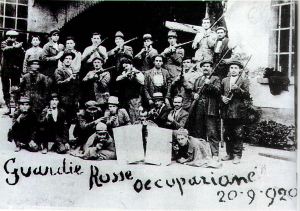
occupationThis text was first pub­lished in Avanti!, Turin edi­tion, from his col­umn “Sotto la Mole,” Jan­u­ary 1, 1916.

Translated by Alberto Toscano for Viewpoint.


Every morn­ing, when I wake again under the pall of the sky, I feel that for me it is New Year’s day.

That’s why I hate these New Year’s that fall like fixed matu­ri­ties, which turn life and human spirit into a com­mer­cial con­cern with its neat final bal­ance, its out­stand­ing amounts, its bud­get for the new man­age­ment. They make us lose the con­ti­nu­ity of life and spirit. You end up seri­ously think­ing that between one year and the next there is a break, that a new his­tory is begin­ning; you make res­o­lu­tions, and you regret your irres­o­lu­tion, and so on, and so forth. This is gen­er­ally what’s wrong with dates. (continues…)

Posted in Antonio Gramsci | 4 Comments

2015 in review – talks, publications and writing, plus links to ‘best-of’ lists

I began 2015 with the manuscript of a book under the title Foucault’s Last Decade close, I thought, to completion. But it was far too long. In the end, I cut the first two long chapters out, and submitted a book which focused very closely on the 1974-84 period, without the prelude discussing early lecture courses and the writing of Discipline and Punish. That material became the basis for a second book, Foucault: The Birth of Power, which took most of the rest of the year to get to its current state of a near-complete first draft.

So, my plans of finishing up my Foucault work early in the year, with a return to Shakespeare didn’t work out. My post one year ago now looks hopelessly optimistic. I now hope I will finish the Foucault work fairly early in 2016, and then turn to Shakespeare. I’m over a year behind where I thought I would be, but of course this has has resulted in a second book on Foucault. And, while I didn’t believe it at the time, removing the material has made Foucault’s Last Decade a better, more tightly focused, book. Perhaps more importantly, Foucault: The Birth of Power has been able to expand and deepen the treatment of the the early lecture courses, collaborative work and activism in a way that would never have been possible had it remained the opening part of the other book. There are detailed updates on the work I’ve been doing on these two books here.

As a result I didn’t manage to do much work on Shakespeare, though I did write a substantial piece on King John, which I presented at UCL and Warwick, and developed the text I had on Henry V. Next year I really hope to make much more substantial progress with this material… There are various bits and pieces relating to this project, albeit a bit out of date, here.

I gave 21 visiting talks of various kinds in 2015. Despite making efforts to reduce speaking commitments this was only one fewer than in 2014. Seven were on Foucault, five were on Shakespeare, one was on Foucault and Shakespeare, one was on Ebola, and seven were on territory in some form – historical, conceptual, geophysical terrain or urban. A few were recorded and are available here. The talks were in the US, UK, Italy and Australia. At the moment I am committed to only a few talks in 2016, and I hope to keep it that way. I certainly don’t want to talk about territory again without having done some serious research, thinking and writing first…

I stepped down as an editor of Society and Space in the middle of the year, after almost nine years as either lead editor or joint editor. I am now one of the honorary editors. I am editor of a book series linked to the journal with Sage, who bought the Environment and Planning journals this year too. We hope the first volumes of the Society and Space book series will be out in 2016.

I didn’t publish much in 2015. The book writing has meant a substantial reduction in other writing tasks. The major publication was the translation of Kostas Axelos’s Introduction to a Future Way of Thought: On Marx and Heidegger (open access), which I edited and introduced. Along with Adam David Morton I introduced a translation of one of Lefebvre’s rural essays for Antipode (open access). We hope that this will be the first of a number of translations of essays on this theme. I also published a review essay of some recent books on territory in Society and Space, a long review essay of Foucault’s La société punitive in Historical Materialism, and a bibliography of ‘The Uncollected Foucault’ in Foucault Studies. I was pleased to have a chapter in Suzanne Conklin Akbari’s wonderful collection How We Write: Thirteen Ways of Looking at a Blank Page (open access). I had a couple of shorter pieces published online – “Theory and Other Languages” at E-IR, and “Peasant Revolts, Germanic Law and the Medieval Inquiry” (a review of Foucault’s Théories et institutions pénales) at Berfrois. I also interviewed Michael Watts for the Society and Space open site.

In addition, of course, there was this blog, which had just over 400,000 visits – a little less than 2014, but also fewer posts. WordPress compiled a report on hits and popular posts here.

In 2016, Foucault’s Last Decade (Polity) will be published, plus the translations of Henri Lefebvre’s Metaphilosophy (Verso) and Marxist Thought and the City (University of Minnesota Press). I had an important role in the first of those translations, editing the text, providing the bulk of the notes and writing an introduction. With the second I only wrote a brief preface. I will be pleased to see both out – both are books which I think will illuminate Lefebvre’s theoretical debts in a way largely absent from Anglophone debates. Foucault: The Birth of Power will hopefully follow in early 2017.

Outside of work I saw more theatre than ever before, helped by a split life between London and Coventry, which is very close to Stratford-upon-Avon, for the second half of the year. Much of it was Shakespeare, but not all. I cycled further than I’d ever managed before – a little over 5000 miles/8000 kilometres in the year. This was helped immeasurably by having a bike in Australia from mid-January to mid-March. It wasn’t helped by not having a bike for the six weeks I was in New York, or in the five trips I took to Paris. And the cycling wasn’t all on the flat roads of the West Midlands or London, as there was more climbing than ever before – Mount Dandenong and Arthur’s Seat near Melbourne, the Black Mountain in the Brecon Beacons, Mont Ventoux in southern France, and multiple trips to Box Hill, Leith Hill and Whitedown in the Surrey Hills. For the first year I can remember, I only visited countries I’d been to before – Australia, US, France, Italy…

The most important academic books to me from 2015 are listed here; the novels I read are here; and the music I most liked here. Thanks for reading and see you in 2016.

Posted in Adam David Morton, Books, Conferences, Cycling, Foucault's Last Decade, Foucault: The Birth of Power, Henri Lefebvre, Kostas Axelos, Michel Foucault, Music, My Publications, Novels read, Publishing, Shakespearean Territories, Society and Space, Territory, Travel, William Shakespeare | 1 Comment

Critical Theory’s books that came out in December

Most of these are too recent to make my best-of year list, but here’s ten books that came out in December from Critical-Theory.com – Foucault, Bataille, Couture, etc.

december-2015-critical-theory-books-672x372

Posted in Uncategorized | 1 Comment

Academic Books of 2015 – my top twenty

The vast majority of academic reading in 2015 was related to Foucault, with a lot of Shakespeare work along the way. Many of these were published some time ago. These were the twenty books published in 2015 I read and most liked.

  1. Peter Burke, The French Historical Revolution: The Annales School 1929-2014 (Polity, 2nd edition)
  2. Wendy Brown, Undoing the Demos: Neoliberalism’s Stealth Revolution (Zone)
  3. Sanjay Chaturvedi and Timothy Doyle, Climate Terror: A Critical Geopolitics of Climate Change (Palgrave)
  4. Jeffrey Jerome Cohen, Stone: An Ecology of the Inhuman (University of Minnesota Press)
  5. Jean-Pierre Couture, Sloterdijk (Polity – which I endorsed)
  6. Jacques Derrida, Séminaire La peine de mort: Volume II (2000-2001) (Galilée)
  7. Michael Dillon, Biopolitics of Security: A Political Analysis of Finitude (Routledge)
  8. Umberto Eco, How to Write a Thesis (MIT)
  9. Jenny Edkins, Face Politics (Routledge – which I endorsed)
  10. Roberto Esposito, Persons and Things: From the Body’s Point of View (Polity)
  11. Michel Foucault, Théories et institutions pénales (Gallimard/Seuil/EHESS – review in Berfrois)
  12. Michel Foucault, Language, Madness, Desire: On Literature (University of Minnesota Press – review forthcoming in Cultural Geographies)
  13. Michel Foucault, The Punitive Society (Palgrave – French original reviewed at Berfrois, and review essay in Historical Materialism)
  14. Ben Golder, Foucault and the Politics of Rights (Stanford University Press)
  15. David Farrell Krell, Phantoms of the Other: Four Generations of Derrida’s Geschlecht (SUNY Press – review forthcoming in Derrida Today)
  16. Thomas Nail, The Figure of the Migrant (Stanford University Press – which I endorsed)
  17. Lisa Smirl, Spaces of Aid: How Cars, Compounds and Hotels Shape Humanitarianism (Zed)
  18. The Wikileaks Files: The World According to US Empire (Verso)
  19. Haim Yacobi, Israel and Africa: A Genealogy of Moral Geography (Routledge)
  20. Perry Zurn & Andrew Dilts, Active Intolerance: Michel Foucault, the Prisons Information Group, and the Future of Abolition (Palgrave – which I endorsed)

There are also several good books from 2015 in one of the ‘to-read’ piles. These are the novels I read as a break from all this academic reading…

Posted in Books, David Farrell Krell, Foucault's Last Decade, Foucault: The Birth of Power, Haim Yacobi, Jacques Derrida, Jeffrey Jerome Cohen, Jenny Edkins, Judith Butler, Michael Dillon, Michel Foucault, Peter Sloterdijk, Politics, Publishing, Roberto Esposito, Theory, Wendy Brown, William Shakespeare | 14 Comments