General bibliography on open-plan office design (2015)

A bibliography on open plan offices, following up from one of the pieces I linked to last week.


Clare O'Farrell's avatarRefracted Input

Still from Jacques Tati's film Playtime (1967) Still from Jacques Tati’s film Playtime (1967) I have put together a general – but still very select – bibliography of material on open-plan office design, which you can download as a PDF. All items have links for easy consultation.

The bibliography includes the following subheadings:

  • Academic articles on open-plan: General
  • Academic articles on open-plan: Universities
  • Online newspaper and magazine articles/Websites: General
  • Online newspaper and magazine articles/Websites: Universities
  • The history of open-plan office design
  • Articles/Websites on the ‘combi-office’
  • Sick building syndrome
  • Audio-visual
  • Books

View original post

Posted in Uncategorized | Leave a comment

Two Uses of Michel Foucault in Political Theory: Concepts and Methods in Giorgio Agamben and Ian Hacking (2015)

Requires subscription, but looks interesting.

Clare O'Farrell's avatarFoucault News

Colin Koopman, ‘Two Uses of Michel Foucault in Political Theory: Concepts and Methods in Giorgio Agamben and Ian Hacking’, Constellations (1), 0 Article first published online: 19 MAY 2015

DOI: 10.1111/1467-8675.12153

First paragraph in lieu of abstract

Putting Foucault to Work

It is difficult to locate a single area of intellectual inquiry in the humanities and social sciences where the work of Michel Foucault is not taken seriously today. Foucault’s influence is perhaps most incisive where the humanities and social sciences come into contact with politics as an object, site, or field of inquiry. Foucault’s influence and importance may then be a function, at least in part, of the fact that in so many disciplines today politics and politicization are crucial domains for the work of critical thought. Consider, in this light, the following quick list of Foucauldian neologisms that are pervasive in almost every field of study that purports…

View original post 52 more words

Posted in Uncategorized | 1 Comment

“Exercises in the History of Ideas”: An Interview with Stuart Elden by Dale Leorke and Suneel Jethani at the Theory, Culture and Society website

downloadExercises in the History of Ideas”: An Interview with Stuart Elden by Dale Leorke and Suneel Jethani at the Theory, Culture and Society website – open access. This is an edited version of an interview conducted last year in Melbourne and covers much of my past, present and future work. Many thanks to Dale and Suneel for their efforts and their engagement with my work.

Posted in Uncategorized | 1 Comment

Books received 4 – various: Meillassoux, Trawny, Eco, Butler, Krell, Naas, Funambulist papers, journals

And everything else that was in the pile of post as I returned from the US. Umberto Eco’s How to Write a Thesis; Quentin Meillassoux’s Science Fiction and Extro-Science Fiction; Peter Trawny’s Freedom to Fail: Heidegger’s AnarchyThe Funambulist Papers Volume 2 (in which I have a piece); Judith Butler, Senses of the Subject; David Farrell Krell, Postponements; Michael Naas, The End of the World and Other Teachable Moments, and the new issues of RIPE, TCS, Society and Space and Area.various

Posted in Books, David Farrell Krell, Jacques Derrida, Judith Butler, Martin Heidegger, Quentin Meillassoux, Umberto Eco | Leave a comment

Books received 3 – books from publishers or authors

publishers

Complementary copies from publishers or authors. Mark Salter’s Making Things International 1, Christopher Roth’s Let’s Split! – a guide to secessionist states; Oli Mould’s Urban Subversion and the Creative City; Hughes Lethierry’s Agir avec Henri Lefebvre and Shannon Mattern’s Deep Mapping the Media City. Thanks to all.

Posted in Books, Politics, Territory, urban/urbanisation | Leave a comment

Books received 2 – various things for the Foucault projects

Books received – various things for the Foucault projects, including the new lecture course, background on May 68 and the abortion rights struggle in France, one of Foucault’s major sources on the revolt of the Nu-pieds, and a book about his apartment…

Foucault

Posted in Books, Foucault's Last Decade, Foucault: The Birth of Power, Michel Foucault | Leave a comment

Books received – review work for Routledge: Marcuse, Pugliese, Valverde, Barry and Born, and Parker

Books received in recompense for review work for Routledge: Marcuse, Pugliese, Valverde, Barry and Born, and Parker.

Routledge

Posted in Books, Herbert Marcuse | Leave a comment

Wilderness Group Tour: PhD dissertations and writing/support/accountablity groups

This is the post that sparked the two reflections on writing I shared earlier today. Interesting reading on ‘writing groups’. I firmly believe there is no one way to write that will work for everyone (or even for the same people for different projects), but there are so many people continuing to struggle with ways that don’t work for them, I think these kinds of discussions can only be valuable.

Michael Collins's avatarThe page “Newfoundland Literature” does not exist

I was recently asked to make a brief presentation about dissertation writing/support groups. I was one of four presenters at a workshop hosted by the University of Toronto’s School of Graduate Studies. I had a few thoughts about these writing groups, why there is such a hunger for them among PhD candidates, and why they usually seem to be of limited success. What follows is a modified script of my presentation. It speaks primarily to my experiences at the University of Toronto, but may be of broader interest and use.

I’ve been a member of at least three writing or accountability groups since beginning work on my dissertation, and I’ve been invited to join more.

One group met (still meets) weekly (usually), at a café on campus, to set goals for the week ahead and to review how each member did (or did not) meet goals set at the previous…

View original post 1,528 more words

Posted in Uncategorized | 1 Comment

Top posts this week on Progressive Geographies

Posted in Uncategorized | Leave a comment

How Do We Write? Two reflections on ‘dysfunctional academic writing’

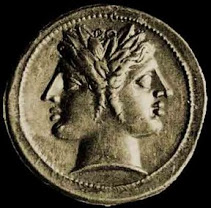
janus_smallHow Do We Write? Two very interesting reflections on ‘dysfunctional academic writing’ at In the Middle.

A conversation has unfolded on Facebook over the last week on the topic of How We Write. Two of us who were involved in that conversation would like to push it forward, first offering our own experiences here, and then going on to collect the experiences of others who are also willing to share, perhaps (if there’s sufficient interest) putting together a collective resource on How We Write. (Note that this is not to be confused with ‘How To Write’ – these are idiosyncratic, self-flagellating approaches to the process.) So please add your experience in the comments, or share it in another way, and let us know if this kind of collective resource is something you’d like to read and/or contribute to.

The impetus for this conversation was a wonderful blogpost by Michael Collins on the occasion of a roundtable hosted by the School of Graduate Studies at the University of Toronto, on how to facilitate dissertation-writing groups. Michael’s thoughtful engagement with his own experience of writing – posted and reposted on a number of Facebook pages – led to an outpouring of personal accounts of the dissertation-writing years, both from those currently in the trenches and those for whom those years are very much in the rear-view mirror. What emerged was a clear sense of the diversity of writing practices that are out there: there’s no single ‘right’ way to write, and exposure to that range of practices might help those who are in the process of mastering academic writing to feel more confident in their own abilities, most of all by demonstrating that such ‘mastery’ is an ongoing – potentially limitless – effort.

Posted in Writing | 3 Comments