Foucault Resources – page on this blog now updated

I’ve made some additions and amendments to the Foucault Resources page on this blog.

Among other things, the two contributions from Graham Burchell are linked; I’ve updated the table of Foucault’s various plans for The History of Sexuality, with a list of his lecture courses and related material; and it also has links to various other bits and pieces, including some short translations of material unavailable elsewhere.

Posted in Uncategorized | 1 Comment

Power and Space in the City – a series of conversations at UCL

This event is now sold out, but will be podcast and then available online – http://www.power-and-space.com/

stuartelden's avatarProgressive Geographies

Power and Space in the City – a series of conversations at UCL. I’ll be part of the first conversation on Powerful Urban Territories on November 18th 2014, along with Wendy Pullan, Allan Cochrane and Janet Newman. Here’s the description for the whole series:

Conversations on Power and Space in the City is a series of workshops designed to challenge current academic debates and influence thinking and policy on cities in this period of rapid urban change and unrest. The series of five workshops runs from November 2014 to May 2015 bringing together internationally renowned researchers, architects and activists working on and in urban space. Our aim is to foster interdisciplinary conversations on how city spaces – imaginary, relational, material – not only influence the ways in which power is exercised, but also how power is fundamental to the production of cities. The question driving this workshop series asks how…

View original post 187 more words

Posted in Uncategorized | 1 Comment

Call For Papers – ‘Thinking with Algorithms’, Durham, 26-27 Feb 2015

SAFE_Securing_Against_Future_Events_LogoCall For Papers for Workshop

‘Thinking with Algorithms: Cognition and Computation in the Work of N. Katherine Hayles’

Gala Theatre, Durham, 26-27 February 2015

Confirmed keynote speakers:
Katherine Hayles (Duke University)
Donald Mackenzie (Edinburgh University)
Luciana Parisi (Goldsmiths, University of London)
Celia Lury (Warwick University)
David Berry (Sussex University)

Organisers: Prof. Louise Amoore and Dr Volha Piotukh, Geography Department, Durham University

The event is funded within Prof. Louise Amoore’s ESRC ‘Securing against Future Events’ project (www.securitysfutures.org) and is free to attend. Research postgraduates and early career researchers whose abstracts are accepted will have their travel and accommodation costs reimbursed to a maximum of £200. Please submit abstracts of up to 400 words to: volha.piotukh@durham.ac.uk by 20 December 2014, using ‘Thinking with Algorithms’ as your subject line.


Posted in Conferences, Louise Amoore | 3 Comments

Juliet Fall, Feminist Political Geography – the animated movie

Juliet Fall has made another short animated movie, following the one she made on The Birth of Territory, which premiered at the Tampa AAG. This one is on ‘Feminist Political Geography’, and I make a cameo appearance (I’m the one in the orange trousers and black waistcoat…).

Feminist Political Geography.mov from Juliet Fall on Vimeo.

Posted in Juliet Fall, Uncategorized | 1 Comment

Top posts on Progressive Geographies this week

Posted in Uncategorized | Leave a comment

Latour on “Digital Methods”

Latour and Venturini discuss digital methods in the social sciences.

Nicholas's avatarInstalling (Social) Order

Capture

In a fascinating, apparently not-peer-reviewed non-article available free online here, Tommaso Venturini and Bruno Latour discuss the potential of “digital methods” for the contemporary social sciences.

The paper summarizes, and quite nicely, the split of sociological methods to the statistical aggregate using quantitative methods (capturing supposedly macro-phenomenon) and irreducibly basic interactions using qualitative methods (capturing supposedly micro-phenomenon). The problem is that neither of which aided the sociologist in capture emergent phenomenon, that is, capturing controversies and events as they happen rather than estimate them after they have emerged (quantitative macro structures) or capture them divorced from non-local influences (qualitative micro phenomenon).

The solution, they claim, is to adopt digital methods in the social sciences. The paper is not exactly a methodological outline of how to accomplish these methods, but there is something of a justification available for it, and it sounds something like this:

Thanks to digital traceability, researchers no…

View original post 98 more words

Posted in Uncategorized | 1 Comment

Stuart Elden: Two Foucault reviews – Berfrois

Jeremy Crampton links to my Berfrois review of recent Foucault lecture courses, and picks a few quotations.

Jeremy's avatarOpen Geography

Lengthy review essay by Stuart Elden of two recent Foucault publications On the government of the living, and Wrong-doing, truth-telling: the function of avowal in justice, in Berfrois.

Some quotes:

It is perhaps too little noted that what we have in these and other publications, expertly edited and translated though they are, are transcribed lecture courses, supplemented by material from manuscripts. The references are, for the most part, the work of the editors, rather than Foucault’s own, and they bear many marks of their verbal delivery.

As he [Foucault] notes: “what I would like to do and know that I will not be able to do is write a history of the force of truth, a history of the power of truth, a history, therefore, to take the same idea from a different angle, of the will to know.”

But it is in confession that perhaps…

View original post 47 more words

Posted in Uncategorized | Leave a comment

With Derrida in Oxford

A nice piece by Lesley Chamberlain about Derrida, Oxford and The Post Card. Thanks to Dirk Felleman for the link.

lesleychamberlain's avatarLesley Chamberlain

the postcard from Derrida

More than thirty years ago the artist-philosopher Jacques Derrida was working in the Old Bodleian Library in Oxford when he strayed into the shop. On offer were postcards  richly and decoratively redolent of the Western heritage. The shop has since moved to an enlarged space on the far side of the Schools quad and won a prize for its innovative approach to museum marketing. But we didn’t care about commercial opportunities in our universities then. When Derrida visited, in 1977 and 1979, the postcard stand was just a draughty space, clustered at one end of the seventeenth-century Proscholium.

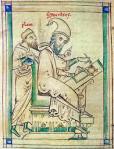
Derrida chose a reproduction of a medieval illustration showing Plato standing behind Socrates. It showed Plato looking over Socrates’s shoulder as if he, Plato, were the teacher and Socrates the scribe. Seeing these two philosophers pictured in the wrong chronological order, Derrida instantly got an idea. What did it mean if the…

View original post 2,149 more words

Posted in Uncategorized | Leave a comment

Warburg Institute high court ruling – good news!

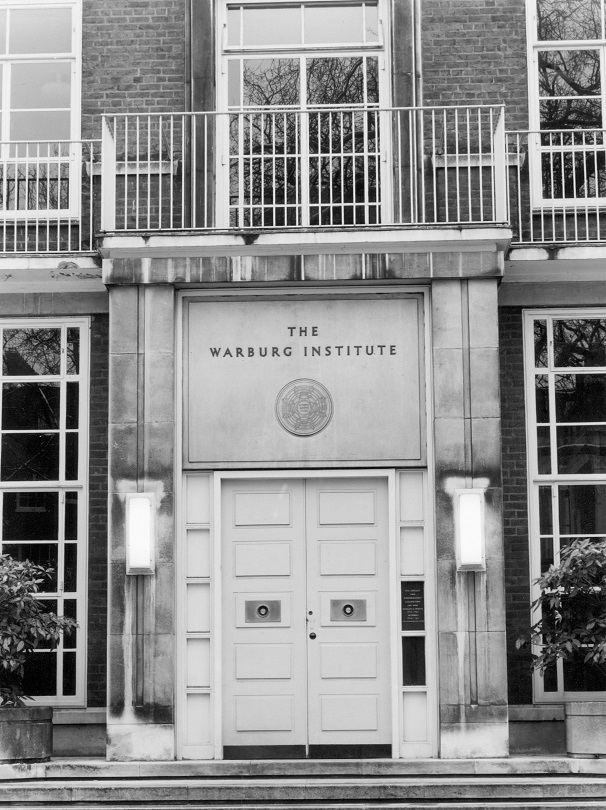
FrontdoorWoburnSquareGood news earlier this week about the future of the Warburg Institute library. I’ve said before how important this library was to my work on The Birth of Territory, and linked to a few earlier stages of this story. Here are the opening two paragraphs of the report on the High Court ruling:

To the benefit and relief of scholars worldwide, the High Court has rejected the University of London’s claims that all additions to the Warburg Institute since 1944 belong to the University, and instead agreed that they form part of the Institute. Furthermore, the judge, Mrs Justice Proudman, held that the University is obliged to provide funding for the activities of the Warburg Institute.

Leticia Jennings of Bates Wells Braithwaite, who advised the Advisory Council of the Warburg Institute, commented: “This decision ensures that the wealth of important material housed within the Institute will remain available, as before, in its entirety, and that the University will not be free to in any way restrict the access of the many scholars who use and rely on the Institute’s outstanding resources.” (more here)

Posted in The Birth of Territory, Universities | Leave a comment

Politics Reconsidered – posts from Warwick this week

Dee Dutta and Trevor McCrisken on the implications of the US mid-terms for Obama and foreign affairs

Michael Saward on ‘Political Courage

and the previously linked post by me and Adam David Morton, ‘Why read a long dead French Marxist to think about land struggles today?

Posted in Uncategorized | Leave a comment