Some responses to questions on novels read

I’ve had a few comments or questions on my lists of novels read. Some of these were on facebook or twitter, either now or when I’ve posted previous lists. So some quick responses:

– why do you read so many novels? Are there not more important things to read?

As I’ve said before, these are read as a break from work. A few years ago I began to realise that I was only rarely reading things that were not for work, and reading less-important things in the evenings. I made a decision – it was actually a new year’s resolution – to read more novels, and kept a list initially for myself. Back when I started this, the blog didn’t have nearly so many readers, and I posted a bit more non-work stuff. The post got some traffic and comments, and so I’ve continued doing it. I don’t think it’s made a difference to how much work-related stuff I read.

– how do you read so many novels? how do you read so fast?

I do read quickly, but with novels I’m not trying to read for anything other than enjoyment. I recall enough to make sense of it while reading, but quickly forget things afterwards. I usually read before I go to sleep, and frequently read before I get up, especially if I wake before the alarm, which is quite common. A bit each day quickly adds up.

– how do you chose what to read?

Probably not dissimilar to other people for a large part – suggestions, things that people lend me, new or old books by novelists I’ve enjoyed before. Especially when I’ve visited Ghana or Nigeria, I look through books there – there is quite a good informal lending culture, which has led to some very different things. I also have been trying to work my way back through the Booker prize and Orange prize past winners. I also get quite a few of the kindle book-of-the-day type deals – thinking that at 99p or similar it’s worth taking a chance on something.

– paper or e-book?

Increasingly both. I prefer paper, but am reading more and more on a screen – partly when I am travelling and trying to save weight. Given how much I read, especially on holiday, this really makes a difference.

– why don’t you say more about the books read? A brief review would be nice, or a thumbs up or down.

Partly time, and partly because I don’t remember. I’m not reading these for work-reasons, and don’t want to have to take this on as a duty. I sometimes say a bit about a book when I list them, and sometimes say what stood out from a half-year of reading. But that’s about it and it’s unlikely to be any more than that.

– you should read this, more of this genre, or my novel.

I’m grateful for suggestions, some of which I will follow. But I’m unlikely to read some types of books – sci-fi, fantasy, young adult, comedy, etc..

Posted in Books, Novels read | 7 Comments

Marc Lombardo, Critique of Sovereignty, Book I – forthcoming from Punctum Books

Lombardo_COS_Bk1_Cover_Front_WEB1-216x342Critique of Sovereignty, Book I: Contemporary Theories of Sovereignty by Marc Lombardo – forthcoming from Punctum books

Using the Western tradition of metaphysical and political thought as a backdrop, Critique of Sovereignty (a work in 4 volumes) re-examines the concept of sovereignty in order to better understand why our ethical values and technical capacities often seem so divorced from our lived realities. On the one hand, ostensibly self-enclosed entities like the nation-state and the person are rhetorically bolstered as sites of technical agency and/or moral responsibility. On the other hand, these same entities appear fragile — if not purely fictional — in relation to ever ongoing tidal processes such as the migration, diffusion, and conglomeration of bodies, capital, ideas, etc. While some of our institutions might work some of the time, they always seem to work differently than we like to think they do. Accordingly, the forging of more humane institutions might very well entail if not require ways of thinking that strive to undo the self-imagined binds, exceptions, and sureties of thought for the sake of embracing a continuity with all that withers, decays, and falls away.

Posted in Books, Politics, Publishing | Leave a comment

Novels read in the first half of 2014

Over the past few years I’ve been keeping lists of novels read. There are a few short story collections here, and a couple of histories, but it’s mainly novels.

  1. David Lodge, Therapy
  2. Mark Hadden, The Curious Incident of the Dog in the Night-time
  3. Pascal Mercier, Night train to Lisbon
  4. Claire Keegan, Antarctica (short stories)
  5. Norman Mailer, The Castle
  6. Julian Barnes, Levels of Life (part memoir; part essay)
  7. J.M. Coetzee, The Childhood of Jesus
  8. Gustav Flaubert, Three Short Works/Three Tales: The Dance of Death, The Legend of St. Julian the Hospitaller, A Simple Soul, Herodias
  9. John Buchan, Prester John
  10. Donna Tartt, The Goldfinch
  11. Daniela Sacerdotti, Watch Over Me
  12. Jody Shields, The Fig Eater
  13. Nikki Gemmill, Shiver
  14. John Updike, The Witches of Eastwick
  15. Peter Høeg, Miss Smilla’s Feeling for Snow
  16. A.J. Hartley & David Hewson, Macbeth: A Novel
  17. Rob Kitchin, The Songs of the Sea – a book of drabbles, free to download here
  18. David Downing, Zoo Station
  19. Lesley McDowell, Unfashioned Creatures
  20. Romain Slocombe, Monsieur le Commandant
  21. Kate Morton, The Shifting Fog (also known as The House at Riverton)
  22. S.G. Redling, Flowertown
  23. Andrej Gelasimov, Thirst
  24. Duncan Whitehead, The Gordonstown Ladies Dog Walking Club
  25. Alan Hollinghurst, The Line of Beauty
  26. Anne Enright, The Gathering
  27. Audrey Niffenegger, The Time Traveler’s Wife
  28. Mohsin Hamid, Moth Smoke
  29. Ian Rankin, Knots and Crosses
  30. Margaret Atwood, The Blind Assassin
  31. Eowyn Ivey, The Snow Child
  32. DBC Pierre, Vernon God Little
  33. Scarlett Thomas, The End of Mr Y
  34. Patrick McGuinness, The Last Hundred Days – a very interesting novel on the last days of the Ceaușescu regime in Romania
  35. J.M. Coetzee, Diary of a Bad Year
  36. Daniel Pembrey, The Harbour Master
  37. Joseph Mailander, The Plasma of Terror
  38. Keith Raffel, A Fine and Dangerous Season – fiction on the Cuban missile crisis
  39. David Stafford, Spies Beneath Berlin (non-fiction)
  40. John Schad, Someone Called Derrida: An Oxford Mystery – not quite sure how to describe this. It’s part memoir, part history, part fiction, part criticism – interesting.
  41. Ian Rankin, Hide and Seek
  42. Nikos Kazantzakis, The Last Temptation
  43. Ian Kershaw, The End: Germany 1944-45 (non-fiction)
  44. Giles Foden, Turbulence

A bit more experimentation than recent years – some through necessity or accident, when I ran out of things to read in Australia and had the choice of a limited collection at the accommodation I was in; and some through trying different things, usually on the kindle app on the iPad – a few crime novels, some thrillers, even a couple that are probably classified as romantic fiction. Not all equally successful. The book I enjoyed most was unquestionably Donna Tartt’s The Goldfinch. Nikos Kazantzakis, The Last Temptation was also excellent.

Posted in Novels read | 7 Comments

Barry Stocker’s reading of Foucault’s Subjectivity and Truth lectures concludes

Final two parts of his reading – here and here.

Posted in Michel Foucault | Leave a comment

A minor Nietzsche question – what does the abbreviation ‘W.W.’ refer to?

A minor Nietzsche question – what does the abbreviation W.W. refer to? I’ve asked some of the leading Nietzsche scholars I know, and they are baffled too.

The context is two references to Nietzsche: W. W. XI, p. 268 and W. W. XII, p. 307. It seems it’s to a collected edition of Nietzsche’s writings, and one from the 1950s or before.

I’ve found both references in the Kritische Studienausgabe (they are both to passages from his notebooks), but I’m curious what the ‘W.W.’ refers to. My best guess is the Großoktavausgabe edition of his works –  edited by Elizabeth Förster-Nietzsche and others. But if it is to that, why the abbreviation W. W. when GOA is the standard for that work? I guess one ‘W’ is for Werke, and had thought the other was for ‘Weimar’ (where Nietzsche was born and the archive was) but that doesn’t make sense – the Großoktavausgabe was published in Leipzig. Any suggestions appreciated…

Update: The references do check out to the GOA – Leipzig, C.G. Naumann, 1901-12 – thanks to John Russell in comments for a link to an online searchable version. But still no clearer why WW is used to refer to this, though John suggests this is not uncommon.

Posted in Friedrich Nietzsche | 6 Comments

Linda Olson, Guide to Academic and Scientific Publication – open access book

Proof Reading Services have made what looks like a useful guide to publication available online.

Posted in Publishing | 1 Comment

Nine critical theory books from June

critical-theory-books-june-2014-672x336critical-theory.com has a round-up of recently published books – Foucault, Lefebvre, Balso, Crary, etc.

Posted in Books, Henri Lefebvre, Michel Foucault | 1 Comment

Top ten posts this week on Progressive Geographies

  1. How powerful is your passport? – infographic – the most popular post in a long time
  2. The theft of Native Americans’ land, in one animated map
  3. Five apps I find really useful for my writing and blogging
  4. The Clubs that Connect the World Cup – New York Times visualisations
  5. Kostas Axelos, On Marx and Heidegger – forthcoming with Meson Press, translated by Kenneth Mills and edited by Stuart Elden
  6. One million views of Progressive Geographies
  7. Graham Burchell – Michel Foucault, La société punitive: an editorial curiosity
  8. Boko Haram – An Annotated Bibliography
  9. The Past, Present and Future of Drones in the U.S. – the al-Awlaki memo and an infographic
  10. A Conversation between Stuart Elden and Babette Babich – Fordham University video
Posted in Uncategorized | Leave a comment

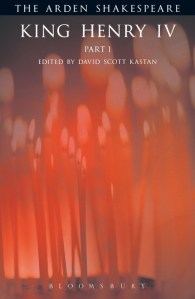
“the frustrations and the pleasures of editing”

9781904271352_p0_v1_s260x420David Scott Kastan on “the frustrations and the pleasures of editing” – for him a play, but much of this works more generally:

We too often think of editing as an activity that is mechanical and objective; it is neither. Even a brilliant editor like [John Dover] Wilson, who must have known better, would sometimes juxtapose the shifting ‘sand’ of literary judgement’ and the bibliographic ‘rock of fact’ (Wilson, ‘Copy’, 185). But, in the face of what cannot be recovered from the past, those seemingly solid rocks of fact easily crumble into all too shifty grains of sand, and literary judgement becomes in the final analysis what every editor must depend upon. Editing is a mode of critical engagement with the play, though of course one ideally informed with relevant historical knowledge about the theatre, about the playwright, about the language of the period and about the various activities that enabled a play written to be acted to become a text to be read. At almost every moment editors are required to be critics, and their critical judgements construct the text that we read. The attractive solidity of the modern published edition on a bookshelf or on a desk asserts far more certainty about what is on the page than its editor can possibly feel. Our editions inevitably belie the provisional nature of the edited text, overstating the authority of what is set forth in the impressive physical form in which they appear. The sheer number of editions alone makes this point, but, even so, they remain (at least for this editor) profoundly satisfying acknowledgements of both the effort involved in their making and the long and honourable history in which they take their place.

“Introduction”, King Henry IV, Part 1, edited by David Scott Kastan, The Arden Shakespeare Third Series, 2002, p. 131.

Posted in Publishing, William Shakespeare, Writing | Leave a comment

Leon Niemoczynski and Stephanie Theodorou (eds.) Animal Experience – open access book

Leon Niemoczynski and Stephanie Theodorou (eds.) Animal Experience – open access book. An interesting, multi-media project. Details here.

File-Animalexperience-book-cover2

This “living” book about life explores the nature and meaning of the emotional lives of nonhuman animals, focusing on how those lives are communicated to other living creatures (such as human beings) via affective states. By examining the emotional lives of animals and how they are communicated, we hope to re-examine how human beings interact with, and relate to, other living creatures that are capable of experiencing emotional lives.

The property of emotion, in both human and nonhuman species, implies a level of internal conscious experience which supports and includes related cognitive activity. Insight into animal emotion can be useful for understanding the evolutionary development we share with animals in terms of the common “brain-mind.” This locus of cognitive activity in centralized nervous systems reveals to us that changes in affect accompany and enable communication and expression, facial and voice recognition of other individuals, and decision-making. These traits, in turn, suggest that most philosophically (and perhaps scientifically) traditional moral boundaries between humans and nonhuman animals may require serious rethinking. We therefore hope to address what impact a better understanding of the emotional lives of animals might have upon animal welfare and upon our deeply embedded beliefs concerning the nature of animal minds in general.


Posted in Books | 1 Comment