Recursions: a new book series in media & cultural theory

A new book series with Amsterdam University Press.


jussiparikka's avatarMachinology

recursions logoWe are proud to announce the launch of a new book series titled Recursions: Theories of Media, Materiality and Cultural Techniques. Placed with Amsterdam University Press, a publisher known for its strong track-record in film and media studies, the series will publish fresh, exciting and important books in media theory. This includes both translations and other volumes that address the core themes outlined below. I am very excited about this project and working with my co-editors Anna Tuschling and Geoffrey Winthrop-Young. We have already some significant projects lined up for 2015 and more forthcoming that we will announce in the coming weeks and months. We are supported by a very strong international advisory board. Get in touch if you want to learn more but first read below for more information!

New Series Announcement

The new book series Recursions: Theories of Media, Materiality, and Cultural Techniques provides a platform for cutting-…

View original post 411 more words

Posted in Uncategorized | Leave a comment

Seeing the secret state with Trevor Paglen

A superbly illustrated, deeply disturbing, and yet very entertaining insight into rendering the secret visible with Trevor Paglen. I’ve said before that Trevor gave one of the best twenty-minute AAG presentations I’ve ever seen, and he is just as good over fifty minutes here. His paper ‘Goatsucker: toward a spatial theory of state secrecy’ is one of the open access highlight papers at Society and Space.

jonescraig's avatarWar Law Space

Earlier this week I blogged about Trevor Paglen’s new work over at Intercept, and now Joseph Lee (via Gab Olah) send news of a talk Paglen gave at the Chaos Communication Congress in Berlin last December. It’s remarkably perceptive and provides insight into the digital and logistical mechanics of his photography as well as his take on secrecy. He insists that secrecy is not merely what we don’t know, but rather a way of seeing and a way of organising society that always leaves a trace in the non-secret world. And, as ever, his visuals are stunning: well worth the full 50 minutes.

For more on Paglen and his other work see commentaries from geographicalimaginations here and here, or Paglen’s site here.

View original post

Posted in Politics, Trevor Paglen | Leave a comment

Three forthcoming papers (require subscription)

New papers in Society and Space – discussing social movements, Kant’s Geography, and water in the city.

Posted in Uncategorized | Leave a comment

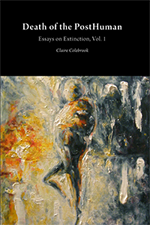
Claire Colebrook, Death of the PostHuman: Essays on Extinction, Vol. 1 – pdf available online

Claire Colebrook’s Death of the PostHuman: Essays on Extinction, Vol. 1 is available online and as downloadable pdf from Open Humanities Press – print version coming soon.

colebrook_death-of-the-posthuman_150x225

Death of the PostHuman undertakes a series of critical encounters with the legacy of what had come to be known as ‘theory,’ and its contemporary supposedly post-human aftermath. There can be no redemptive post-human future in which the myopia and anthropocentrism of the species finds an exit and manages to emerge with ecology and life. At the same time, what has come to be known as the human – despite its normative intensity – can provide neither foundation nor critical lever in the Anthropocene epoch. Death of the PostHuman argues for a twenty-first century deconstruction of ecological and seemingly post-human futures.


Posted in Uncategorized | Leave a comment

E.P. Thompson and the Making of the New Left


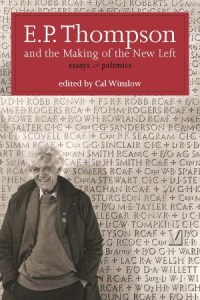
E.P. Thompson and the Making of the New Left: Essays and Polemics by E. P. Thompson; edited by Cal Winslow – out in June with Monthly Review Press. More details and endorsements at the site – here’s the blurb.

PB4437-300x450

E. P. Thompson is a towering figure in the field of labor history, best known for his monumental and path-breaking work, The Making of the English Working Class. But as this collection shows, Thompson was much more than a historian: he was a dedicated educator of workers, a brilliant polemicist, a skilled political theorist, and a tireless agitator for peace, against nuclear weapons, and for a rebirth of the socialist project.

The essays in this book, many of which are either out-of-print or difficult to obtain, were written between 1955 and 1963 during one of the most fertile periods of Thompson’s intellectual and political life, when he wrote his two great works,The Making of the English Working Class andWilliam Morris: Romantic to Revolutionary. They reveal Thompson’s insistence on the vitality of a humanistic and democratic socialism along with the value of utopian thinking in radical politics. Throughout, Thompson struggles to open a space independent of official Communist Parties and reformist Social Democratic Parties, opposing them with a vision of socialism built from the bottom up. Editor Cal Winslow, who studied with Thompson, provides context for the essays in a detailed introduction and reminds us why this eloquent and inspiring voice remains so relevant to us today.

Posted in Books, E. P. Thompson, Politics | 2 Comments

critical-theory.com’s five books that came out in April

april-critical-theory-books-2014-672x372

critical-theory.com‘s five books that came out in April – Agamben and Politics, Reasoning with Who we are, Making Money, The Imperial University and… Why are Animals Funny?

Posted in Uncategorized | Leave a comment

Urban theory without an outside: Neil Brenner

This has been online for a few weeks, but now made time to watch it – a very helpful lecture by Neil Brenner outlining the work of the Harvard Urban Theory Lab and his edited collection Implosions/Explosions. This, and other videos available on the Urban Theory Lab website.

Jeremy Schmidt's avatarJeremy J Schmidt

View original post

Posted in Boundaries, Neil Brenner, Territory, urban/urbanisation | Leave a comment

Nazism and the German Academy

An interesting historical document translated – the 1935 preface to Kant-Studien. Peter Gratton also links to one of the most thoughtful pieces on the latest Heidegger Controversy in The New Yorker.

Peter Gratton's avatarPHILOSOPHY IN A TIME OF ERROR

Eric Schwitzgebel provides a translation to the preface of a 1935 issue of the journal Kant-Studien, which shows just how much the academy (obviously not just Heidegger) rolled over Kantian and other philosophical terms (will, etc.) to demonstrate their adherence to Nazi philosophy: Splintered Mind: The 1935 Preface to Kant-Studien.

View original post

Posted in Martin Heidegger, Politics | Leave a comment

Book review symposium – James C. Scott’s ‘Two Cheers for Anarchism’

A book review symposium at Antipode for James Scott’s Two Cheers for Anarchism.

Antipode Editorial Office's avatarAntipodeFoundation.org

Just in time for this year’s festival of self-organisation on May 1st, International Workers’ Day, we’re pleased to present a book review symposium on James C. Scott’s Two Cheers for Anarchism. Professor of Anthropology in Yale University’s Department of Political Science, James Scott will be well-know to many Antipode readers: The Moral Economy of the Peasant (1976), Weapons of the Weak (1985), Domination and the Arts of Resistance (1990), Seeing Like a State (1998) and The Art of Not Being Governed (2009) have established him as one of today’s most innovative, interesting and important writers on the nature of domination and resistance and forms of governance and alternatives to them.

ScottScott’s more recent book Two Cheers for Anarchism: Six Easy Pieces on Autonomy, Dignity, and Meaningful Work and Play (2012) offers not a ‘comprehensive anarchist worldview and philosophy’ but, rather, an ‘anarchist squint’ or some ‘anarchist glasses’ through which to…

View original post 129 more words

Posted in Uncategorized | Leave a comment

Two positions at Warwick, Politics and International Studies

1. Assistant Professor in Political Economy and Public Policy

2. Associate Professor in Political Theory and Interdisciplinary Ethics


Posted in Uncategorized | Leave a comment