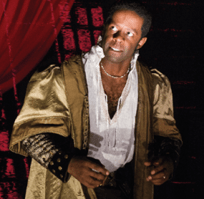
King Lear with Michael Pennington at the Polonsky Shakespeare Center

lear28f-1-webLast night I went to see Michael Pennington in King Lear by the Theatre for a New Audience at the Polonsky Shakespeare Centre in Brooklyn. There are good reviews in The New York Times and NY Daily Times.

As the reviews suggest, this is less high octane than some other recent productions. Some of that is undoubtedly due to the acting, but it is also related to the script. This version uses the Quarto text as its basis, as opposed to the Folio text or the conflated version that is usually the basis for modern editions. That said, some of the cuts made were those of the Folio. There are some crucial differences between these texts. In particular, scenes are cut; speeches and lines are in one or other text; the identity of the invading army changes; and lines are switched between actors.

You can read my paper on “The Geo-politics of King Lear: Territory, Land, Earth” – in Law and Literature (open access). That’s an early version of what I hope will be in the planned Shakespearean Territories book. This production rather underplayed the big ‘geopolitical’ elements of the text – the territorial division (the Quarto omits the crucial line ‘interest of territory, cares of state’), the invading army, internal warring factions – but was good on the more domestic elements, such as the land-inheritance issues at the heart of the Duke of Gloucester/Edgar/Edmund sub-plot. The production was more of a domestic tragedy, with a wider war going on in the background. The behaviour of Lear’s revenue at Goneril’s home almost made you sympathetic for her.

I’m going to see the Sam Mendes/Simon Russell Beale version in London in June. It will be interesting to compare these two productions.

Update: Steve Mentz has a nice piece on this production here, which especially praises the performances of Lear’s daughters.

Posted in Shakespearean Territories, William Shakespeare | 2 Comments

In Memory of Ernesto Laclau

Another tribute to Laclau, from Mark Devenney.

WEEENGLAND's avatarconstellations68

In Memory of Ernesto Laclau

I first met Ernesto Laclau in 1992, in Johannesburg. I was an MA student, studying politics intent on changing the world not merely interpreting it. I struggled though, with party lines, with party discipline, with Marxist theory, and with party hacks who refused even to ask, never mind address, the difficult questions. In the context of apartheid Marxism was the only political discourse which provided both a revolutionary rejection of, and a serious conceptualisation of, the apartheid regime. Knowledge and power fused all too easily in the language of student activists. Those who asked awkward questions were re-educated against residual bourgeois prejudices. In 1989 I read Hegemony and Socialist Strategy. It made sense of my groping attempts to fuse a commitment to the left, with a language and a politics bereft of the politics of certainty, a certainty which rendered so much of the Marxism…

View original post 2,577 more words

Posted in Uncategorized | Leave a comment

Verso’s Reading List on Christianity

As a riposte to David Cameron’s comments about Christianity (or just to sell some books), Verso have put together a list of their studies of Christianity. Régis Debray, Slavoj Žižek, Simon Critchley, Ernst Bloch, Terry Eagleton, Wu Ming…

Posted in Books, Politics, Simon Critchley, Slavoj Zizek, Wu Ming | Leave a comment

Amador Fernández-Savater, “Notes for a Non-​Statocentric Politics”

fishAmador Fernández-Savater, “Notes for a Non-​Statocentric Politics” at Critical Legal Thinking.

Posted in Politics | 1 Comment

Shakespeare’s annotated dictionary?

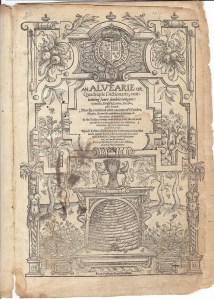
AlvearieTitlePage-001An interesting story from the Folger Shakespeare Library about the claimed discovery of Shakespeare’s dictionary – an annotated copy of John Baret’s Alvearie. The claim is not just that Shakespeare used the dictionary, which is well-known, but that this was his personal copy.

You can read more about the project of publishing this dictionary at the Shakespeare’s Beehive website, and read the book itself – Shakespeare’s Beehive: An Annotated Elizabethan Dictionary Comes to Light – there too. The hardcopy is expensive, but there is a reasonably priced e-book.

Thanks to Jeffrey Jerome Cohen for the link.

Posted in Publishing, William Shakespeare, Writing | Leave a comment

WMD V: Warwick Manuscript Development Sessions 2014

A good opportunity for book publishing advice – contact Leonard Seabrooke: ls.dbp@cbs.dk for more information.

In 2009 the Centre for the Study for Globalisation and Regionalisation (CSGR) at the University of Warwick held its first Warwick Manuscript Development (WMD) workshop with first-time authors, discussants with single-authored book experience, and publishers. At WMD the discussants provided their thoughts on a book proposal and introductory chapter from the authors, acting as a reviewer for an established academic press and raising questions of the audience for the book, its market, and what could obviously be improved.

WMD V returns to CSGR this October 6th and 7th 2014.

Schedule: 10.00-22:00, Monday, October 6. (Dinner from 19.00-22.00); 09:00-12:00, Tuesday, October 7.

Location: S150, Social Sciences Building 53, University of Warwick, dinner and accommodation at Scarman House, on campus.

The format is that authors have 5-10 minutes to present the key idea and argument from their book, discussants then have 15 minutes to provide comments. No PowerPoint is permitted. We then open it up for general discussion. The dinner includes short presentations from commissioning editors on how the market for academic books works.

CSGR is covering the dinner and accommodation costs for participants for the Monday night. All costs will be covered for the discussants. The authors pay their own travel and any additional costs that may be necessary. The event in previous years has been a stimulating ego-free zone that provided first-time authors with a lot of feedback and insight into the business of academic publishing. WMD V promises a repeat of these positive experiences.

The WMD sessions are open to all authors in the fields of International Political Economy and International Relations. Interested authors should write to Professor Leonard Seabrooke: ls.dbp@cbs.dk

Posted in Books, Publishing | Leave a comment

The Geography of Poverty – Images, Maps and Text

Nails

A beautifully designed website, blending images, maps and text – The Geography of Poverty. Thanks to David Campbell for the link.

Posted in Politics | Leave a comment

Capital in the Twenty-First Century: A Reading List

As Piketty’s book is the top-seller on amazon.com, and sells out in bookstores, some other reading suggestions to sit in place or alongside it…

Elliott Bay Book Company's avatarThe Ship's (B)log

Were you hoping to read Capital in the Twenty-First Century by Thomas Piketty, but weren’t able to get a copy before we sold out of our first batch?

Capital in the Twenty-First Century

Rest assured, we expect more copies to be in stock as soon as they become available from Harvard University Press, probably around mid-May.

But!

We know waiting is hard…especially for a book that riveting, so, in the meantime, our bookseller Jacob has created a list of recommended titles that are on our shelves now to read while we await the next printing of Thomas Piketty’s knockout debut:

Debt: The First 5,000 Years

Debt: The First 5,000 Years

 by David Graeber

“Anthropologist David Graeber casts a wide net, and this much longer view of human culture uncovers the moral and philosophical assumptions that are so deeply ingrained in our conceptions of debt that they usually remain invisible. By exploring the enormous variety of human relationships, exchanges, and…

View original post 386 more words

Posted in Uncategorized | Leave a comment

Red Velvet at St Ann’s Warehouse, Brooklyn

redvelvet2014_feaLast night Susan and I went to see the remarkable play Red Velvet at St Ann’s Warehouse, Brooklyn. It’s the story of Ira Aldridge, the first African-American actor to play Othello in London, among a host of other roles. Steve Mentz recommended this to me, and does a much better job than I can of saying why it was so good on his blog. Steve went for a second time last night, which was the closing night of this run, after opening in London.

Posted in William Shakespeare | Leave a comment

Japhy Wilson’s critical study of Jeffrey Sachs from Verso

sachsAnother book picked up in the Verso sale, Japhy Wilson’s Jeffrey Sachs: The Strange Case of Dr. Shock and Mr. Aid. [Update: An abridged version of Chapter Five is available here.]

It’s a powerful and nuanced critique of his work and involvement in neoliberal projects, and a careful analysis of his development projects in sub-Saharan Africa.

Sachs spoke at the AAG in Boston in 2008 (video below). I expressed some of my doubts about this invitation to a senior member of the profession who told me I was wrong, and that “Sachs was one of the good guys”. Reading this book makes me think I wasn’t wrong after all, and I now know a lot more about why that is the case.

I examined Japhy‘s PhD thesis some years ago (on a completely different topic). It’s great to see him make this carefully researched and politically engaged contribution. A more theoretical approach to Sachs can be found in an article by Japhy in Antipode from earlier this year (requires subscription).

Posted in Books, Politics | 4 Comments