“Interview with Stuart Elden” at Groundwork

Another interview with me, conducted by Jordan Skinner, has been published at the Groundwork site – a blog run by past and present students of the Centre for Research in Modern European Philosophy at Kingston University. It ranges widely across my work and interests – disciplinary boundaries, philosophy and geography, territory, space, Sloterdijk, Heidegger, Shakespeare, Foucault, Harman, Meillassoux, fossils, blogging etc.

It was conducted some time back, and at some time distance from the recently published interview at Polis, though there is a little overlap, especially on Sloterdijk.

Posted in Books, Boundaries, Fossils, Foucault's Last Decade, Graham Harman, Martin Heidegger, Medieval Studies, Michel Foucault, My Publications, Peter Sloterdijk, Publishing, Quentin Meillassoux, Shakespearean Territories, Society and Space, Territory, The Birth of Territory, The Space of the World, Universities, William Shakespeare, Writing | 1 Comment

A review of Punk Sociology

David Beer’s Punk Sociology reviewed by Deborah Lupton.

Deborah Lupton's avatarThis Sociological Life

ShowJacketSociology in the Anglophone world has been in the doldrums for some time. Since the heady days of poststructuralism and postmodernism, until very recently few advances had been made in theory or method. British sociology, however, is seeing a renewed impetus and vigour, with several sociologists beginning to talk about a move from ‘zombie sociology’ to ‘live sociology’ (Back, 2012) or ‘inventive methods’ (Lury and Wakeford, 2012), in which creative approaches and different ways of communicating are suggested to move the discipline out of its doldrums.

Punk Sociology, by British sociologist Dave Beer, is a welcome contribution to this new and exciting approach. As its title suggests, Beer attempts in this short book (part of the Palgrave Pivot series, itself an innovative approach to academic publishing) to show how sociology might be shaken up and re-energised. Punk sociology looks outward, is subversive and willing to try new approaches and…

View original post 643 more words

Posted in Uncategorized | Leave a comment

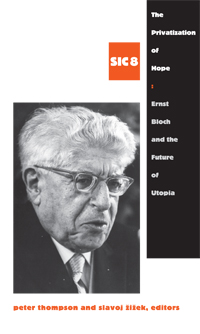
Thompson and Zizek (ed.) The Privatization of Hope: Ernst Bloch and the Future of Utopia

Bloch

Interesting looking new collection just out with Duke University Press.

The concept of hope is central to the work of the German philosopher Ernst Bloch (1885–1977), especially in his magnum opus, The Principle of Hope (1959). The “speculative materialism” that he first developed in the 1930s asserts a commitment to humanity’s potential that continued through his later work. In The Privatization of Hope, leading thinkers in utopian studies explore the insights that Bloch’s ideas provide in understanding the present. Mired in the excesses and disaffections of contemporary capitalist society, hope in the Blochian sense has become atomized, desocialized, and privatized. From myriad perspectives, the contributors clearly delineate the renewed value of Bloch’s theories in this age of hopelessness. Bringing Bloch’s “ontology of Not Yet Being” into conversation with twenty-first-century concerns, this collection is intended to help revive and revitalize philosophy’s commitment to the generative force of hope.

Contributors. Roland Boer, Frances Daly, Henk de Berg, Vincent Geoghegan, Wayne Hudson, Ruth Levitas, David Miller, Catherine Moir, Caitríona Ní Dhúill, Welf Schröter, Johan Siebers, Peter Thompson, Francesca Vidal, Rainer Ernst Zimmermann, Slavoj Žižek

Posted in Slavoj Zizek | Tagged , , , | 1 Comment

London’s waterways mapped – and sound clips

waterwaysLondon’s waterways mapped – the site also has sound clips of site recordings at each location. Thanks to several people who shared this on Facebook.


Posted in Uncategorized | Leave a comment

The ever-increasing deluge of bad and useless books (Schopenhauer)

More book-grumpiness from Schopenhauer…

Biblioklept's avatarBiblioklept

Literary journals should be a dam against the unconscionable scribbling of the age, and the ever-increasing deluge of bad and useless books. Their judgments should be uncorrupted, just and rigorous; and every piece of bad work done by an incapable person; every device by which the empty head tries to come to the assistance of the empty purse, that is to say, about nine-tenths of all existing books, should be mercilessly scourged. Literary journals would then perform their duty, which is to keep down the craving for writing and put a check upon the deception of the public, instead of furthering these evils by a miserable toleration, which plays into the hands of author and publisher, and robs the reader of his time and his money.

If there were such a paper as I mean, every bad writer, every brainless compiler, every plagiarist from other’s books, every hollow and incapable…

View original post 327 more words

Posted in Uncategorized | Leave a comment

Towards a new geophilosophy, book forum on Ben Woodard’s “On an Ungrounded Earth”

Review forum on Ben Woodward’s On an Ungrounded Earth at the Society and Space open site.

Posted in Uncategorized | Leave a comment

Discipline, Punish, Examine and Produce: Foucault’s La société punitive – Stuart Elden @berfrois

michel-foucault

Update September 2025: the Berfrois site is now closed and the archive has been removed. My piece can now be found here.

My review of Foucault’s La société punitive has now been published at Berfrois.

Posted in Michel Foucault | 3 Comments

Mapping the songs of Tom Waits

Interactive map of locations in the songs of Tom Waits.

Tom Waits

Posted in Music | 1 Comment

A Geology of Media

Jussi Parikka with news of his forthcoming book. Lots of links to my own interest in the ‘Geo’ part of geopolitics, geometrics, geopower…

jussiparikka's avatarMachinology

I am pleased to announce that I have signed a contract with University of Minnesota Press for a new book tentatively called A Geology of Media.

Planned for 2015, A Geology of Media forms the third, final part of the media ecology-trilogy. It started with Digital Contagions: A Media Archaeology of Computer Viruses (2007) and continued with Insect Media (2010). This book on the geophysics and the non-organic ground of media complements the earlier takes by offering a media materialism from the point of view of geological resources, electronic waste and media arts. Through engaging with several contemporary art and technology projects it provides a media theoretical argument: to think of materiality of media beyond the focus on machines and technologies by focusing on what they consist of: the chemistry and geological materials of media, from metals to dust.

In short, I am interested to see if what…

View original post 191 more words

Posted in Uncategorized | Leave a comment

Peter Trawny on Heidegger’s ‘black notebooks’ in Le Monde

In Le Monde, Peter Trawny discusses Heidegger’s ‘black notebooks’ – thanks to enowning for the link.

Posted in Martin Heidegger | Leave a comment