The Politics of Our Selves: Power, Autonomy, and Gender in Contemporary Critical Theory (2013)

An important book now in paperback.

Clare O'Farrell's avatarFoucault News

allenAmy Allen, The Politics of Our Selves: Power, Autonomy, and Gender in Contemporary Critical Theory, Columbia University Press, 2007.

This has just been newly published in paperback.

Publisher’s page

  • Draws on the work of Michel Foucault, Jurgen Habermas, Judith Butler, Seyla Benhabib, and others
  •    The book is both an analysis of power and an account of autonomy
  • Up to now, most critical theorists have assumed that these two aspects of the politics of the self are incompatible with one another
  • develops a theoretical framework that illuminates how the self can both be constituted by power and at the same time capable of being autonomously self-constituting.

Some theorists understand the self as constituted by power relations, while others insist upon the self’s autonomous capacities for critical reflection and deliberate self-transformation. All too often, these understandings of the self are assumed to be incompatible. Amy Allen, however, argues that the…

View original post 227 more words

Posted in Uncategorized | Leave a comment

Hiding behind transparency: the UK government online information strategy?

John Parkinson discusses doing research on UK government documents in the digital age.

John Parkinson's avatarRuminative Rumblings

In the last ten years, one of the great things about being an academic has been the explosion of public information available online. While I miss aspects of browsing through dusty archives and stacks, it’s been an awrful lot easier and an awful lot quicker to go to the relevant department or ministerial website and download some policy papers at a few clicks of the mouse.

Developments in the world of online government information in the UK are damaging that. Badly.

Government departments in the UK are moving their online presences to http://gov.uk, a development of what used to be direct.gov.uk which was a general information portal for citizens wanting to know how to access a service, download a form, make a payment and so forth. Which is all very well if that’s the only way you engage with government — as a consumer of goods and services.

But…

View original post 424 more words

Posted in Uncategorized | Leave a comment

Editing the Theory, Culture & Society open site

David Beer on plans for the TCS open site.

Posted in Theory, Culture and Society | Leave a comment

David Simon and Aditya Chakrabortty on division, deprivation and development in the US and UK

Two pieces in The Guardian that make for an interesting juxtaposition – David Simon (of The Wire) on the divisions in the US, and Aditya Chakrabortty on how Britain has become a developing country.

Posted in Politics | Leave a comment

Heidegger and antisemitism – ‘a new Heidegger affair’?

If you read French, this is an interesting discussion of what is called ‘a new Heidegger affair’ – the comments on antisemitism in a forthcoming volume of the Gesamtausgabe.

[Update: I mistakenly said this was Volume 73; it is rather Volumes 94-96.]

[Update: some more links at Enowning – thanks to Philippe Theophanidis for pointing me there. I think we need to be careful in how this affair is described. Enowning suggests that ‘professional haters’ are probably getting ready to weigh in. I’m sure that there will be plenty of dismissive contributions. But Peter Trawny (who edited the volume in question) is a serious scholar who has edited four other volumes of the Gesamtausgabe, and for that at least should be distinguished from Victor Farias or Emmanuel Faye. It doesn’t serve anyone’s interests to deny that Heidegger said and did some deeply unpleasant things. The question – as it always was – is how the thought and the actions interrelate, and to what extent.]

Posted in Uncategorized | 1 Comment

Vannini and Taggart on off-grid living

A short video linked to a paper in Society and Space, with the paper open access for a short time in recompense for the authors’ additional material for the open site. This is something we are trying to do more often at the journal.

Posted in Uncategorized | Leave a comment

Simon Critchley on Nietzsche, the death of God and nihilism in three minutes

via critical-theory.com

Posted in Uncategorized | 1 Comment

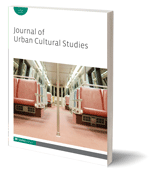
Journal of Urban Cultural Studies – first issue now open access

20509790The launch issue of the Journal of Urban Cultural Studies is now available open access.

Posted in Uncategorized | Leave a comment

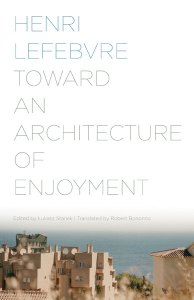
Henri Lefebvre, Toward an Architecture of Enjoyment – forthcoming

A previously unpublished manuscript by Henri Lefebvre, Toward an Architecture of Enjoyment is forthcoming with University of Minnesota Press. Edited by Łukasz Stanek and translated by Robert Bonnano, this is going to be a significant moment in the discussion of his work, especially since the manuscript remains unpublished in French.

image-1The relationship between bodily pleasure, space, and architecture—from one of the twentieth century’s most important urban theorists

Toward an Architecture of Enjoyment, the first publication of Henri Lefebvre’s only book devoted to architecture, redefines architecture as a mode of imagination rather than a specialized process or a collection of monuments. Lefebvre calls for an architecture of jouissance—of pleasure or enjoyment—centered on the body and its rhythms and based on the possibilities of the senses.

Posted in Uncategorized | Leave a comment

The ten books that have stayed with me…

This originated on Facebook, and I had it from Helga Tawil-Souri.

Rules: In your status line, list 10 books that have stayed with you. Don’t take more than a few minutes; don’t think too hard. They don’t have to be great works, just the ones that have touched you. Tag 10 friends, including me so I’ll see your list.

So, doing it quickly, and without a huge amount of thought, I went for a couple of novels that I regularly re-read, books by the three most important thinkers to me, one on territory, a broad-scale history book, the book that (for all its flaws) inspired me to become whatever kind of geographer I am, and two research tools I couldn’t do without.

  1. Umberto Eco, The Name of the Rose
  2. Herman Melville, Moby Dick
  3. Martin Heidegger, Being and Time
  4. Michel Foucault, History of Madness (tricky to chose just one though) [update: I’ve since realised it should have been the four volume Dits et Écrits, which has been incredibly important to how I read Foucault, and is rarely back on the shelf these days.]
  5. Henri Lefebvre, De l’Etat
  6. Jean Gottmann, The Significance of Territory
  7. Perry Anderson, Passages from Antiquity to Feudalism and Lineages of the Absolutist State (bit of a cheat, but they are really two volumes of the same study)
  8. Edward Soja, Postmodern Geographies
  9. The Oxford English Dictionary – the full, multi-volume one, or at a pinch, The Shorter Oxford English Dictionary on Historical Principles
  10. The Ordnance Survey Map of Great Britain – for planning cycle routes as much as anything else

So many left off, but that’s not a bad list, and fairly representative of my interests. In Desert Island Discs you get the complete works of Shakespeare as a matter of course. If I had to pick just one play, it would be King Lear.

Posted in Books | 2 Comments