Syria: Mapping the conflict

The BBC has a good, interactive image mapping the Syria conflict. It is “produced by the Syria Needs Analysis Project (SNAP), [and] is based on information from the US government compiled from media sources”.

graphic_1378382738


Posted in Boundaries, Politics, Territory | 2 Comments

New Journal: The Anthropocene Review

Launch of a new interdisciplinary journal – this should be of wide interest, especially given the discussions at the recent RGS-IBG.

Jeremy Schmidt's avatarJeremy J Schmidt

A new journal is now being published with Sage titled The Anthropocene Review.ANR

Here is the “aims and scope” of the new publication that I snagged from the blog where you can also find information on submissions, the editorial board, and this link to the first editorial (opens to PDF).

“The overall aim of the new journal is to communicate clearly and across a wide range of disciplines and interests, the causes, history, nature and implications of a world in which human activities are integral to the functioning of the Earth System. The concept of the Anthropocene has, since its initial promulgation, provoked a great deal of debate, raising challenging questions of focus and definition. My aim in this short introduction is to be indicative rather than prescriptive and thereby, both to encourage high quality, stimulating contributions to the new journal and to foster further debate on the…

View original post 513 more words

Posted in Uncategorized | Leave a comment

Earth, Terricide, Geo-metrics

I’ve now nearly finished writing my keynote lecture for the Regimes of Calculation and Global Governance workshop at the Balsillie School of International Affairs (September 19-20). The title is “Geo-metrics” (abstract here). This is the third in a sequence of papers I’ve been working on, along with the Foucault material, over the past few months. The first was the ‘Earth’ paper at the CityState: A Lexical-Political Workshop in Tel Aviv back in June (abstract and audio recording here). The second was last week’s talk on “Terricide: Lefebvre, Geopolitics and the Killing of the Earth” at the RGS-IBG conference (abstract and audio here).

The problem is that the papers share crucial parts, even if the arguments go in different directions. This is, I think, fine for presentations – especially ones on three continents. The ‘Earth’ paper was the conceptual clearing-the-ground paper, with some gestures towards how this might help us to rethink geopolitics, and some discussion of Elizabeth Grosz’s work on geopower at the end. For a conference on concepts this worked okay, I think. The ‘Terricide’ paper began with the geopolitics argument, and then moved to discuss what Lefebvre might offer to all this, mentioned debates around urbicide, linked it to E.P. Thompson’s notion of exterminism, and briefly related this to Grosz and the other papers in the session around geology and geophysics. The ‘Geo-metrics’ paper begins with some general comments about the globe and world, rehearsing some of the arguments I’ve made before in relation to Fink, Axelos and Lefebvre, moves to a discussion of the global/geopolitics issue that it shares with the other two papers, a bit on the etymology and the risk of reactionary politics (from ‘Earth’), and then goes into a much longer argument about Heidegger’s work on calculation (drawing on my book Speaking Against Number). Calculation is obviously a crucial theme in the workshop, and presumably why I was asked to speak at it. It then returns to a discussion of Grosz (part of the ‘Earth’ paper), and discusses potentials in the tradition, and in the present, for thinking geo-metrics. Examples include the Roman land surveyors, Bartolus of Sassoferrato, lots of quick references to other work that I think shares a sensibility and sensitivity to these questions, and then moves to discuss Simon Dalby‘s forthcoming paper ‘The Geopolitics of Climate Change’, in relation to my ‘Secure the Volume‘ essay. Both those two papers were Political Geography lectures, and Simon generously picked up on my arguments in his paper. My paper, to be delivered at a workshop in the School where Simon now works, repays the favour.

Depending on publication plans, though, overlap presents much more of a problem. The ‘Terricide’ paper is promised to a Punctum Books project out of the sessions. There has been discussion of the Tel Aviv papers, in some form and arrangement, being published. But the Geo-metrics paper is probably going to be the strongest of these, at least as it develops over time. But I may have to sacrifice that, or the ‘Earth’ one, to make the others work – they share too many elements to be published as they are.

Posted in Bartolus of Sassoferrato, Conferences, Elizabeth Grosz, Eugen Fink, Henri Lefebvre, Kostas Axelos, Martin Heidegger, Politics, Publishing, Speaking Against Number, Writing | 3 Comments

Shakespeare in Stratford

One of the things I was looking forward to about being in the Midlands again was the proximity to Stratford-on-Avon. Susan and I went to see Titus Andronicus at the end of August, and I’ve booked tickets for As You Like It this weekend, and then Antony and Cleopatra and Richard II in the autumn. Richard II is due to be followed by the other history plays. A constant source of inspiration for the Shakespeare project just down the road.

Posted in Shakespearean Territories, William Shakespeare | Leave a comment

The Stuart Hall project – film out this week

Highly acclaimed at this year’s Sundance and Sheffield Documentary festivals, the new film from award-winning documentarian John Akomfrah (The Nine Muses) is a sensitive, emotionally charged portrait of cultural theorist Stuart Hall.

A founding figure of contemporary cultural studies – and one of the most inspiring voices of the post-war Left – Stuart Hall’s resounding and ongoing influence on British intellectual life commenced soon after he emigrated from Jamaica in 1951. Combining extensive archival imagery – television excerpts, home movies, family photos – with specially filmed material and a personally mixed Miles Davis soundtrack, Akomfrah’s filmmaking approach matches the agility of Hall’s intellect, its intimate play with memory, identity and scholarly impulse traversing the changing historical landscape of the second half of the 20th century.

More details including screening locations at the BFI site. Thanks to Matt Davies and Rory Rowan for the link.

Posted in Stuart Hall | 1 Comment

On the Migration of Whitehead from Analytical Philosophy to Continental Philosophy – New APPS: Art, Politics, Philosophy, Science

Peter Gratton links to an interesting discussion of AN Whitehead.

Peter Gratton's avatarPHILOSOPHY IN A TIME OF ERROR

View original post

Posted in Uncategorized | Leave a comment

Ian Hacking on DSM-5: Diagnostic and Statistical Manual of Mental Disorders

Ian Hacking reviews DSM-5: Diagnostic and Statistical Manual of Mental Disorders in the London Review of Books (open access). Thanks to Chathan Vemuri for the link.

Posted in Ian Hacking | Leave a comment

Foucault’s 1970-71 course Lectures on the Will to Know reviewed in The New Inquiry

Christopher Chitty reviews Foucault’s 1970-71 course Lectures on the Will to Know in The New Inquiry. Thanks to John Protevi for the link.

Posted in Michel Foucault | 2 Comments

Making edited collections work – a publisher’s perspective

Rowman and Littlefield International offer some interesting perspectives and advice (see also the LSE Impact of Social Sciences blog, where three people offer defences of edited collections – I’ve previously linked to this.)
Posted in Books, Publishing | 1 Comment

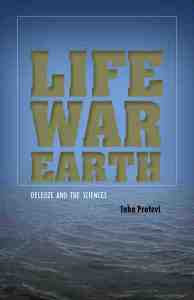
John Protevi, Life, War, Earth: Deleuze and the Sciences – reviewed by Todd May

ProteviJohn Protevi’s Life, War, Earth: Deleuze and the Sciences is reviewed by Todd May at NDPR.

Posted in Gilles Deleuze, John Protevi | 1 Comment