The Commons: in what state? – workshop in Manchester

Please contact matthew.thompson@manchester.ac.uk with any inquiries

One-day workshop for PhD and early career researchers organised by Open Space at the University of Manchester and sponsored by cities@manchester

Date: Thursday 20th June 2013

This one-day workshop specifically for PhD and early career researchers across the UK aims to explore the nature, relevance, and value of the ‘commons’ for us today. In the context of the global financial crisis spawning resistance movements to the austerity urbanism imposed in its wake a new political narrative of the ‘commons’ appears to emerge as the signifier of radical alternatives to neoliberalization. But what do we mean by the ‘commons’ and how can we make theoretical sense and political use out of the concept?

Intensified neoliberal enclosure is constructing walls to produce what Žižek (2009) describes as “social apartheid”. This ‘walling’ is at work at multiple scales (Jeffrey, McFarlane, & Vasudevan, 2011): from the global scale of the biosphere; to geopolitical state spaces; to increasingly polarised and ‘splintered’ urban spaces of elite privatopias gated off from disinvested marginality; through new forms of (il)legality and citizenship generated by uneven access and property rights; scaling right down to the ‘endless enclosure’ of the human body and the biopolitics that attempts to capture biopower (Hardt & Negri, 2001). It is through the struggles against these various processes of what Harvey (2003) calls ‘accumulation by dispossession’ that the shape of the ‘commons’ comes into view.

Yet the ‘commons’ remains an unstable and contested concept. A genealogy reveals roots in pre-capitalist acts of ‘commoning’ and rights to common land laid down in the Magna Carta (Linebaugh, 2009); an emphasis on common access to resources which can be traced to contemporary Common Property Regime (CPR) discourses and environmental management of common pool resources (Ostrom, 1990). The CPR focus on economic institutions is perhaps seemingly irreconcilable with neo-Marxist perspectives that privilege the ‘common’ as a new form of sovereignty and emancipatory citizenship, entailing a radically democratic and egalitarian ‘being-in-common’ or ‘being-together’ (Agamben, 1993; Hardt & Negri, 2004; Nancy, 1991). We are interested in exploring the relationship between the ‘commons’ and related discourses around the ‘right to the city’ and ‘the political’ (Harvey, 2012; Marchart, 2007). These ontologies point us toward the recent revolutionary spaces unfolding in the ‘Occupy’ movement, Spain’s ‘Indignados’, the Greek urban protests, and the ‘Arab Spring’ (Swyngedouw, 2011).

We invite discussion on how to bridge the gap between radical politics and institutional processes. The gap contains the progressive potential for everyday social practices and institutional designs to foster more cooperative forms of social life and spaces of communal belonging. How can the ‘commons’ be enacted out, performed and embodied through various lived practices? In what ways can architecture help materialise the commons? How does community self-government connect with the ‘commons’? Does institutionalisation always necessarily dissolve the ‘commons’ in producing new forms of enclosure? How far do common property rights challenge or reproduce capitalist property relations? Is the ‘commons’ ultimately a tantalising imaginary only realisable in ephemeral moments of revolutionary tumult?

We invite theoretical and empirical contributions that address the following indicative themes:

  • Political economy of enclosure and the commons;
  • Political philosophy, rights-based discourses, theories of social justice;
  • Revolutionary moments of ‘being-in-common’, ‘the political’;
  • Practices of ‘commoning’, performative spaces of collective life;
  • Urban commons, ‘right to the city’, community self-government;
  • Common land, public space, land trusts, land reform;
  • Global commons; environmental enclosure, common pool resources;
  • Governing the commons, CPR institutions;
  • Architectures, spatial designs for the commons;
  • Digital commons, open source publishing, intellectual property rights;
  • Biopolitics, new governmentalities of enclosure.

Participants will be given 15 minutes to present, followed by questions and discussion from the audience led by a panel of leading academics from the School of Environment and Development at the University of Manchester. Confirmed so far are Prof. Maria Kaika, Prof. Erik Swyngedouw, and Prof. Diana Mitlin. The focus of the workshop is on providing the space for interdisciplinary debate and engagement with the issues as well feedback for particular presentations.

If you would like to present, please send a title and abstract of 200 words to Matthew Thompson (matthew.thompson@manchester.ac.uk) by Friday 31st May 2013.

The event is hosted by Open Space: http://www.cities.manchester.ac.uk/studying_cities/open-space/

And sponsored by Cities@manchester: http://www.cities.manchester.ac.uk/

Agamben, G. (1993). The Coming Community (Theory Out of Bounds). University of Minnesota Press.

Hardt, M., & Negri, A. (2001). Empire. Harvard University Press.

Hardt, M., & Negri, A. (2004). Multitude: War and Democracy in the Age of Empire. Penguin Press.

Harvey, D. (2003). The New Imperialism. Oxford University Press.

Harvey, D. (2012). Rebel Cities: from the right to the city to the urban revolution. Verso.

Jeffrey, A., McFarlane, C., & Vasudevan, A. (2011). Rethinking Enclosure: Space, Subjectivity and the Commons. Antipode, 00(00),

Linebaugh, P. (2009). The Magna Carta Manifesto: Liberties and Commons for All (p. 376). University of California Press.

Marchart, O. (2007). Post-Foundational Political Thought: Political Difference in Nancy, Lefort, Badiou and Laclau (Taking on the Political). Edinburgh University Press.

Nancy, J.-L. (1991). An Inoperative Community. University of Minnesota Press.

Ostrom, E. (1990). Governing the Commons: The Evolution of Institutions for Collective Action (Political Economy of Institutions and Decisions). Cambridge University Press.

Swyngedouw, E. (2011). Interrogating post-democratization: Reclaiming egalitarian political spaces. Political Geography, 30(7), 370–380.

Žižek, S. (2009). First as Tragedy, then as Farce. Verso.

Posted in Conferences | 2 Comments

Books received

books received 25 AprilThe new Oxford Dictionary of Human Geography, and the latest issues of Transactions and Annals. Rob Kitchin, one of the authors of the dictionary, reflects briefly on it here, and provides the text of the preface.

Posted in Books | Leave a comment

Verso World History

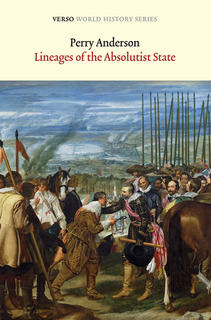
Philosophy pb DEMYA number of books reissued as a series, including classic works by Robin Blackburn, Perry Anderson, Ernest Mandel, Lucian Febvre and Max Weber.

Posted in Books | 1 Comment

After Neoliberalism? The Kilburn Manifesto

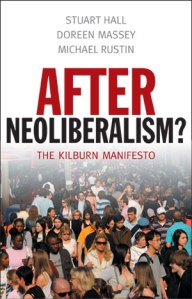
Kilburn1Stuart Hall, Doreen Massey and Michael Rustin launch the Kilburn Manifesto. Stuart Hall explains the purpose in The Guardian; and the first chapter can be downloaded here.

Although the neoliberal economic settlement is unravelling, its  political underpinning remains largely unchallenged. Our manifesto calls into  question the neoliberal order itself, and argues that we need radical alternatives to its foundational assumptions.

As a footnote to the chapter suggests, this project develops arguments explored in The Neoliberal Crisis, a free e-book.

Posted in Books, Doreen Massey, Politics, Stuart Hall | Leave a comment

Social Justice and the City at 40

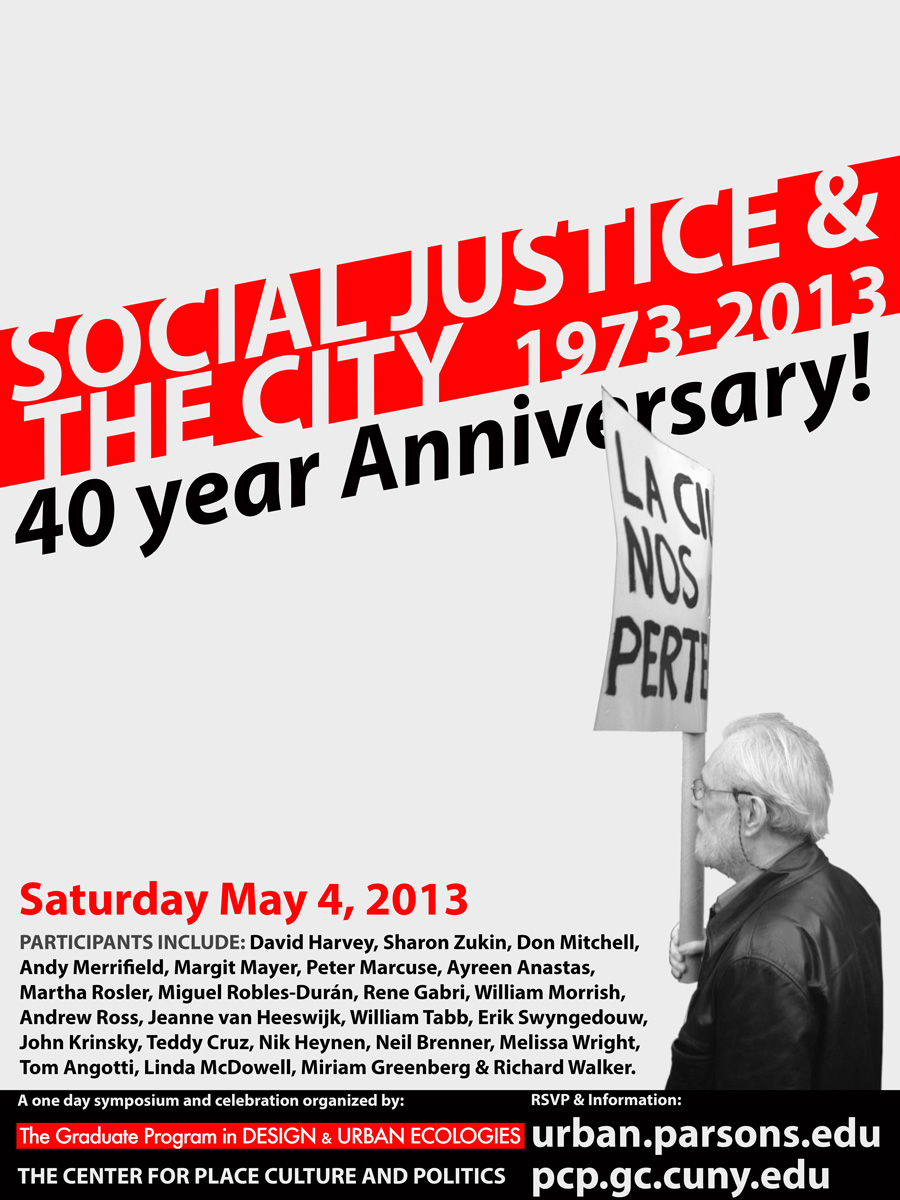
Social-JusticeWebHR-FINAL416Details of a conference in New York celebrating 40 years of David Harvey’s classic Social Justice and the City (via Harvey’s blog).

Posted in Conferences, David Harvey, Events | 1 Comment

Emergence fellowships at Durham’s Institute of Advanced Study

Recruitment for IAS Fellowships for 2014-15 is now open, with a closing date of 09 June 2013. The annual theme for this Fellowship is ‘Emergence‘.

Posted in Institute of Advanced Study | Leave a comment

On writing books

Yesterday I reblogged Graham Harman’s post about his forthcoming Latour book Prince of Nodes (a sequel to Prince of Networks). In that post he reflects on how this means he is contracted to write three books simultaneously.  He suggests that it is a good cure for writer’s block, in that you can turn to another project if you get stuck on one.

I don’t have three books contracted, but I do have substantial bits of three future projects – the one under the working title of Shakespearean Territories; the history of Foucault’s History of Sexuality; and the one that is emerging out of the ashes of the ‘Space of the World’ project, with a reorientation to thinking about world and earth together. Many of my recent talks have been on the first two; most of my forthcoming ones are on the third. While I was at the AAG a very good friend tried to convince me that I should be writing a different book entirely, and I did sketch out a table of contents for that; I began thinking about a kind of sequel to The Birth of Territory; and floated an idea in one of my talks for yet another project that is a much longer term venture. But, for me, these are ideas at different stages of development – some of which have lots of draft material; some of which I aim to piece together from conference presentations and published essays, with a lot of additions and reworking; and some are just ideas for books that would be interesting to research and write.

Graham Harman’s approach clearly works for him, yet for me it will be important, at some point, to commit to one of these and move it forward to completion, with the others very clearly pushed to the background. That doesn’t mean I won’t do anything on the others, and I may give talks that connect to different ones, but there would be a clear moment where one becomes the absolute priority. That would be akin to the way that the project that became The Birth of Territory was put aside in 2002 to write Understanding Henri Lefebvre and then Speaking Against Number, and again in 2007 to write Terror and Territory, before becoming the absolute priority in early 2008 until its completion. This is one of the reasons why The Birth of Territory took so long to complete. While I’ve talked to publishers about a few of the above ideas, I’ve got no contracts at present, and so for a while at least I’m free to move things forward as they feel right and as the ideas come.

But for now, essays and dissertations to mark…

Posted in Books, Michel Foucault, Publishing, Shakespearean Territories, The Birth of Territory, The Space of the World, Writing | 2 Comments

Interview with Iain Hamilton Grant

Interview with Iain Hamilton Grant at the After Nature blog, which touches on art, his books on nature and idealism, Hegel, and his forthcoming work.

Posted in Georg Wilhelm Friedrich Hegel | Leave a comment

Prince of Modes: Latour’s Later Philosophy

Graham Harman on another book project on Latour, and some reflections on his writing practice generally.

doctorzamalek's avatarObject-Oriented Philosophy

That’s the title of my sequel to Prince of Networks, which re.press (home of the earlier book) has just agreed to published. I’ve really enjoyed working with them, and it’s still my best-selling book despite being available free of charge as a PDF on the re.press website. I wanted the sequel to be living in the same home. The center of this book will be Latour’s massive new modes of existence project, though I plan to cover the Gifford Lectures and maybe a few other things, and some attention will need to be given to the philosophy of Étienne Souriau.

This does mean that I’ll be working on 3 books simultaneously (this one, the Latour’s politics book, and the one on continental epistemism) during sabbatical. But at the risk of this sounding like an affectation, I find it much easier to work on multiple books simultaneously rather than one at…

View original post 264 more words

Posted in Uncategorized | Leave a comment

Spinozan Genealogies of Political Community (2013)

An interesting event in Sydney on Spinozan Genealogies of Political Community.

Clare O'Farrell's avatarFoucault News

Spinozan Genealogies of Political Community

UNSW, Morven Brown 310, 9.30am July 25, 2013

An international workshop organised by the School of Humanities and Languages at the University of New South Wales
Supported by the School of Philosophical and Historical Inquiry at the University of Sydney

unsw

Spinoza’s idea that ‘the right of the individual is co-extensive with its determinate power’ has influenced important strains of contemporary political thought including Deleuze and Foucault, the Althusser School with Negri and Balibar, and socialist theology after Feuerbach. However, the assertion of equivalence between rights and powers confounds classic conceptions of sovereignty and political justice. How is the protection of fragile bodies able to be secured, if the right to persevere is linked with a power of endurance? If the indivisible power of a sovereign state is aligned with its right, then how are we to think about contested sovereignties in jurisdictions after empire? Participants…

View original post 100 more words

Posted in Uncategorized | Leave a comment