Longlisted for the 2024 Financial Times Book of the Year. How life and the economy became a black box—a collection of systems no one understands, producing outcomes no one likes.
Passengers get bumped from flights. Phone menus disconnect. Automated financial trades produce market collapse. Of all the challenges in modern life, some of the most vexing come from our relationships with automation: a large system does us wrong, and there’s nothing we can do about it.
The problem, economist Dan Davies shows, is accountability sinks: systems in which decisions are delegated to a complex rule book or set of standard procedures, making it impossible to identify the source of mistakes when they happen. In our increasingly unhuman world—lives dominated by algorithms, artificial intelligence, and large organizations—these accountability sinks produce more than just aggravation. They make life and economy unknowable—a black box for no reason.
In The Unaccountability Machine, Davies lays bare how markets, institutions, and even governments systematically generate outcomes that no one—not even those involved in making them—seems to want. Since the earliest days of the computer age, theorists have foreseen the dangers of complex systems without personal accountability. In response, British business scholar Stafford Beer developed an accountability-first approach to management called “cybernetics,” which might have taken off had his biggest client (the Chilean government) not fallen to a bloody coup in 1973.
With his signature blend of economic and journalistic rigor, Davies examines what’s gone wrong since Beer, including what might have been had the world embraced cybernetics when it had the chance. The Unaccountability Machine is a revelatory and resonant account of how modern life became predisposed to dysfunction.
I’ve shared this before, but was thinking again about Daniel Defert’s memories of Foucault’s working routines in this interview – ‘The Materiality of a Working Life‘ (open access; original French).
No no, weekends didn’t exist! We would go to see art exhibitions on the Saturday afternoon, certainly, but the very notion of the weekend didn’t exist… Especially a public holiday, a Christmas day without writing, that was impossible! Foucault rarely put dates on his writings, but he would have been quite capable of putting “December 25th” on something, that being a day when, as he said, “nothing has happened for several thousand years.”
Interviewed by Alain Brosset and Philippe Chevalier; translated by Colin Gordon.
I’ve shared news of the book before. There is a New Books discussion with Jana Byers now available.
A major study of marine serpent deities, which embodied ancient people’s reverence of water.
Early human relationships with water were expressed through beliefs in serpentine aquatic deities: rainbow-coloured, feathered or horned serpents, giant anacondas and dragons. Representing the powers of water, these beings were bringers of life and sustenance, world creators, ancestors, guardian spirits and law makers. Worshipped and appeased, they embodied people’s respect for water and its vital role in sustaining all living things. Yet today, though we still recognize that ‘water is life’, fresh- and saltwater ecosystems have been critically compromised by human activities. This major study of water beings, and what has happened to them in different cultural and historical contexts, demonstrates how and why some – but not all – societies have moved from worshipping water to wreaking havoc upon it, and asks what we can do to turn the tide.
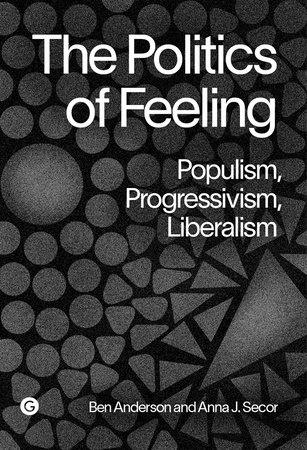
How today’s dominant political forms—right-wing populism, progressivism, and liberalism—offer differentiated responses to shared conditions of uncertainty.
The Politics of Feeling argues that politics has become a matter of political feelings in an age of uncertainty. If the second half of the 20th century saw the defeat and exhaustion of fascism and socialism, what remained of ideological certainty in neoliberal democracies such as the UK and the US ran aground in the wake of the 2008 financial crisis. The Politics of Feeling is diagnostic of how the uncertainties of the post-2008 period have transformed the political arena and made the question of how people feel central to the formation of political affiliations and divisions. We identify three competing political forms in the US and the UK today: right-wing populism, progressivism, and contemporary liberalism. We argue that rather than naming coherent programs of political thought, these popular political forms are operating as arrangements or modes of attachment and political intensity. Each one suggests a different way of remembering the past, imagining the future, and making the present politically meaningful. Each one elevates some affective orientations over others and thereby etches differences of race, class, and gender within its structure. Tracing contemporary articulations of populism, progressivism and liberalism across US and UK contexts, we at once draw out commonalities and underline the way these forms diverge both between and within these societies. The Politics of Feeling is a critique of the living edge of politics: the emergent and shifting clusters of orientations and affects that continually work to differentiate political subjects, to intensify or alienate attachments and allegiances.
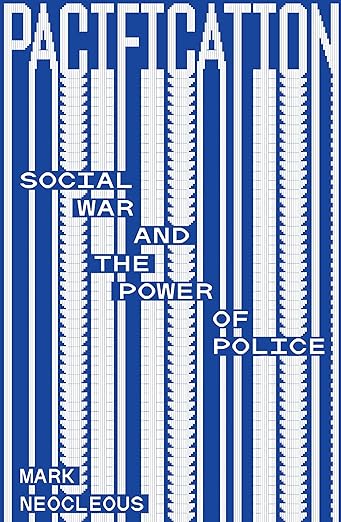
In his new book, critical theorist Mark Neocleous engages in a sustained critique of the theory and practice of pacification. Combining philosophical analysis with historical detail, Neocleous analyses the development of pacification as a key concept through which capitalist modernity has been organised, offering readers the first book that treats pacification as an important concept in the history of state power and capitalism. Neocleous’s approach is fourfold, examining pacification as social warfare carried out through the ideology of peace; as a form of social police carried out through mechanisms of security; as law and order exercised through the permanent wars of class society; and as the myriad practices of power designed to counter insurgency.
Making use of official documents of state, the writings of counterinsurgency thinkers and the ideas perpetuated by practitioners of counterrevolution, the book unravels the complex ways through which pacification generates new forms of social war and new modes of policing that reproduce capitalist order and fabricate obedient subjects.
Through expansive accounts of war and police, and engaging with a range of topics from debt to death, from stasis to civil war, and from the police kettle to the politics of fear, the book offers a provocative analysis of the ways in which state and capital combine to build a pacified social order.
Despite the common misconception that ancient philosophy was the domain of male thinkers, sources confirm that ancient women engaged in philosophical activity. Bringing together a collection of essays on ancient women thinkers, with special focus on their ideas and contributions to the history of philosophy, this volume is about the earliest women philosophers, their breakthroughs, and the methods we can use to excavate them. The essays survey the methodological strategies we can use to approach the surviving evidence, retrieve the largely unresearched thought and the original ideas of ancient women philosophers, and carve out a space for them in the canon. The broad focus includes women thinkers in ancient Indian, Chinese, and Arabic philosophy as well as in the Greek and Roman philosophical traditions. The volume will be valuable for a wide range of researchers, teachers, and students of ancient philosophy.
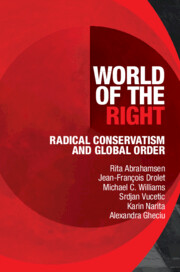
The contemporary radical Right is not merely a series of nationalist projects but a global phenomenon. This book shows how radical conservative thinkers have developed long-term counter-hegemonic strategies that challenge prevailing social and political orders both nationally and internationally. At the heart of this ideological project is a critique of liberal globalisation that seeks to mobilise transversal alliances against a common enemy: the ‘New Class’ of global managerial elites who are accused of undermining national sovereignty, traditional values, and cultures. ‘World of the Right’ argues that while the radical Right is far from a unified political movement, its calls for sovereignty, civilisational orders, and multipolarity enable complex, strategic convergences with illiberal states such as China and Russia, as well as states and people in the Global South. The potential consequences for the future of the liberal world order are profound and wide-ranging.
Provides an historical, inter-disciplinary analysis of the global rise of radical conservative parties and movements, showing how different disciplines can interact
The wide geographical coverage clearly demonstrates how radical Right movements are operating across the world, often taking inspiration from each other’s ideas
Traces the ideological strategies behind globalization of the Right, including its appropriation of key ideas traditionally associated with the Left, as well as introducing the radical right’s critique of the liberal international order and the call to replace it with multipolarity and civilizationalism
Explains how many of the Italian Marxist Antonio Gramsci’s core ideas concerning cultural hegemony, historic blocs, and counter-hegemonic movements have been self-consciously and strategically appropriated by the radical right, demonstrating how there is a logic and a strategy linking many radical parties and intellectuals
In October 2022, the Academy of European Law (ERA) in Trier celebrated its 30th anniversary with a congress devoted to the legal dimension of the European sovereignty. 1992 was not only the year in which the ERA was founded, but also a key moment in the history of European integration, as it marked the signing of the founding treaty of the European Union, the Treaty of Maastricht. While sovereignty was a highly controversial issue at the time, the (geo)political and economic challenges facing the Union in recent years have brought it back to the centre of the debate. This book brings together some of the papers presented at the Jubilee Congress and explores recent concepts such as ‘budgetary sovereignty’, ‘strategic sovereignty’, and ‘digital sovereignty’.
I’m overdue an update on this project, but while I’ve been working hard, I haven’t felt there has been much to say until now. I’ve also had some further health problems, leading to another shorter stay in hospital and the fitting of a pacemaker. It feels like a small setback, which I recovered from quickly, and I’m now back doing everything again.
Over the past couple of months I’ve been working on Benveniste for the most part, completing a draft of the chapter on the 1949-63 period which attempts to connect the Benveniste and Dumézil stories. Much of what I’ve done has concerned his teaching, and trying to show how his courses at the École Pratique des Hautes Études and at the Collège de France connect to his publications. Some pieces he published are directly the result of his teaching, and some of his publications find their way into his classes. This is appropriately much more the case with the Collège de France courses, since Professors there are supposed to report on their ongoing research, whereas at the EPHE there is a more pedagogical purpose. The Annuaires of both institutions give brief details of each year’s classes, and there are some materials in the archive which also help, as well as a few student notes in different places. Occasionally reading between the course and a publication of a similar time can help make sense of a cryptic remark in either a summary or text, though I’m sure I’ll find more connections as I continue this work.
In this draft chapter, the two key books by Benveniste I discuss are both very technical – Études sur la langue ossète and Hittite et indo-européen. But there are a number of shorter pieces too, many collected in Problems in General Linguistics and a few in Langues, Cultures, Religions. Others are harder to track down, but I’m trying to connect them to the teaching records. Benveniste worked on multiple projects in parallel, and trying to create a clear narrative is challenging.
I then continued with Benveniste’s final years, beginning to draft a chapter that will also cover his teaching and writing alongside Dumézil. Where Dumézil lived long enough to provide an ambitious summation of his life’s work, and then embarked on new projects in his last decade or so, Benveniste’s career was cut brutally short by a stroke which left him aphasic and unable to do any work for the last seven years of his life. The Last Lecturesvolume gives some idea of where he might have gone in one direction.
Many of the essays Benveniste wrote in this final period are collected in the second volume of his Problèmes, only a few of which are translated into English. (I’ve made a list of those I know about here.) The second volume of Problèmes was compiled by Mohammed Djafer Moïnfar and Michel Lejeune, and unlike the first which Benveniste selected across over two decades, it took texts from just a few years. Quite a few of the texts again directly relate to teaching, and I found it useful to be able to compare the reports to the published work. What is clear to me from the teaching records and these publications is how much else Benveniste planned to do – there are indications of much larger projects which his health prevented him from completing. Of course, his illness came as a sudden shock, but he left so many promises of things he planned to do. There are also two very late projects with some manuscript traces on Baudelaire and poetic language, published by Chloé Laplantine, and on axiology, partly published by Irène Fenoglio. The first has generated some secondary discussion, but the second is rather enigmatic and I’m not entirely sure what to make of it all. It sent me off looking at the work of the Chilean philosopher Auguste Salazar-Bondy to whom Benveniste was responding.
At the end of November I gave a seminar on the research to the University of St Andrews, to the Social Anthropology seminar, where I was kindly invited by Christos Lynteris. It was a good opportunity to try to shape some of the thoughts into a form I could share with others. I spoke about Dumézil and Benveniste’s careers at the Collège de France, picking a few themes from their work to show how I think exploring their teaching is helpful in reconstructing their careers. I expect I will give this talk again at some point, perhaps in a revised form.
In mid-December I was briefly back in Paris, where I finally completed a first pass through the Benveniste material at the Bibliothèque nationale, so I now have a good sense of where everything is. When I’m next back I can return to some material with a clearer sense of how it fits together. The boxes are not chronological, and not thematic, so looking at them in number sequence was a necessary first step, but a different order will hopefully make more sense of some material. I also went back to the Collège de France to look at some extra things and go over a couple of familiar files again. At the Bibliothèque nationale I also looked at two more boxes of the Tzvetan Todorov papers, which I thought might be useful for this project. One of those contained something I wasn’t expecting. It’s a document I knew existed, but which I thought I wouldn’t be able to see until I was able to get to the Roman Jakobson archive at MIT. It’s the transcript of a long interview with Jakobson for French television, and which it turns out Todorov was involved with writing the questions. This was shortly before Todorov edited a French collection of Jakobson’s work – Questions de poétique. The interview is very interesting and biographical, and touches upon, among many other themes, Jakobson’s friendship with Nicolai Trubetzkoy and his first meeting with Benveniste. As far as I can tell, this interview was never published.
Following this I also made a trip to Oxford which I found has some papers relating to Jakobson in the Second World War. Jakobson left Prague shortly before the Nazi invasion in early 1939, and spent time in Denmark, Norway and Sweden, before moving to New York in 1941. There are some published letters which shed some light on this. But there were attempts to get him to England, and there is quite a bit of correspondence about this attempt, less of which is published. The archive gave a lot more information than I’d seen before. Once he was in New York, he was introduced to Claude Lévi-Strauss by Alexandre Koyré, and all three taught at the École Libre des Hautes Études. This meeting was so important for Lévi-Strauss, and post-war French theory. That is fairly well-known, and I’d planned to say only a little about it. But I was also interested in his pre-war meeting with Benveniste, when Benveniste gave a talk in Prague to the linguistic circle. There is an interesting scrap of information about that talk, for which the manuscript was lost in the war. After the war, Benveniste and Jakobson met several more times, in the USA and Paris, and there was a correspondence between them. Their pre-war correspondence though is lost – Jakobson burned most of his papers before leaving Czechoslovakia; and most of Benveniste’s papers were destroyed when his apartment in Paris was occupied during the war.
The Paris trip is the last I will make there until June at the earliest, since I’ll be in the USA in early 2025. I’ll be in a visiting post at the Remarque Institute at New York University, and I’m looking forward to that very much. I’m not going to do many talks on this trip, except at NYU, and one in Buffalo, but am looking forward to less formal conversations. It’s also a chance to get to visit some archives – some in New York, and some a bit further away but accessible from there. I had hoped to go to New York with more of the book in draft, since work on Benveniste and Dumézil’s publications is actually easier at home, where I have almost all their books, more than in any library I know. But I think that I should have most of the Benveniste material drafted, and the Dumézil parts up to around 1963. The later parts of Dumézil’s career are possible to work on with good libraries, since those books are more easily accessible than some of the earlier ones. But part of the aim of being in New York is to research and write about some of the other figures in the wider story I want to tell, many of whom spent crucial years there. Lévi-Strauss, Jakobson and Koyré are some of those people, but there are others.
Previous updates on this project can be found here, along with links to some research resources and forthcoming publications. The re-edition of Georges Dumézil’s Mitra-Varunais now published. There is a lot more about the earlier Foucault work here. The final volume of the series is The Archaeology of Foucault,and the special issue of Theory, Culture & Society I co-edited on “Foucault before the Collège de France” has some important contributions on the earlier parts of Foucault’s career, and is currently available free to access. My article “Foucault and Dumézil on Antiquity” was recently published in the Journal of the History of Ideas (currently open access); “Alexandre Koyré and the Collège de France” is online first and open access.