Kano attacks – one year on

On the 20th January 2012, a series of attacks were launched by the Boko Haram group against the northern Nigerian city of Kano (the second biggest city in the country). A number of government buildings including passport offices and immigration centres, several police stations, the headquarters of the State Security Service (SSS), as well as some churches were targeted. There were several bombs, but also firefights between Boko Haram members and the Nigerian security forces. Most estimates put the number of deaths at around 150-170, but people I’ve spoken to that were in the city that day put the number much higher.
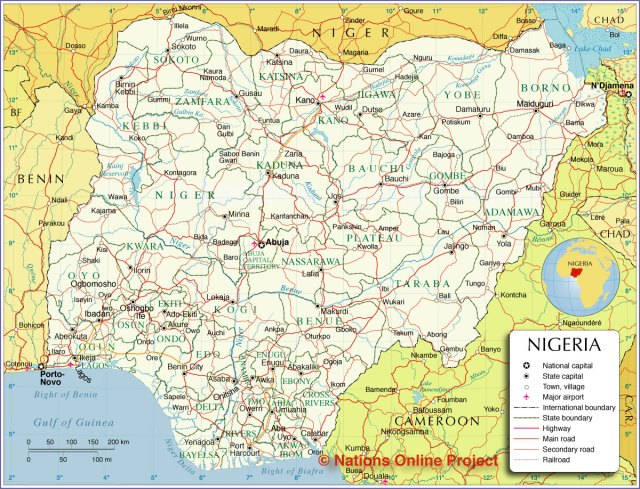
nigeria_mapBoko Haram is an Islamist group, seeking to have Sharia law imposed in the north of Nigeria. The name means something like ‘Western Education is forbidden’, but it has wider resonance of Western values or those who take Western money and don’t act charitably towards the normal people. ‘Boko’ originally meant fake; ‘Haram’ means forbidden, sinful or sacrilege (see the BBC News report on the group). Their base is in the north-eastern states of Yobe and Borno. The Nigerian state response has been heavy handed, with reports of door-to-door raids in Boko Haram strongholds such as the city of Maiduguri. In 2009 raids led to the death of the group’s leader Mohammed Yusuf, and several members were imprisoned, but in September 2010 they freed several prisoners from a jail, and the group continued under the leadership of Abubaker Shekau with new attacks on the city of Jos and on barracks in the capital of Abuja. Their strategies have included remote detonation of bombs, suicide bombers, and shootings. (For a timeline see The Guardian). The group have claimed responsibility for numerous further attacks, some of which are further from their northeast bases, including the bombing of the Abuja police headquarters in June 2011, the bombing of the UN building in the capital in August 2011, various attacks on churches, and are likely behind the attack on the Emir of Kano just yesterday (19th January 2013). The Emir is a Muslim religious leader, but Boko Haram have attacked Muslim leaders before for their criticism of the group. The Emir survived the attack, but his guards and driver were killed.

Kano has changed since the 2012 attacks, with a much stronger security presence, and many Christians moving south. A number of aid agencies or foreign government workers have been relocated to Abuja or elsewhere in the country. Boko Haram have often started their attacks with men on motorbikes – easier to manoeuvre through road blocks and Nigeria’s traffic, and quick to use for escape afterwards. Many of the 20th January 2012 Kano attacks were launched in this way, as was the attack on the Emir. This has led to increased police and military presence in the city, with riders forced to dismount and wheel bikes through checkpoints. There are various reports of police and military atrocities following attacks, which often produce more supporters for the group being targeted.

I plan to talk about the January 2012 attacks in my AAG paper this year. There is an abstract of that paper here. I also plan to discuss them in a seminar I’m giving at the L.S.E. on 19 February. Both talks are under the title of ‘Urban Territory’ – trying to see how the work I’ve done on territory as a political technology can begun a productive discussion with literature on the urban and urbanisation. Some very preliminary ideas were explored in the Durham workshop on ‘Urban Worlds’ in December 2012 (audio here and some comments and images here). In that talk I said very little about Nigeria, but I’ve begun reading the academic literature that is starting to emerge on Boko Haram, and would welcome further suggestions.

Posted in Politics, Territory, urban/urbanisation | 5 Comments

Levi Bryant on the contents of his forthcoming book Onto-Cartography.

larvalsubjects's avatarLarval Subjects .

For anyone who’s interested, here’s the table of contents for Onto-Cartography.  I’m about 2/3rds of the way through editing it and should, with luck, send it to Edinburgh this week.

Acknowledgments

Introduction:  For a Renewed Materialism

Part I.  Machines

1.         Towards a Posthuman Media Ecology

1.1.      Common Prejudices About Machines

1.2.      Varieties of Machines

1.3.      Posthuman Media Ecology

2.         What is a Machine?

2.1.      Machines Operate

2.2.      Machines are Split Between Their Powers and Products

2.3.      Machines are Binary Machines:  Trans-Corporeality

3.         Alien Phenomenology

3.1.      Machines are Structurally Open and Operationally Closed

3.2.      Alien Phenomenology, Second-Order Observation, and Post-Vitalist Ethology

4.         Machinic Assemblages and Entropy

4.1.      Machinic Assemblages

4.2.      Assemblages and Individuals

4.3.      Extended Minds and Bodies

4.4.      Entropy


Part II: Worlds


5.         The Structure of Worlds

5.1.      Ecologies of Worlds

5.2.      Content and Expression

6.         Topologies of Time and Space

6.1.      Space

6.2.      Time

6.3.      Overdetermination

View original post 51 more words

Posted in Uncategorized | Leave a comment

Postdoctoral Fellowship in Geography at NUS

I don’t usually post jobs outside Durham, but this is a good scheme in a department that hosted me as a visitor a few years ago. Please note informal enquiries should go to Professor James D Sidaway (Chair of Search Committee: geojds@nus.edu.sg) or Professor Neil Coe (Head of Dept.: geohead@nus.edu.sg), not to me.

DEPARTMENT OF GEOGRAPHY, NATIONAL UNIVERSITY OF SINGAPORE

INVITATION TO APPLY: POSTDOCTORAL FELLOWSHIPS (Teaching)

The successful candidate will be someone who holds a PhD degree or is awaiting conferment (the PhD must be awarded by the time that the post is taken up).  Candidates should be able to teach on one or preferably both of the following courses: (a) A Singapore Studies module, Changing Landscapes of Singapore (introductory undergraduate level); (b) Global Cities (postgraduate level).

More information on the modules offered by the Department of Geography can be found at http://www.fas.nus.edu.sg/geog/  

Terms and Conditions

The terms and conditions for the Postdoctoral Fellowship (PDF) (Teaching) are as follows:

1.    Contract to be awarded for 12 months, starting no later than 1st July 2013.

2.    An Annual Base Salary of up to S$66,000 per year.

3.    An allowance of S$500 a month as contribution towards housing expenses for non-citizens (i.e. non-Singaporeans) and their spouses who do not own any property in Singapore and whose spouses are not in receipt of any form of housing benefits from their Singapore employers. 

4.    Singapore citizens and permanent residents are eligible for provident fund benefits. 

5.    Travel Assistance, payable once only, as follows.

•    $2,000 for the Postdoctoral Fellow

•    $2,000 for spouse

•    $1,000 for each eligible child, subject to a maximum of 3 children.  Children must be less than 18 years of age and receiving full-time education.

The above travel assistance is a contribution towards expenses incurred by the appointee and his/her dependants in re-locating to Singapore. Such expenses refer to costs for travel, packing, transportation and insurance of personal and professional effects as well as settling-in expenses.

The travel allowance is contingent upon the Postdoctoral Fellow’s completion of his/her contract. In the event that the appointee does not fulfill the contract, the appointee shall be liable to refund the University a proportionate amount of the travel assistance granted to him/her and his/her dependants on appointment.

6.    Foreign PDFs who are granted Singapore Permanent Residence will continue to receive an allowance of S$500 a month as contribution towards housing expenses.  The allowance will cease if they acquire Singapore citizenship.

7.    Medical benefits in accordance with the Medical Benefit Plan.

8.    Formal vacation leave of 28 days per calendar year.

9.    The balance of time spent between research and teaching for each PDF is about 50-50. The PDF can expect to teach up to 1.5 modules per academic year.

Application

All applications, including details about publications, research interests and teaching areas, as well as the names of two academic referees, should be submitted by 22nd February 2013. The search will continue until an appointment is made. Please address and submit documents to:

Search Committee, Postdoctoral Fellowships (Teaching), Department of Geography, National University of Singapore, 1 Arts Link, Singapore 117570

Email correspondence and attachments should be sent to: geowlw@nus.edu.sg

Informal enquiries to: Professor James D Sidaway (Chair of Search Committee: geojds@nus.edu.sg) or Professor Neil Coe (Head of Dept.: geohead@nus.edu.sg).

Visit our websites at http://www.fas.nus.edu.sg/for information on the Faculty, and http://www.fas.nus.edu.sg/geog/ for information on the Department of Geography and the undergraduate modules on offer.

Posted in teaching, Universities | Leave a comment

Foucault.info

foucaultThe website www.foucault.info has been redesigned with some new material. Lots of useful resources here.

Posted in Michel Foucault | Leave a comment

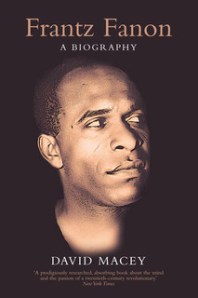
David Macey’s biography of Frantz Fanon

Fanon PB_Philosophy pb DEMYDavid Macey, who sadly died in 2011, wrote an excellent biography of Foucault. His biography of Frantz Fanon was reissued late last year with new material included. Full details here.

Posted in Frantz Fanon | Leave a comment

New Geographies 4: Scales of the Earth reviewed

Issue 4 of Harvard GSD journal New Geographies was on the theme of ‘Scales of the Earth’. You can read a review of it here.

ScalesNew Geographies, 4: Scales of the Earth, edited by El Hadi Jazairy, centers on the concept of scale as an alternative framework to address global concerns and space. Jazairy opens the issue by stating that further investigations on the plasticity of scale — a scale that does not represent a fixed environment but is dynamic and “expands and contracts through the interaction of objects and people” — will allow to structure and study different levels of relationships without falling into the “homogenizing assumptions” that discourses like globalization imply. Characterized by the diversity of its contributors — a photographer, a geographer, an engineer, an environmentalist, a pilot and photographer, a historian, a social and cultural geographer, several architects and landscape designers — the issue carries on with two correlated essays by Robin Kelsey and Nicholas de Monchaux.

Posted in My Publications, The Space of the World | Leave a comment

The editors of the Antipode book series on what the series does.

Antipode Editorial Office's avatarAntipodeFoundation.org

Following a post earlier this week about Gramsci: Space, Nature, Politics – one of the latest titles in the Antipode Book Series – here we’ve a new ‘mission statement’, and invitation, from Book Series editors Sharad Chari and Vinay Gidwani…

The Antipode Book Series explores what it means to think radical geography, broadly considered, ‘antipodally’ as in opposition and from various margins, limits or borderlands.

View original post 374 more words

Posted in Books, Publishing | Leave a comment

Simon Dalby discusses climate change geopolitics.

Jeremy Schmidt's avatarJeremy J Schmidt

Simon Dalby, who is now at the Balsillie School of International Affairs in Waterloo offers his thoughts on Climate Geopolitics after the most recent round of negotiations:

View original post

Posted in Uncategorized | 1 Comment

Speculative Medievalisms e-book

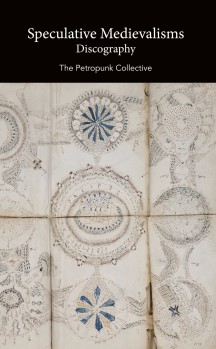
SM_Cover_Front-216x349The Speculative Medievalisms books is now available to for free download or to buy in print. If you do download, consider leaving a donation – free access does not mean no cost to produce.

I was at one of the two workshops that lead to this volume – contributors include Graham Harman, Jeffrey Jerome Cohen, Eugene Thacker, Eileen Joy, Patricia Clough, Michael O’Rourke…

Posted in Books, Graham Harman, Jeffrey Jerome Cohen, Medieval Studies | Leave a comment

Shakespearean Colonial Territories – audio and maps

The audio recording of my talk to the Sociology Department at the University of York is available here. In the talk I discuss two maps – one from Ortelius’s Theatrum Orbis Terrarum (1570) of the Roman Empire:

Ortelius

And this example of a so-called ‘T in O’ map, from Isidore of Seville’s Etymologies.

Isidore T in O map


Posted in Boundaries, Conferences, Politics, Shakespearean Territories, Territory, William Shakespeare | 2 Comments