The editors of the Antipode book series on what the series does.

Antipode Editorial Office's avatarAntipodeFoundation.org

Following a post earlier this week about Gramsci: Space, Nature, Politics – one of the latest titles in the Antipode Book Series – here we’ve a new ‘mission statement’, and invitation, from Book Series editors Sharad Chari and Vinay Gidwani…

The Antipode Book Series explores what it means to think radical geography, broadly considered, ‘antipodally’ as in opposition and from various margins, limits or borderlands.

View original post 374 more words

Posted in Books, Publishing | Leave a comment

Simon Dalby discusses climate change geopolitics.

Jeremy Schmidt's avatarJeremy J Schmidt

Simon Dalby, who is now at the Balsillie School of International Affairs in Waterloo offers his thoughts on Climate Geopolitics after the most recent round of negotiations:

View original post

Posted in Uncategorized | 1 Comment

Speculative Medievalisms e-book

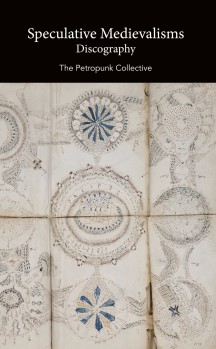
SM_Cover_Front-216x349The Speculative Medievalisms books is now available to for free download or to buy in print. If you do download, consider leaving a donation – free access does not mean no cost to produce.

I was at one of the two workshops that lead to this volume – contributors include Graham Harman, Jeffrey Jerome Cohen, Eugene Thacker, Eileen Joy, Patricia Clough, Michael O’Rourke…

Posted in Books, Graham Harman, Jeffrey Jerome Cohen, Medieval Studies | Leave a comment

Shakespearean Colonial Territories – audio and maps

The audio recording of my talk to the Sociology Department at the University of York is available here. In the talk I discuss two maps – one from Ortelius’s Theatrum Orbis Terrarum (1570) of the Roman Empire:

Ortelius

And this example of a so-called ‘T in O’ map, from Isidore of Seville’s Etymologies.

Isidore T in O map


Posted in Boundaries, Conferences, Politics, Shakespearean Territories, Territory, William Shakespeare | 2 Comments

Earth – rethinking geopolitics

Here’s my abstract for CityState: A Lexical Workshop later this year in Tel Aviv:

Earth

Geopolitics has, today, become effectively a synonym for global politics. Armchair strategists still come up with grand plans for understanding and changing the world; critical geopolitics scholars offer broad analyses of such strategies and the interlinked relations of capital, state power, nationalism and territory. But could geopolitics be rethought in a way that was closer to the etymological roots of the word, yet for progressive political purpose?

Geopolitics literally means politics of the ‘geo’, the earth, land, planet or world. Each of those terms would need to be thought carefully, both in relation to and differentiation from each other, and from a notion of the global. Here the focus is on the question of the earth. A geopolitics that was a politics of the earth, rather than of the globe, might  easily collapse into reactionary politics. Friedrich Ratzel’s notion of Lebensraum; Martin Heidegger’s distinction between earth and world, and his reimagining of autochthony; and Carl Schmitt’s nomos of the earth are ideas that were in each case partnered by deeply unpleasant politics. In the present moment, calls for religious, national or cultural rights to promised lands can be found in Israel’s claims to the West Bank, Argentina’s claim to Las Malvinas, other contested territories such as Western Sahara and Kashmir, and self-determination movements the world over.

But might there be an alternative to such politics and ways of imagining space? What if there were resources in Deleuze and Guattari’s work on geophilosophy, or Elizabeth Grosz’s notion of geopower, to think geopolitics differently? Such a politics of the earth would take into account the power of natural processes, or resources; the dynamics of human and environment; the interrelation of objects outside of human intervention; the relation between the biosphere, atmosphere and lithosphere;  and the complex interrelations that produce, continually transform and rework the question of territory and state spatial strategies. It would be appropriate to the complexities of space and territory in three dimensions, rather than the tendency to imagine political space as a surface, an area. This paper tries to take forward that work of rethinking a politics of the earth.

[Update: the audio recording is now available here.]

Posted in Carl Schmitt, Conferences, Elizabeth Grosz, Felix Guattari, Gilles Deleuze, Martin Heidegger, Politics, Territory | 2 Comments

A video of Graham Harman speaking on Speculative Realism and the Philosophy of Tristan Garcia.

Posted in Uncategorized | Leave a comment

jonescraig's avatarWar Law Space

I’m a little late off the mark on this one, but being so close, I could hardly let it pass without note.

As I’m sure many of you already know, Benjamin Netenyahu over the weekend ordered the eviction and mass arrest of Palestinian and international protestors from the area that the Israeli Military call E1. The protestors had set up camp on Friday – January 11 – in a small but immensely significant piece of land just to the east of Jerusalem. The establishment of the camp at what Palestinians call Bab el Shams had a simple aim: to bring attention to Israel’s plans to illegally build a settlement on this (and other) Palestinian land. The Israeli High Court had issued an order which prohibited the military from taking any action – pending further investigation of the facts – but (and it is unclear how) the order was overturned and within 48…

View original post 789 more words

Posted in Uncategorized | Leave a comment

Cary Wolfe & Claire Colebrook discuss the Anthropocene – first link takes you to a download page for the audio. Looks interesting.

dmf's avatarANTHEM

www.hkw.de/anthropocene Dialogue between Cary Wolfe (Department of English at Rice University, Houston) and Claire Colebrook (Department of English at Penn State University, University Park ). Introduction: Cecelia Watson (Max-Planck-Institut für Wissenschaftsgeschichte, Berlin) – Haus der Kulturen der Welt, 12.01.2013

View original post

Posted in Uncategorized | Leave a comment

Kant’s Geographies – review of Natural Science

karl-friedrich-hagemann-immanuel-kantMy review of the Natural Science volume of Kant’s writings has now been published at the Berfrois website.

Posted in Immanuel Kant | Leave a comment

Sociology at York – Sociology and Space seminar series

On Wednesday I’m going down to York to speak to the Sociology department – their blog has details of the whole term’s seminar programme, all on the theme of ‘Sociology and Space’. It’s a really interesting programme, with people from Geography, Sociology and Politics departments.

My talk on ‘Shakespearean Colonial Territories’ discusses The Tempest – the obvious play, of course – but also says a very little about Othello, and I’m drafting a short part on Pericles and hope to have something to say about Antony and Cleopatra too.

Posted in Conferences, Shakespearean Territories, Territory, William Shakespeare | Leave a comment