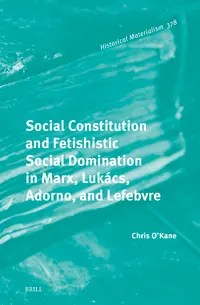
The Marxian theory of fetishism is usually interpreted as a theory of false consciousness, alienation, or reification pertaining to commodities or culture. This book reconstructs how Marx, Lukács, Adorno, and Lefebvre interpret and use the theory of the fetish to explain how capitalist social relations create a supra-individual, autonomous, and inverted form of social domination. These relations transform individuals into bearers of domination, thereby perpetuating capitalist society. The resulting reinterpretations of their respective social theories, and of the theory of the fetish, are crucial for a critical theory of capitalism today.
Part of the Historical Materialism series, where books are published in paperback 12 months later with Haymarket.
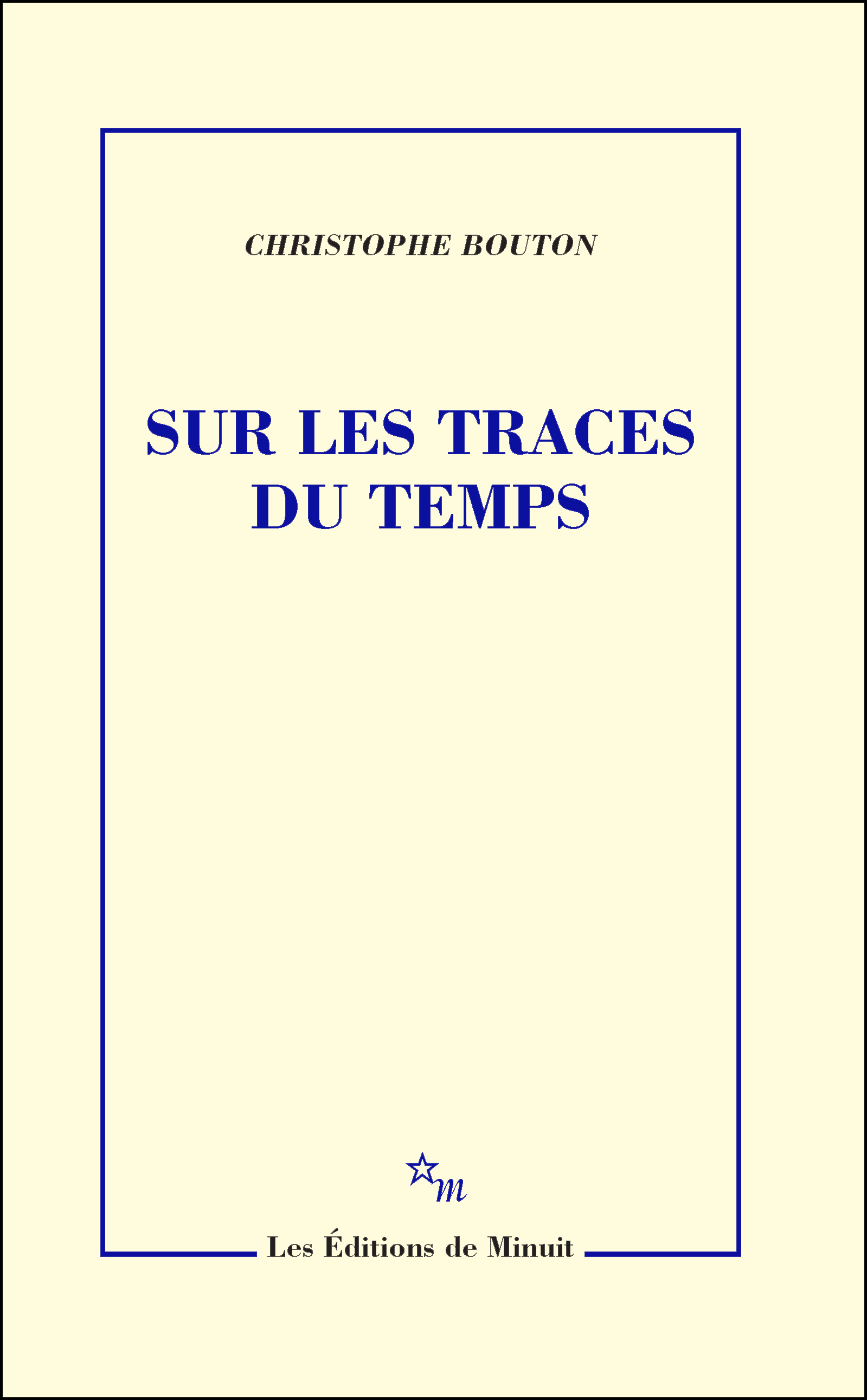
Qu’est-ce que le temps ? Constitue-t-il une réalité autonome ou une simple relation entre les êtres ? Un élément irréductible du monde ou une forme de la conscience, voire une illusion subjective ? S’écoule-t-il vers le passé ou vers l’avenir ? Est-il réversible ou irréversible ? Peut-il même être défini ? Ce livre se propose d’instruire ces questions à nouveaux frais, en s’appuyant sur plusieurs apports récents de la philosophie et des sciences de la nature. Son point de départ est la conviction qu’il faut libérer la pensée du temps du primat ontologique du présent, qui consiste soit à affirmer que seul le présent existe, en reléguant le passé et l’avenir dans le néant, soit à concevoir ceux-ci sur le modèle du présent, dont ils ne seraient que des formes dérivées ou dégradées. L’avenir, le présent et le passé existent tout autant, mais selon des modalités différentes que cette enquête se donne pour tâche d’analyser selon trois catégories principales, unies comme les volets d’un triptyque : la puissance, la présence et la trace. Si ces trois concepts s’appliquent en premier lieu au monde des choses et des événements, la dernière étape de cet ouvrage examine la forme spécifique qu’ils revêtent pour les êtres humains.
I’ve shared news of this major study, of a massive topic – 784 pages! – before. There is now a New Books Network discussion with Ryan Trip. Thanks to JC on bluesky for the link.
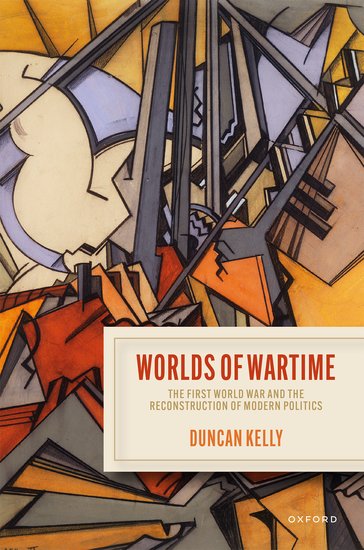
The First World War hardly ended with the formal Armistice in Europe on November 11, 1918, amid the continuing violence of blockades and epidemics, amid numerous forms of reconstruction and revolution. Its legacies, in fact, resonate deeply in our present. Nor is it obvious that it only began on July 28, 1914, just a month after the assassination of the Archduke Franz Ferdinand, in Sarajevo. Rather than these formal legal openings and closings, the beginnings and endings of wartime are many, depending upon the questions we ask, and the frames of reference we provide. For many at the time, the outbreak of what would become the First World War was an inevitability, the result of rising tensions over decades, whether due to the dynamics and systems of international politics within Europe, or a result of the competitive logic of imperial politics as practised by Europe outside its borders, rebounding back upon it. This resulted in equally persistent ideas down to our own time, about the inevitability that followed from victory; namely, that to be successful and realistic, modern politics and economics must necessarily be fixed in the form of a democratic nation-state. But this new world of democracy, forged in war, could easily become its own sort of intellectual prison-house, curating and limiting political and economic possibilities just as securely as any form of tyranny. That the tyranny of victory was a danger recognized by many of the leading analysts of the First World War at the time, helped to foster a continued search for ideas that might keep the worlds of politics and economics open to alternative futures, rather than being closed by the force of a few great powers or the presentational fiat of democracy. Those hopes paved the way for the wide variety of anti-imperial, federal, diasporic, and revolutionary forms of political and economic arrangements, which were designed to challenge the seemingly inevitable rise of the nation-state.
Worlds of Wartime: The First World War and theReconstruction of Modern Politics provides a new intellectual history of the many and varied ideas about politics and economics that were made, and remade, through wartime and revolution, by political and economic thinkers working across the globe, from the 1880s to the 1930s. Spanning continents, connecting networks of people, power, and possibilities, in new and often experimental ways, the worlds of wartime saw histories of modern politics and economics revised and updated, used as well as abused, in myriad attempts to interpret, explain, understand, explore, and indeed to win, the war. This book takes the measure of a great many of these overlapping visions, and it does so by trying to learn some of the lessons that literary and artistic modernism can teach us about the complexities of political and economic ideas, their contingency and uncertainty, and how they are fixed into focus only at very particular moments. Moving from the stylised narratives of European and American political theory and intellectual history, through to the futurist politics of revolutionaries in Ireland, India, Ottoman-Turkey, and Russia, this book also tracks arguments and strategies for Pan-African diasporic federation, alongside German and American debates about federal pasts and federal futures. From the invention of the world economy, to the reality of multiple war economies, from revolutionary conjunctures to ideas of democracy and climate catastrophe in the Anthropocene today, Worlds of Wartime tells the story of just how strongly modern politics in general, and modern ideas about political and economic possibility, were fixed by the intellectual turbulence wrought during the First World War.
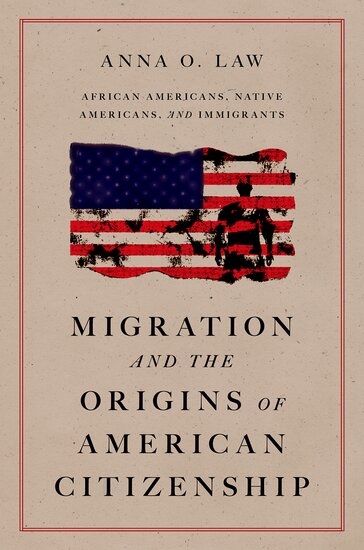
Since the late nineteenth century, the US federal government has enjoyed exclusive authority to decide whether someone has the ability to enter and stay in US territory. But freedom of movement was not guaranteed in the British colonies or early US. By contrast, voluntary migrants were met with strict laws and policies created by colonies and states, which denied free mobility and settlement in their territories to unwanted populations.
Migration and the Origins of American Citizenship presents a story of constitutional development that traces the confluence of the logics of slavery and settler colonialism in early legal rulings and public policy about migration and citizenship. The book examines the division of labor between the national and state governments that endured for over a century, reasons why that arrangement changed in the late nineteenth century, and what the transformation meant for people subject to those regimes of control. Drawing into one study the migration policy histories of groups of people that are usually studied separately, and combining the methodologies of political science, history, and law, Anna O. Law reveals the unmistakable effects of slavery and Native American dispossession in modern US immigration policy.
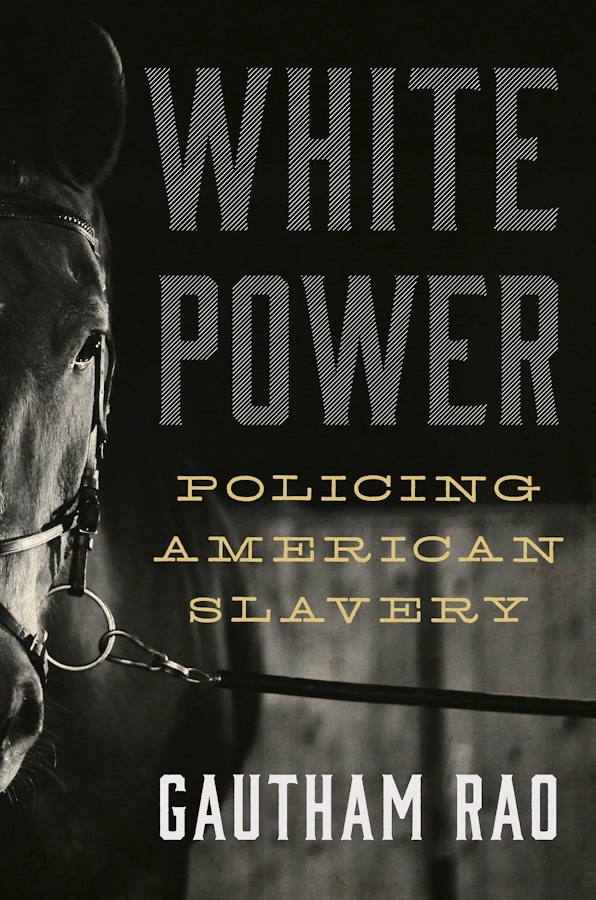
Beginning in the colonial era and growing through the American Revolution and the Southern plantation system, slaveholders’ violent police regime continued after Emancipation, through Reconstruction, to today. Moving across time, space, and place, White Power uncovers how slaveholders created their own white supremacist police and government to deny Black people rights, power, and humanity.
Legal historian Gautham Rao introduces us to laws that empowered white people to forcibly exercise their desired racial superiority over Black people, shows how they spread from the South throughout the nation, and traces the rebellions, fugitivity, activism, and legal systems that challenged them. Rao’s narrative includes slaveholders, lawmakers, and the Ku Klux Klan, dramatic escapes by runaway enslaved people, abolitionist activism in courtroom showdowns, and pitched battles between white paramilitaries and enslaved rebels. He offers a new interpretation of the history of policing in the US, centering the institution and legacy of slavery and speaking to the origins of today’s persistence of white vigilance, white supremacist militia groups, and white racist cops determined to maintain power over Black people by force. Equally determined, however, was Black Americans’ refusal to accept it.
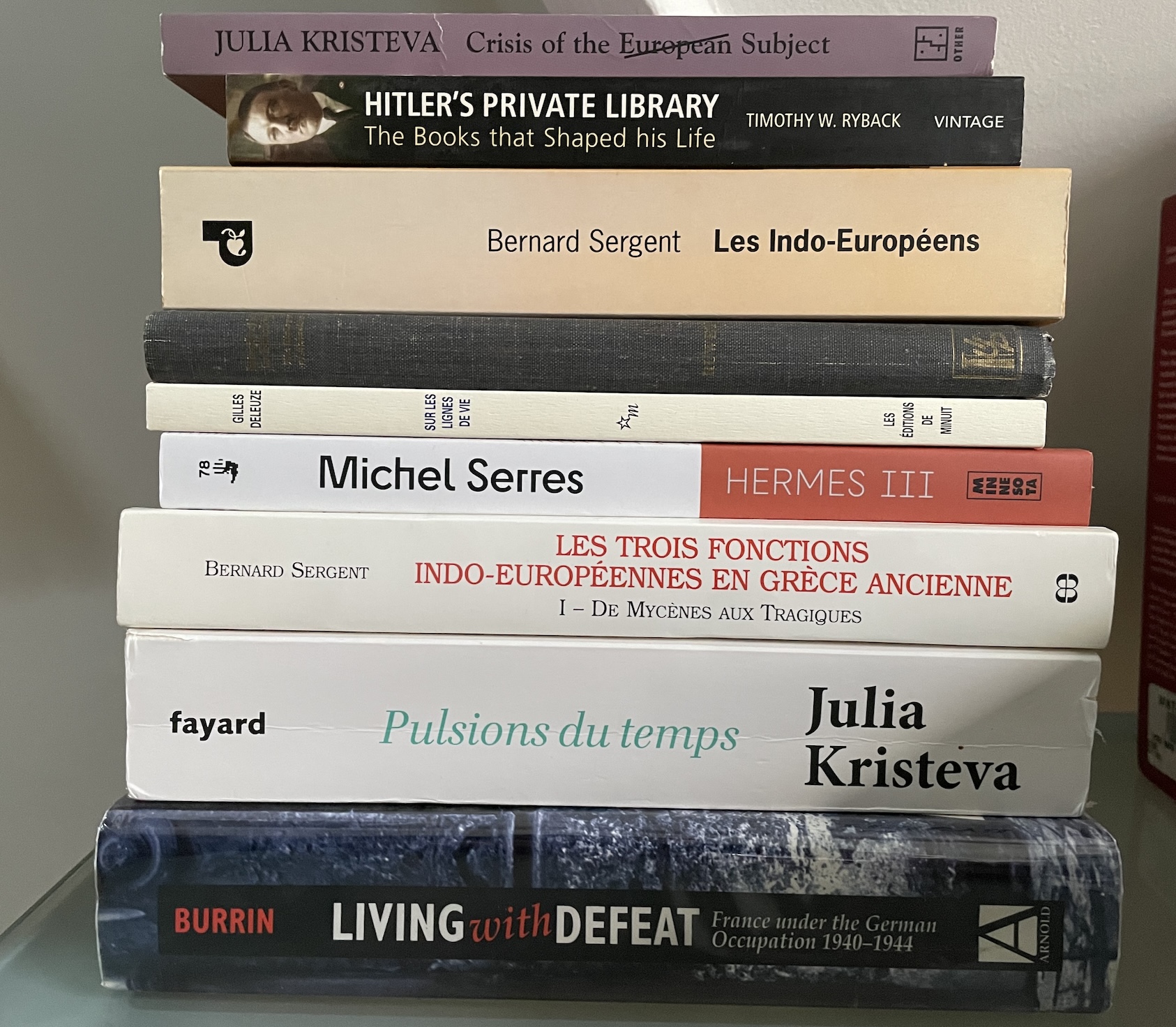
Mostly bought second-hand, but including Michel Serres, Hermes III, sent by University of Minnesota Press, and Gilles Deleuze, Sur les lignes de vie. The one without a clear title on the spine is Jean-Claude Ruwet, Introduction to Ethology: The Biology of Behaviour. Ruwet’s work on territoriality was important for some of the French theorists I’m interested in. The others generally relate to my current Indo-European thought project.
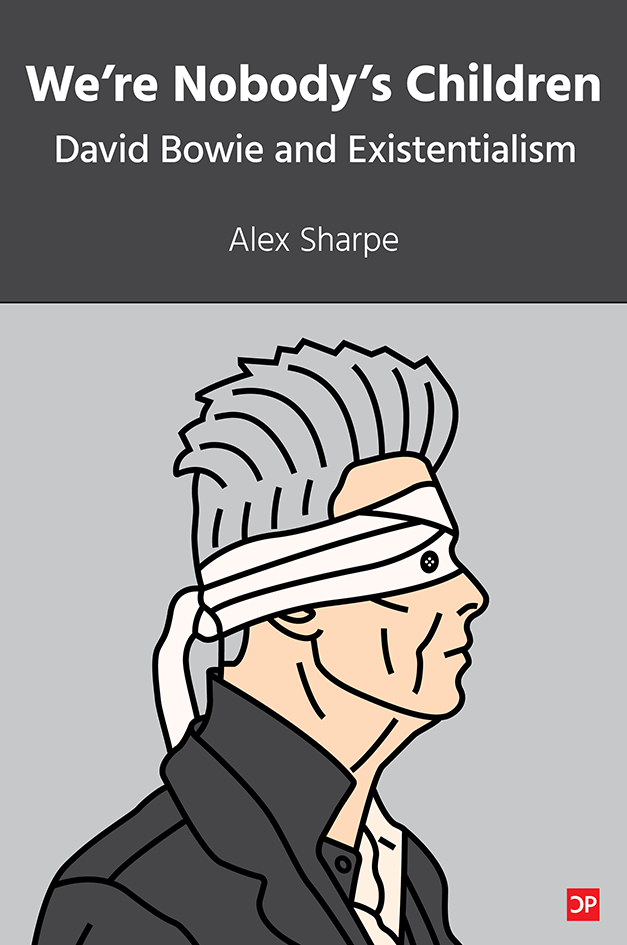
This book brings existentialist philosophy (atheistic and Christian) to life through the artistic life of David Bowie. Working with Søren Kierkegaard, Friedrich Nietzsche, Martin Heidegger, Jean-Paul Sartre, Albert Camus, and Simone Weil, it both explains different existentialist ideas (authenticity, anxiety, ethics, spirituality and death) and applies them to Bowie. In doing so, it sharpens our understanding of these ideas and of tensions both within existentialism and between it and some other philosophical approaches. In particular, it explores what it means to live an existentially authentic life, and it makes the case that Bowie, while he certainly ‘fell’ at times, can be understood as an exemplar of such a life. For David Bowie’s life and work can be read as a meditation on themes of alienation, loneliness, abandonment, fear, anxiety, meaninglessness, freedom and mortality.
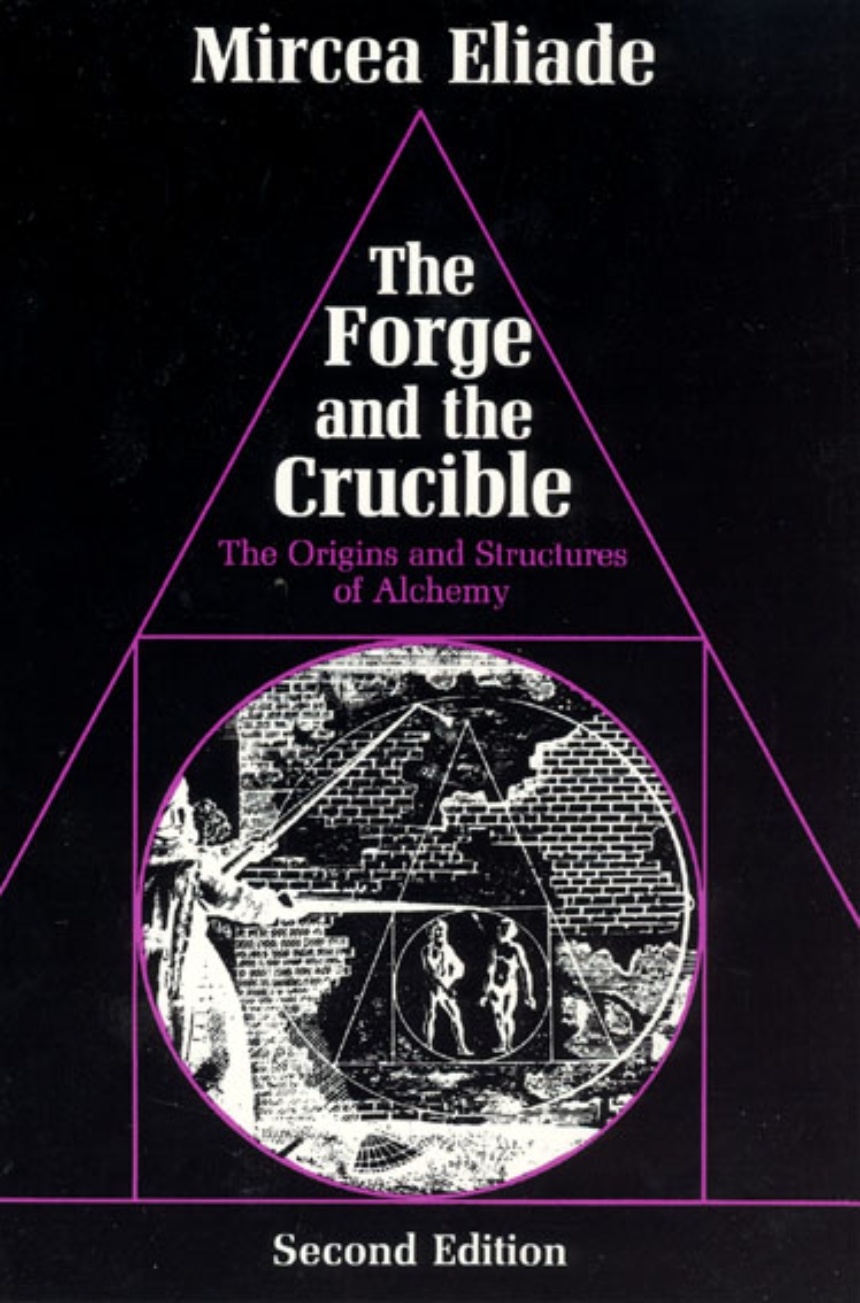
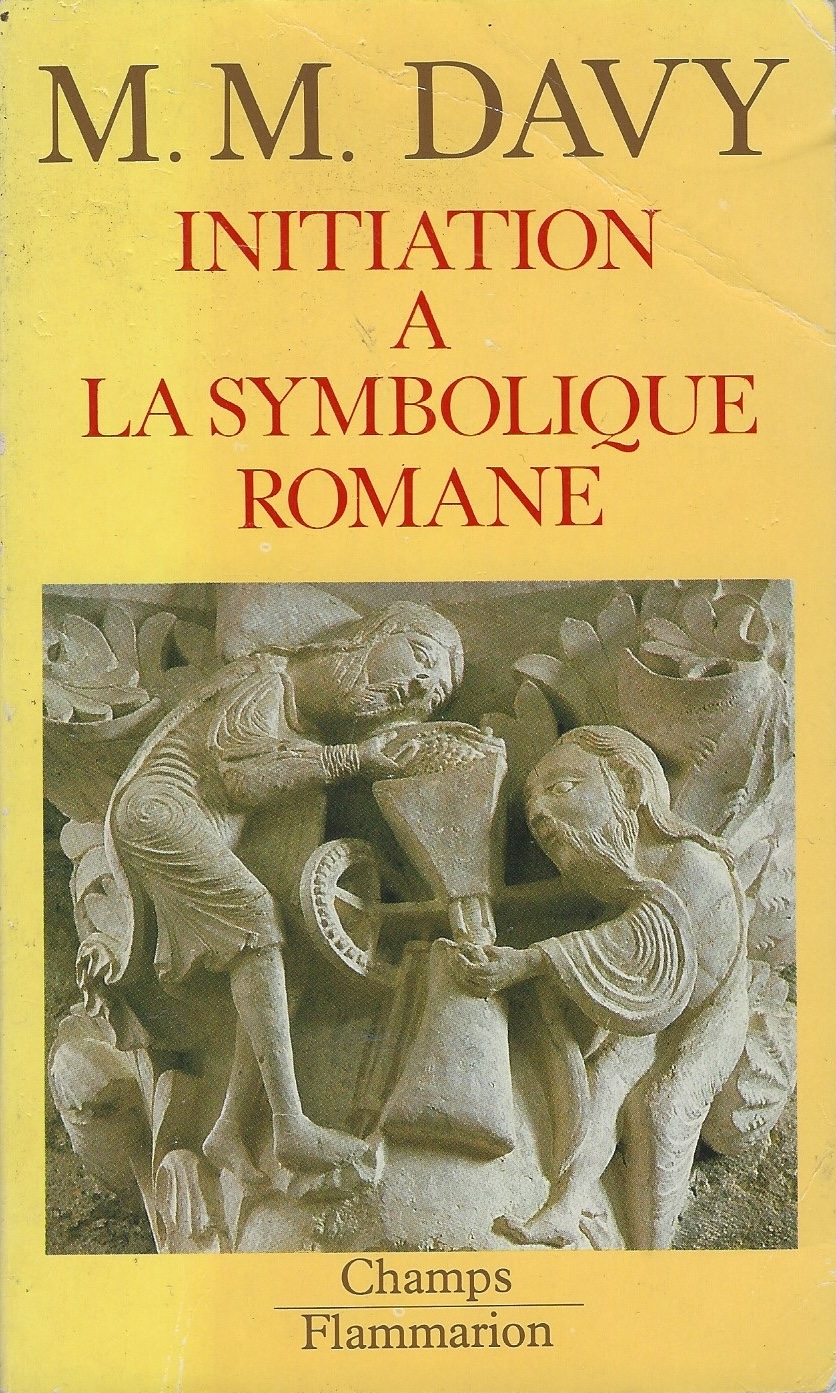
Mircea Eliade, The Forge and the CruciibleM.M. Davy, Initiation à la symbolique romane (XIIe siècle)
Among many other topics, the Romanian historian of religion Mircea Eliade wrote about alchemy. His 1937 book Cosmologie Şi Alchimie Babiloniană was translated into French as Cosmologie et alchimie babyloniennes, but only in 1991. A substantial part of this text appeared in English in 1938 in the first volume of the Zalmoxis journal which Eliade edited. Although this was an important early book on the topic, a later book circulated much more.
This was Forgerons et alchimistes, first published in French in 1956. It was not entirely new, since it used and expanded material from both Cosmologie and the earlier Alchimia Asiaticǎ (see Forgerons et alchimistes, pp. 37-38). This blend of translation and new material was quite common as he tried to rebuild a career in France after the Second World War and he made his work available in French, and later English. Unable to return to newly Communist Romania because of his past links to the fascist Iron Guard and the Antonescu dictatorship, Eliade moved to Paris from Lisbon, where he had been working for the Romanian government as a cultural attaché. With the support of Georges Dumézil and Henri-Charles Puech, he taught at the École Pratique des Hautes Études. As well as reworking material from earlier Romanian publications in French, he was beginning to write directly in that language. I will be discussing the network of academics, journals and publishers which supported him in my book on Dumézil and Benveniste.
Forgerons et alchimistes was the last book which came from Eliade’s decade in Paris, before he moved to the University of Chicago. Eliade notes that in updating it he made use of translations of Chinese material, articles in the Ambix journal – founded in 1936 by the Society for the History of Alchemy and Chemistry – and the writings of Carl Jung, who had met Eliade through the Eranos conferences held in Ascona, Switzerland. It was translated as The Forge and the Crucible over twenty years later, shortly after Eliade had revised the French version.
I was greatly surprised when preparing a new edition in 1977 to realise that I had filled a whole shelf with recent monographs and articles, to which were added several files of notes and extracts. (I haven’t yet dared to burn them, as I did with the files and notes of many works, from the second edition of Shamanism to the third volume of Histoire des croyances et des idées religieux.) (Eliade, Autobiography Volume II, p. 172).
The original edition of Forgerons et alchimistes appeared in the ‘Homo Sapiens’ series, directed by Marie-Madeleine (sometimes Magdeleine) Davy. She was a writer on medieval mysticism, a former student of Étienne Gilson. She was born in 1903 and died in 1998. Some publications appear as M.M. or M.-M. Davy – presumably as a reaction to a male-dominated academy. Other authors in the ‘Homo Sapiens’ series included Henry Corbin, Jean Grenier and Gabriel Marcel.
Davy’s book Essai sur la symbolique romane, revised as Initiation à la symbolique romane (XIIe siècle), which was in her series, is an interesting study of medieval imagery, artefacts, texts and architecture. A summary of some of its argument can be found in an article in Roger Caillois’s multilingual UNESCO journal, Diogenes, as “The Symbolic Mentality of the Twelfth Century”. Although best known as a medievalist, writing about Bernard of Clairvaux, William of Saint Thierry, Pierre de Blois and others, Davy also wrote a book on Marcel, Un Philosophe itinérant, books about Nikolai Berdyaev and Henri Le Saux (Swami Abhishiktananda), and also edited a collection of Le Saux’s writings. (As far as I’m aware, of these books only the one on Berdyaev is in English.)
Davy is an intriguing figure who was active in the French resistance to Nazi occupation, but who rarely wrote about this. Her links with Eliade, and to a lesser extent, Corbin, are therefore surprising. She was also a friend of Simone Weil, and after Weil’s death was involved in the collection of her papers to create an archive and the posthumous publication programme. Davy wrote the first book on Weil, a short study first published in English as The Mysticism of Simone Weil, based on earlier French articles but only later published as a book in French. On this, Brenna Moore’s work is very useful, especially Chapters 3 and 4 of her Kindred Spirits: Friendship and Resistance at the Edges of Modern Catholicism, and a shorter piece online. Jean Moncelon’s tribute is also helpful. Moore however only briefly mentions the friendship between Davy and Eliade (Kindred Spirits,p. 142), though notes the contrast between their politics:
In the face of anti-Semitism and authoritarianism, she was an active resister: forging documents for the safe escape of Jews, political prisoners, and airmen; shifting her teaching to include Judaism; and convening conferences that helped ensure Jewish, Russian, and Islamic scholarship was published in the French presses. We are missing a great deal of the politics in the history of the comparative study of religion because stories almost always exclude people on the margins of its intellectual history—that is, women. Davy’s work and insights did not emerge from any privileged vantage point as a woman, but her borderland position in relation to the mainstream certainly brought a new perspective. When we include women like Davy in our scholarship, not only do we diversify intellectual history, but familiar fields—comparative religion, theology, philosophy of religion—actually look different. In her realism, scholarship, and political action, she stood with a community that worked against both the theosophists and New Agers, who spurned serious linguist study and careful attention to differences and politics, as well as the militants, nationalists, and xenophobes, who believed in blood purity and were enraptured by the dream of Catholic renewal (p. 143).
Davy briefly mentions her friendship with Eliade in her memoir, Traversée en solitaire (p. 134). She says she got to know Eliade during his decade in Paris, but that after he moved to Chicago she saw him only rarely. She says that one of these later meetings was in Ascona. It was through Eliade that she met Dumézil. The long second part of her memoir, “Rencontres et croisements”, gives some interesting detail on her situation within a wider network of scholars in Paris, including many philosophers and historians. She mentions, for example, Georges Bataille and Corbin (pp. 123-24, 139-42). But the third part of the memoir, “Solitude et paradoxes”, indicates how important it was for her own work to be alone. This part comes with two epigraphs, from Cicero, “Man is never less lonely than when he is alone”* and Lev Shestov, “The most intense spiritual work is done in absolute solitude” (p. 173).
References
Marie-Magdeleine Davy, The Mysticism of Simone Weil, trans. Cynthia Rowland, London: Rockliff, 1951.
M.M. Davy, Essai sur la symbolique romane, Paris: Flammarion, 1956; revised edition as Initiation à la symbolique romane (XIIe siècle), Paris: Flammarion, 1964.
M.-M. Davy, Un Philosophe itinérant: Gabriel Marcel, Paris: Flammarion, 1959.
Marie-Madeleine Davy, “La mentalité symbolique du XIIe siècle”, Diogène 32, 1960, 111-22; “The Symbolic Mentality of the Twelfth Century”, trans. Wells F. Chamberlain, Diogenes 8 (32), 1960, 94-106.
M.-M. Davy, Nicolas Berdiaev: L’homme du huitième jour, Paris: Flammarion, 1964; Nicolas Berdyaev: Man of the Eighth Day, trans. Leonora Siepman, London: Geoffrey Bles, 1967.
Marie-Madeleine Davy, Traversée en solitaire, Paris: Albin Michel, 1989.
Mircea Eliade, “Metallurgy, Magic and Alchemy”, Zalmoxis: Revue des études religieuses 1, 1938, 85-129.
This is the 55th post of a weekly series, posted every Sunday throughout 2025, and now entering a second year. The posts are short essays with indications of further reading and sources. They are not as formal as something I’d try to publish more conventionally, but are hopefully worthwhile as short sketches of histories and ideas. They are usually tangential to my main writing focus, a home for spare parts, asides, dead-ends and possible futures. I hope there is some interest in them. They are provisional and suggestions are welcome. A few, usually shorter, pieces in a similar style have been posted mid-week. I’m not sure I’ll keep to a weekly rhythm in 2026, but there will be at least a few more pieces.
The full chronological list of ‘Sunday histories’ is here, with a thematic ordering here.
Ranging from Italian unification to the aftershocks of Covid-19, and drawing on architectural records, medical history, and the author’s own travels, Terra Infecta reveals the lived realities of grand schemes, traces of vanished communities, and forgotten histories of collective organisation and resistance.
In Terra Infecta, Andrea Bagnato tells an unfamiliar story about a well-known place. Since the early days of tourism, the cities and landscapes of Italy have been bywords for beauty and grandeur. But, at home and abroad, the same places have also been haunted by associations with disease and uncleanliness, often more to do with politics than conditions on the ground.
In this gripping narrative study, Bagnato shows how the modern quest for sanitation shaped Italy’s urban and rural landscapes, propelling major transformations from the draining of the wetlands around Venice, to demolitions and replanning in Naples, to the expulsion of the inhabitants of ancient Matera. He argues that current north–south inequalities are founded on spurious medical narratives, and focuses on the real impact on the people caught in their ministrations.
Andrea Bagnato is an architect and writer living in Genoa. He has taught at the Architectural Association in London, Piet Zwart Institute in Rotterdam, and DAAS in Stockholm, and co-edited the books Rights of Future Generations (Hatje Cantz, 2022) and A Moving Border: Alpine Cartographies of Climate Change(Columbia University Press, 2019). Rose Facchini interviewed him about his new book Terra Infecta: Disease and the Italian Landscape (Mack, 2025), a counterhistory of the urban and rural landscapes of Italy, charting the disappearance of the Venetian wetlands, urban renewal and displacement in Naples and Matera, and protocols of containment in Milan. It is a narrative study that shows how sanitation and its metaphors were central to Italy’s internal colonialism and how the notion of a pathological “south” opposed to a functional “north” persists there just as elsewhere.
We often idealize the university as a sanctuary for disinterested reason, where material concerns are set aside in favor of higher principles. Yet when we remember our own college experiences, what springs to mind are not just lofty concepts but also material realities: cramped dorm rooms and musty library stacks, gothic towers and freshly mowed quads.
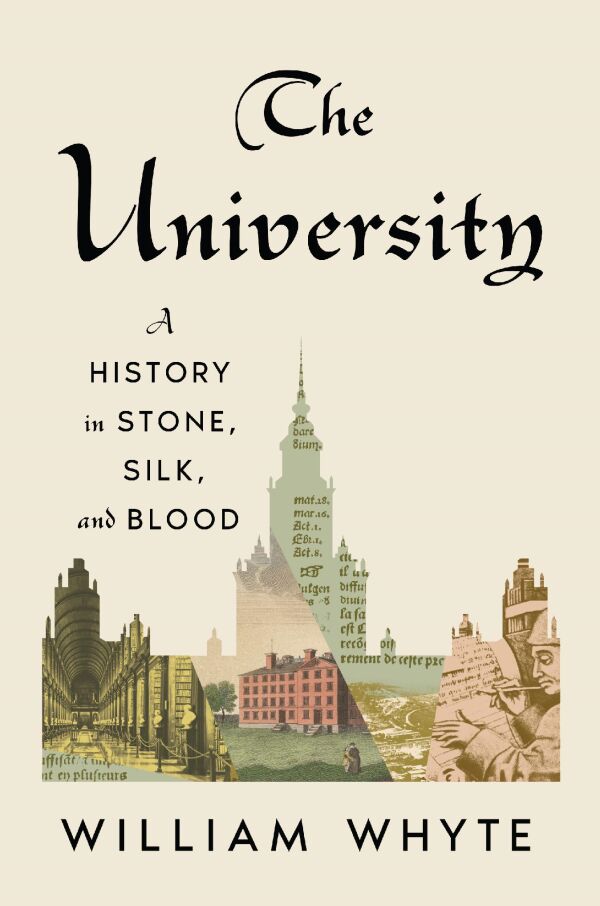
The University puts such seemingly inconsequential details at the center of the institution’s 900-year history. Constructing each chapter around an emblematic material—straw, stone, flesh, blood, silk, paper, iron, and concrete—William Whyte traces the intimate connections between the university’s shifting physical form and its evolving social and cultural meanings. From the medieval University of Paris, where students purchased bundles of straw to use as chairs in otherwise-unfurnished classrooms, to the ocean of concrete at postcolonial Nigeria’s Obafemi Awolowo University, Whyte shows how competing visions of higher learning left their imprint on generations of university architecture, landscaping, and furniture. Along the way, he highlights perennial fears that, within the social space of the university, the life of the mind would recede before worldly interests: that student bloodlines would be tainted by racial intermixing, that courting donors with buildings named in their honor would become more important than research and education, that the allure of powdered wigs and silk gowns would undermine scholarly discipline.
A richly textured chronicle, The University concludes that, even in the age of remote learning, the college campus is irreplaceable. The future of higher education includes fiber-optic cables, but stone, brick, and steel are here to stay.