
 Thanks to Rory Rowan for letting me know that Simon Critchley will be speaking about Hamlet in London on 29th November. Details here.
(there is a video of his talk on this play – not sure if it is same one, but it’s Critchley on Hamlet – here)
Thanks to Rory Rowan for letting me know that Simon Critchley will be speaking about Hamlet in London on 29th November. Details here.
(there is a video of his talk on this play – not sure if it is same one, but it’s Critchley on Hamlet – here)
I only finished the Greenblatt book this morning, but went straight onto another Shakespeare study. Here’s an interesting passage (the book it refers to by Crystal is Think on My Words: Exploring Shakespeare’s Language):
No less groundless is the argument that Shakespeare’s vocabulary was far greater than someone with only a grammar-school education could have possessed. As David Crystal, the leading expert on Shakespeare’s language, has shown, the myth that ‘Shakespeare had the largest vocabulary of any English writer’ is hard to dispel. Impressive claims are often tossed about, such as that Shakespeare used as many as thirty-thousand different words. It’s true if you count variants (both ‘cat’ and ‘cats’, or ‘say’ and ‘says’); otherwise, his vocabulary was about twenty thousand words. It’s a sizeable figure but not all that surprising, given the vast range of subjects treated in his plays and poems as well as how much of his work survives (the complete Works runs to just under nine hundred thousand words). Crystal also notes that ‘most of us use at least 50,000 words’ out of the roughly one million that are available in English today – and yet few of us with working vocabularies twice Shakespeare’s can boast of having written anything of the order of Romeo and Juliet.
James Shapiro, Contested Will: Who wrote Shakespeare? pp. 312-3.
Update: Shapiro offers a critical take on the new film Anonymous, here.
With its crush of small factories, dockyards, and warehouses; its huge food markets, breweries, print shops, hospitals, orphanages, law schools, and guildhalls; its cloth makers, glassmakers, basket makers, brick makers, shipwrights, carpenters, tinsmiths, armorers, haberdashers, furriers, dyers, goldsmiths, fishmongers, booksellers, chandlers, drapers, grocers, and their crowds of unruly apprentices; not to mention its government officials, courtiers, lawyers, merchants, ministers, teachers, soldiers, sailors, porters, carters, watermen, innkeepers, cooks, servants, peddlers, minstrels, acrobats, cardsharps, pimps, whores and beggars, London overflowed all boundaries. It was a city in ceaseless motion, transforming itself at an unprecedented rate.
Stephen Greenblatt, Will in the World: How Shakespeare became Shakespeare, p. 164.
 Interesting piece in The Guardian on the contested meanings of the Guy Fawkes mask.
Over at the Society and Space open site I link to, and briefly discuss, a couple of interesting reflections on publishing today.
A report on her speech here.
Some photos from the occupation – taken 30th October.
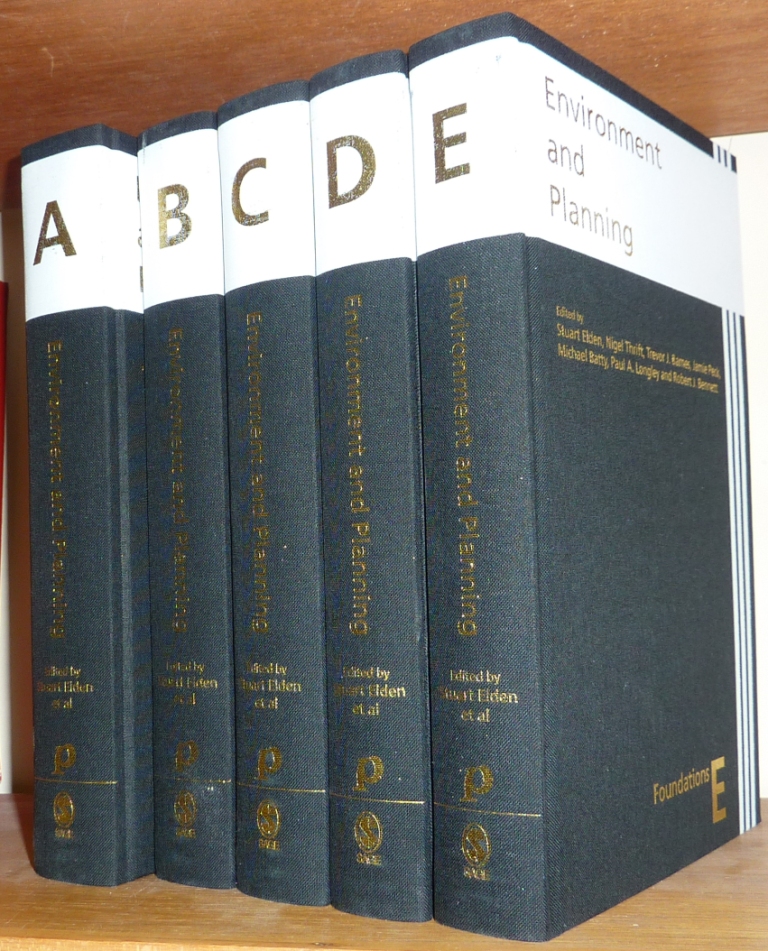 The Sage/Pion Environment and Planning Collection is now
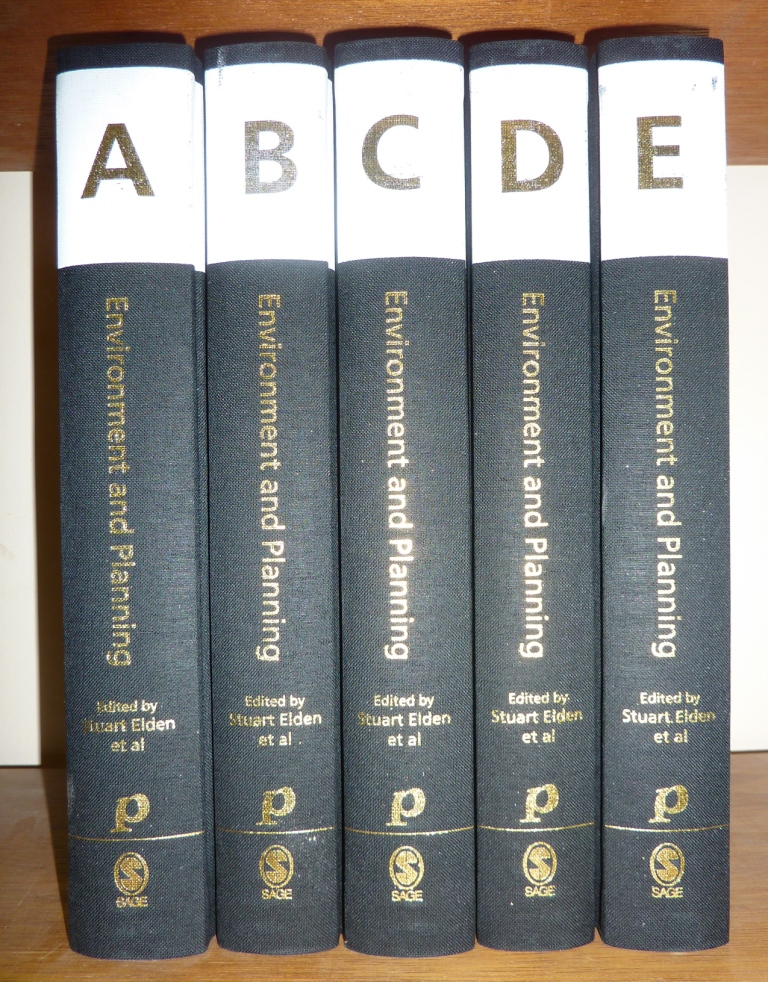 available. As I’ve said before, this collection is intended for libraries. The collection draws from the four Environment and Planning journals, with the first four volumes devoted to a single journal each, and the fifth drawing from all four across general themes. The introduction to Vol D: Society and Space – the only part of the volume that is not available in the journal’s archive – is available as a free download here.
I mentioned his sad death a few weeks back. There is now an obituary in The Guardian.
“Spaces of Capital, Moments of Struggle”
Eighth Annual Historical Materialism Conference, Central London, 10–13 November 2011
Conference website here.


