New York Times and philosophy

Given the previous discussion of analytic/continental philosophies, it may be of interest that the New York Times has launched a philosophy blog…

The first post is by Simon Critchley, who will also serve as moderator. Brian Leiter has already responded in outrage.

Thanks to the Immanence blog for bringing this to my attention. As Adrian says, I’m getting out of the way.

Posted in Uncategorized | Leave a comment

Tariq Ali and Citizenship without Community – audio files

Tariq Ali’s speech at Middlesex yesterday is available as an audio file – Kentucky Fried Education

this site also has the audio files from the Citizenship without Community conference held last week

Posted in Conferences, Events, Universities | 1 Comment

Letter to Middlesex

From: Stuart Elden
Sent: Sun 16/05/2010 08:08
To: michael@partridges.org.uk; A.Gajownik@mdx.ac.uk; A.Durant@mdx.ac.uk; thelindens@googlemail.com; andrew.parsons@rlb-law.com; avrobinson1@tiscali.co.uk; l_spence1@sky.com; Bridget.Rulski@guardian.co.uk; colin.hughes@guardian.co.uk; T.Cockerton@mdx.ac.uk; P.A.Johnson@mdx.ac.uk; jritterman@blueyonder.co.uk; dinagray@btinternet.com; j.alleyne@mdx.ac.uk; geoff.lambert2@ntlworld.com; W.Ahmad@mdx.ac.uk; J.Compton-Bishop@mdx.ac.uk; j.mulroy1@btinternet.com; K.A.Bell@mdx.ac.uk; lorna.cocking@btinternet.com; M.House@mdx.ac.uk; M.Keen@mdx.ac.uk; m.driscoll@mdx.ac.uk; PeterCheeseman1@aol.com; Peter.Thomas2@justice.gsi.gov.uk; RS1000@live.mdx.ac.uk; stephen.hand@lr.org; s.knight@mdx.ac.uk; T.Kelly@mdx.ac.uk; T.Butland@mdx.ac.uk; e.esche@mdx.ac.uk
Cc: savemdxphil@gmail.com
Subject: Injunction

Dear Governors and Senior Managers at Middlesex  

How disappointing that you have resorted to legal means to address the situation at your university. While clearer communication and negotiation could have prevented this in the first place, and continued discussions brought this to a different conclusion, you have turned to threats to clear the immediate situation. The occupation of Mansion house is over, so you have achieved a short-term aim.  

However it is clear that Middlesex University’s reputation has been severely damaged, perhaps irrevocably, by your management style. I cannot remember a situation like this where the national and international outrage has been so strongly felt. Your decisions alone were bad enough, but your recent actions have compounded them.  

I understand that the campaign against your decision will continue. I will be pleased to give it what support and publicity I can.  

Yours sincerely,  

Stuart Elden    

Professor Stuart Elden, Geography Department, Durham University

Posted in Universities | Leave a comment

“the occupation is over, the campaign continues”

Peter Hallward reports on the situation at Middlesex

http://savemdxphil.com/2010/05/15/the-occupation-is-over-the-campaign-continues/

Posted in Universities | Leave a comment

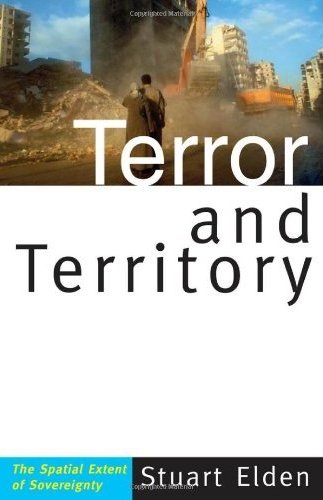
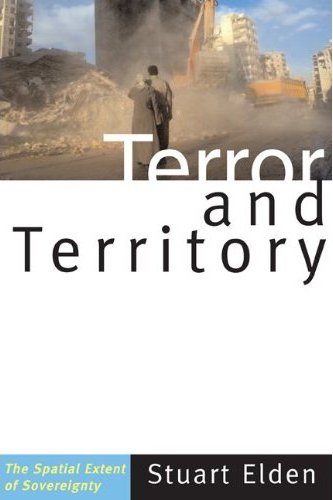
Don’t judge a book by its covers…

I am not sure what is going on here. I’ve just found – on Amazon – both these images. The one on the left is the actual book cover; the one on the right I’ve never seen before. Leaving aside the colour variation which I’ve not tried to fix, there is quite a change in the text. I never really liked this cover, which always struck me as confused. The earliest version I saw had an even worse colour scheme – red and yellow, which I managed to convince them was the colour of fast food. That was the only thing they budged on. But the text positioning – which I asked to have changed – was always as the one on the left. So, where did Amazon get the variant from?


Posted in My Publications, Territory | Leave a comment

Red Pepper on Middlesex

Jeremy Gilbert in Red Pepper on the Middlesex situation

About a month ago I was chatting to a friend, and happened to mention the vague rumours I’d heard that Middlesex University, North London, was on the point of closing its Philosophy programmes. Even as the words came out of my mouth, I found myself unable to believe them. I said, ‘I must have got that wrong’, the thought was not only shocking but simply absurd. Why would any university close a research centre and teaching programme, which was widely known to be popular and profitable, with a world-class reputation well beyond the normal confines of its own discipline?

You can read the rest here.

Posted in Universities | Leave a comment

Analytic/continental philosophy, political theory and geography

Graham Harman has written on the analytic/continental ‘divide’ in philosophy, through a reading of Brentano here. Levi Bryant has an interesting reply here.

I’ve never had an official position in philosophy, apart from a three month visiting research post in Tasmania, though I’ve been a visitor to a number of philosophy departments to give lectures and often attend conferences within the discipline. I can well imagine the hiring politics that goes with perceptions of this divide. This is one of the reasons that the Middlesex situation is so tragic, given that this was one of the few departments in the UK where continental/European work was the focus.

Graham’s argument about the divide seems to me to be perceptive and persuasive – that ‘analytic’ work sees philosophy as based on arguments, and a cumulative enterprise; ‘continental’ as much more orientated towards the great thinkers and great books. Both approaches have their problems. I don’t like the idea that the thinkers of the past can be debated as if they were colleagues in the office next door, since that inevitably ignores anything about context, tries to encounter them on the ground of the present, thus giving the present an unreasonable privilege, and conducts work with violent disregard for the history of ideas. But there are problems with any idea of a ‘canon’, the privileging of certain thinkers and the endless continuation and proliferation of secondary literature. (I’ve contributed to the latter myself, in some small way, although I’d like to think I was always driven by specific questions in doing so.)

Similar divides can also be found in other disciplines, of course. I found political theory to be a problematic field, in part because the hegemony in the UK was debates about ‘justice’, and endless analysis of the nuances of John Rawls and everyone after. Other issues, such as freedom and power, were marginalised; as were other thinkers that could not be shoehorned into positions. In a way this seemed to combine the worst aspects of both analytic and continental philosophy. On the one hand there was the insistence on arguments without context (I remember an appointment committee discussion where one candidate was praised for being the ‘only one who said something I could disagree with’, when most of what they said was either problematic, unimportant or plain silly); on the other the privileging of great thinkers and texts. International Relations was obsessed by its ‘three debates’, although my experience in Copenhagen recently gave me hope that this was becoming less important.

Geography can have its own moments of this kind too, of course. Some of the less interesting – but widely publicised – debates have drawn pretty artificial lines between people and groups, and then played these out in some frankly uninteresting ways. I speak as someone who hasn’t really been involved in these, but has friends and colleagues who care deeply about them. One of the worst tendencies is to tabulate arguments and people making them.

A key issues is labelling. If you can label someone as ‘analytic’, ‘Rawlsian’, ‘constructivist’, ‘non-representational’, etc., then in a certain way it allows a short-cut to thinking or engagement. Since you already know their arguments you don’t need to engage with them. If you know the work of thinker X, who fits in category Y, then you can make confident statements about thinker Z because they are also a Y. A badge or label can be helpful, in the sense of a school, set of shared interests, common themes, etc., but it also acts as a barrier to actual engagement with the thought. Not being part of a group means people either ignore you or if they do want to say something about you, have to read you.

One theme that Levi picks up is interesting here. This is the different weight given to books and articles. When I first came in geography, I remember a colleague saying that in geography books were valued about the same as articles. I laughed and said that they had clearly never written a book (they hadn’t). I appreciate the different currency of different parts of the discipline, notably physical geography, but the geographers I read before I came into a geography department were ones I knew through their books – Agnew, Thrift, Harvey, Smith, Massey, Gregory, etc. I think the attitude is changing, and there are more and more people in geography writing books. One of the things that books can achieve is a visibility outside of your own discipline, and potentially even outside of the academy. Hopefully Levi’s appreciative note to theory done outside philosophy will be enriched by this.

The object of inquiry is perhaps the only profitable way to enter any debate. What’s the question or problem? I don’t mean this in the narrow, disciplining sense of ‘a research question’, but rather in the sense of a motivation. In such an inquiry, the texts needed, the arguments to be engaged with, the positions to be taken and so on emerge from the problem, rather than are pre-given. This is one of the reasons why geography has actually been such a liberating place for me to end up – there isn’t an established canon, the field of inquiry is as broad as you could ask for, and such set-piece debates as there are can be fairly safely ignored. I’m aware that this may not be the same for others. But given what I came from – political theory – and where for some time I hoped I’d end up – philosophy – I could have done a lot worse.

Posted in Publishing, Universities | 3 Comments

Middlesex correspondence

Interesting reading – here

Nina Power’s Infinite Th0ught site has an interesting commentary here

[update – Saturday – link now fixed]

Posted in Universities | Leave a comment

UCU – too little too late?

I’ve just today received an email from the University and Colleges Union concerning the Middlesex situation. Individual university branches have done things certainly, but this is the first I’ve heard from the central union… About time, but perhaps too late?

Posted in Universities | Leave a comment

Middlesex – eviction?

This news just received

http://infinitethought.cinestatic.com/index.php/site/eviction_news_at_middlesex…just_in/#When:11:11:36Z

Management at High Court to Evict!!! Middlesex students have just received a letter from Mansion House wanting us out in half an hour. We would urge as MANY PEOPLE AS POSSIBLE to go straight to the Mansion Building straight away!!! Oakwood tube, Picadilly line, shuttle bus or walk to Trent Park Campus.

Also:  Dear everyone, we just received a notification that the Management will pursue legal action within 1 hour. We urge you all to come and support us in our hour of need (literally). Thank you for your solidarity!

There is a photograph of the eviction notice here – http://infinitethought.cinestatic.com/index.php/site/eviction_notice/#When:13:42:16Z

Posted in Universities | 2 Comments