Across three thematically-linked sections, this volume charts the development of competing geographical, national, and imperial identities and communities in early medieval England. Literary works in Old English and Latin are considered alongside theological and historical texts from a range of disciplinary perspectives. Accounts of travel, foreign contacts, conversion, migration, landscape, nation, empire, and conquest are set within the continual flow of people and ideas from East to West, from continent to island and back, across the period. The fifteen contributors investigate how the early medieval English positioned themselves spatially and temporally in relation to their insular neighbours and other peoples and cultures. Several chapters explore the impact of Greek and Latin learning on Old English literature, while others extend the discussion beyond the parameters of Europe to consider connections with Asia and the Far East. Together these essays reflect ideas of inclusivity and exclusivity, connectivity and apartness, multiculturalism and insularity that shaped pre-Conquest England.
Anchor and Burden, Molten Burden and Feels like Forever
The Aristocrats With Primuz Chamber Orchestra
Sel Balamir, ( )rphans
Big Big Train, Welcome to the Planet
Tim Bowness, Butterfly Mind
Miles Davis – That’s What Happened bootleg series 7 [my least favourite Miles period, but still….]
D’Virgilio, Jennings, Morse, Troika
Roger Eno, The Turning Year
Fractal Sextet, Fractal Sextet
Gavin Harrison, Sanity and Gravity (reissue)
King Crimson, In the Court of The Crimson King – King Crimson at 50 (box)
Volker Lankow, Places
David Longdon, Door One
Lonely Robot, Model Life
Magma, Kãrtëhl
Marillion, An Hour Before It’s Dark
The Mars Volta, The Mars Volta
Mask of Confidence, Mask of Confidence
The Pineapple Thief, Give It Back
Pink Floyd, Animals (remaster/5.1)
Porcupine Tree, Closure/Continuation
Pure Reason Revolution, Above Cirrus
Markus Reuter, Truce 2
Reuter Motzer Grohowski, Bleed
J.Peter Schwalm, Stephan Thelen, Transneptunian Planets
Derek Sherinian, The Vortex
Stephen Thelan, Fractal Guitar 3 (and Fractal Guitar 2 remixes)
Bernhard Wöstheinrich & Tobias Schößler, Der Ort
And live, I particularly enjoyed Big Big Train, Frost*, Marillion, Nick Mason’s Saucerful of Secrets, The Neal Morse Band, Porcupine Tree, Transatlantic, Van der Graaf Generator and the streaming of Nik Bärtsch’s Montags series at yourstage.live
At the end of each year I’ve posted a list of academic books I liked (2013, 2014, 2015, 2016, 2017, 2018, 2019, 2020, 2021). The criteria was simply that they were published in that year (or late the previous year), and that I read and appreciated them. Some of these are books I reviewed or endorsed, and some are by friends and colleagues. It’s of course biased by my interests and prejudices. I’m sure I’ve missed loads of other great books, and haven’t yet read all the ones I’ve bought or been sent, but I can at least say that these are all worth reading.
Articles
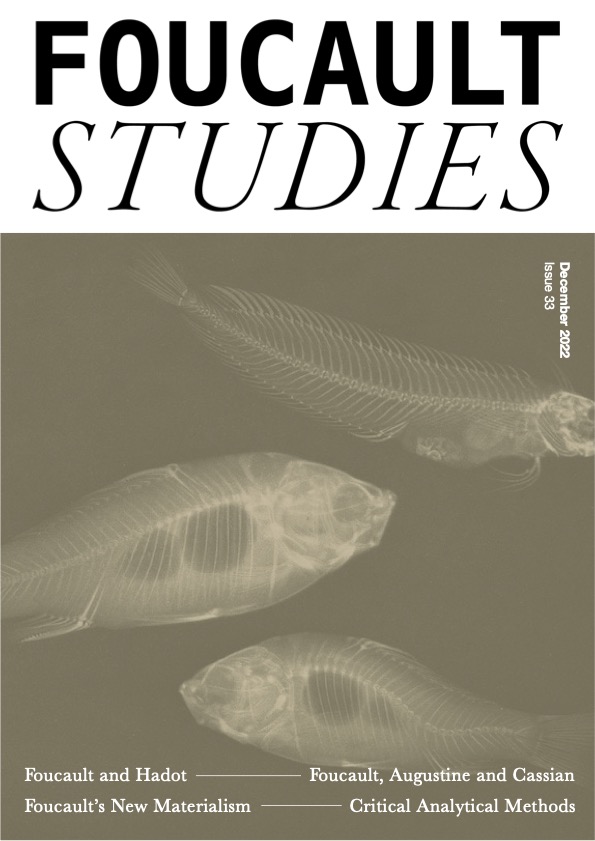
The Use and Misuse of Pleasure: Hadot contra Foucault on the Stoic Dichotomy Gaudium-Voluptas in Seneca
Matteo Johannes Stettler
The Subject of Desire and the Hermeneutics of Thoughts: Foucault’s Reading of Augustine and Cassian in Confessions of the Flesh
Herman Westerink
Philosophy From the texture of Everyday Life: The Critical-Analytic Methods of Foucault and J. L. Austin
Jasper Friedrich
Review essays
Foucault’s New Materialism: An Extended Review Essay of Thomas Lemke’s The Government of Things
Thomas Lemke, The Government of Things. New York: NYU Press, 2021. Pp. 312 (ISBN: 9781479808816 hardback)
Mark Olssen
Book Reviews
Marta Faustino and Gianfranco Ferraro (eds.), The Late Foucault: Ethical and Political Questions. London and New York: Bloomsbury Publishing, 2020. Pp. 304.
ISBN: 978-1350134355 (hardback).
Matteo Stettler
Michael Hardt joined Coop and Taylor for a look at his work with a focus on an article from he and Toni Negri titled, Empire, 20 Years On. We look back at some of the arguments made in the text and discuss a bit about Michael’s experience collaborating with Negri.
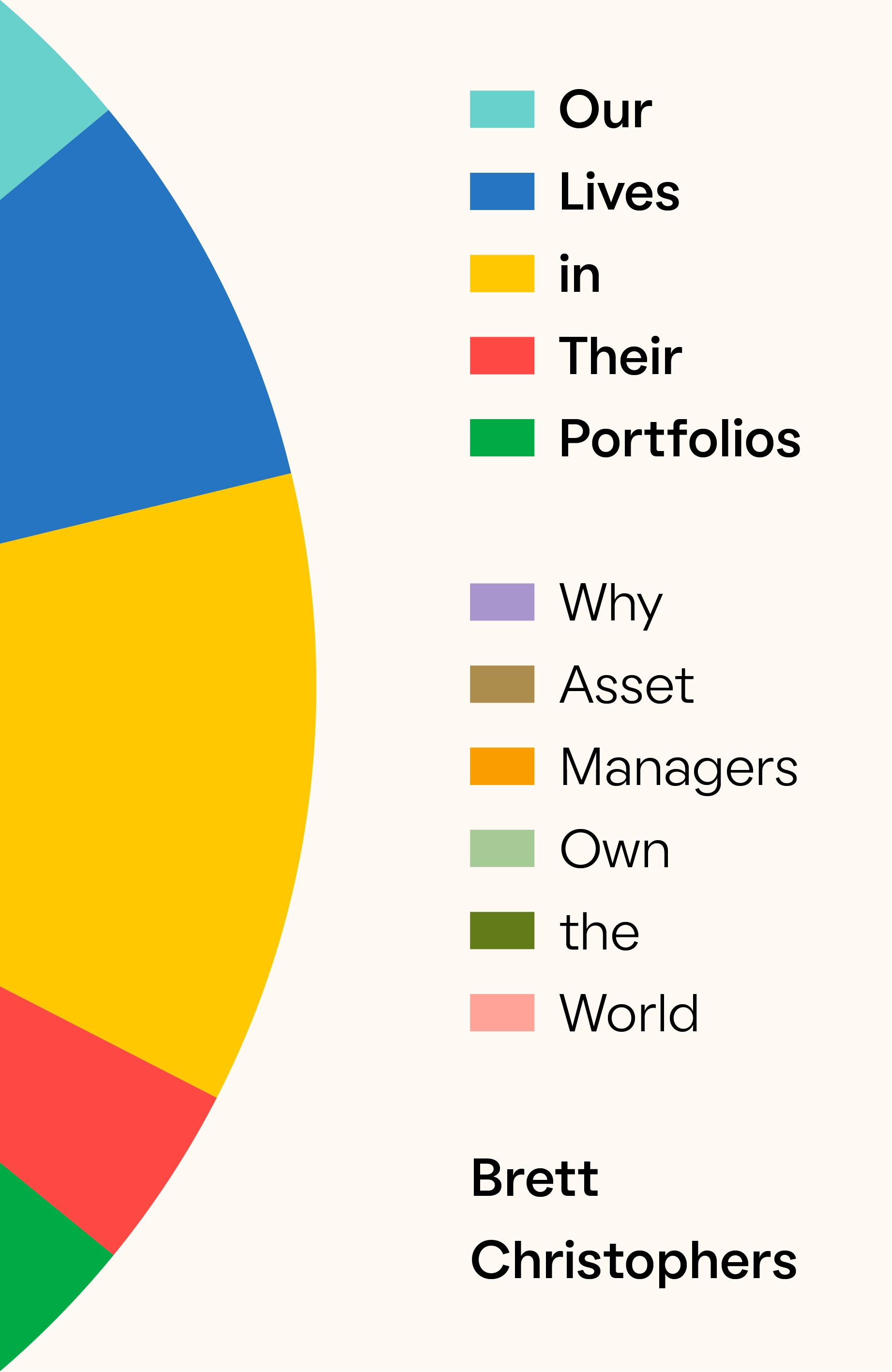
All hail the new masters of Capitalism: How asset managers acquired the world
Banks have taken a backseat since the global financial crisis over a decade ago. Today, our new financial masters are asset managers, like Blackstone and BlackRock. And they don’t just own financial assets.
The roads we drive on; the pipes that supply our drinking water; the farmland that provides our food; energy systems for electricity and heat; hospitals, schools, and even the homes in which many of us live—all now swell asset managers’ bulging investment portfolios.
As the owners of more and more of the basic building blocks of everyday life, asset managers shape the lives of each and every one of us in profound and disturbing ways. In this eye-opening follow-up to Rentier Capitalism, Brett Christophers peels back the veil on “asset manager society.”
Asset managers, he shows, are unlike traditional owners of housing and other essential infrastructure. Buying and selling these life-supporting assets at a dizzying pace, the crux of their business model is not long-term investment and careful custodianship but making quick profits for themselves and the investors that back them.
In asset manager society, the natural and built environments that sustain us become one more vehicle for siphoning money from the many to the few.
Verso currently have a sale – 40% off books; 60% off e-books (physical books usually come with a bundled e-book too)
Since the last update on this project I’ve not done quite what I intended. I had thought I’d begin working systematically through Georges Dumézil’s works in a chronological way, filling in much detail and some gaps in my previous reading. Instead I went down a couple of detours which have been interesting and productive, but are almost at the two different ends of the project – one right at the beginning, and another towards its end.
One of these things I want to discuss in the project is how Dumézil and Émile Benveniste were important for a younger generation. I’ve already done quite a lot on the relation between Dumézil and Foucault for my books on Foucault, and for some separate papers. More recently, my focus has been on Roland Barthes, following up on some clues in the excellent biographies by Tiphaine Samoyault (French/English) and Marie Gil. Barthes’s references to Dumézil are minor, but he is explicit about the importance of Benveniste to his work. There are lots of references, both in texts he published in his lifetime – including, among others, reviews of both volumes of Problèmesde linguistique générale and an obituary. There are also some references in his courses, both at the Collège de France and the École pratique des hautes études. This expanded quite a way beyond what I originally anticipated. I asked some bibliographic questions about Barthes, and received some really useful replies. I added all the information into this post. I’m particularly interested in his courses, mainly at the Collège de France, but also at the École pratique des hautes études.
I’ve also begun a bit of work on the relation between Dumézil, Benveniste and Lévi-Strauss. This is a much bigger challenge, and I think will be more important to the story I want to tell. The correspondence between Benveniste and Lévi-Strauss has been published, as well as his more extensive correspondence with Roman Jakobson, but not the Dumézil-Lévi-Strauss letters. Emmanuelle Loyer quotes some of the latter in her biography of Lévi-Strauss (French/English), but I will try to look at the full collection in the archives at some point. There are a lot of things to follow up here.
There is also work to be done at some stage on the way wider Indo-European work was important for some French classicists, including Jean-Pierre Vernant, Pierre Vidal-Naquet, Clémence Ramnoux, and possibly others including Marcel Detienne and Nicole Loraux. For that I think I need to get a much better sense of Dumézil’s work on Greece, which is be largely at the start and end of his career, and especially his work on Rome, which runs as one of its major themes throughout.
Paul Pelliot examining manuscripts in the Dunhuang ‘library cave’, 1908 (public domain)
The influence on these thinkers is a late part of the story I want to tell. But the other part of the story which I’ve been reading and writing about is towards its beginning. This is the Mission Paul Pelliot from 1906-1909. This was an expedition to central Asia and Western China, led by Pelliot, which brought back a lot of artefacts and manuscripts – bought under such dubious circumstances they were effectively looted. The Musée Guimet has a lot of this material, and the manuscripts, many of which came from a remarkable find in Dunhuang, are mainly at the Bibliothèque nationale. There are lots of publications which came from the material returned to Paris, some of which involve a very young Benveniste. I started reading a little on this to provide some background, but ended up spending more time on it than I anticipated. It’s been interesting, and has taken me to a different reading room at the British Library, Asian and African Studies, one of the very few there I had not used before.
There are a couple of popular books which talk about Pelliot, including Peter Hopkirk’s classic Foreign Devils on the Silk Road and more recently Eric Enno Tamm, The Horse that Leaps through Clouds, so I’ve been reading those too, as well as accounts of the almost parallel expedition of Aurel Stein. The material Stein brought back is across London – including the Victoria and Albert Museum, the British Library and the British Museum. And there is a lot elsewhere, so material from key sites, including Dunhuang, is scattered across the world. There are obviously connections to some of the more high-profile debates about cultural repatriation like the Benin Bronzes and the Parthenon Marbles. But Dunhuang seems to be a case where there is a lot more international collaboration, and there is an incredible online resource, The International Dunhuang Project, gathering links, reproductions and information.
In the last update I talked about the records of Dumézil’s teaching, and especially his courses at the École Pratique des Hautes Études. I followed the references in Hervé Coutau-Bégarie’s bibliography, which are largely complete, but found a few other sources of information, including the pre-announced titles. The records on Gallica are very good, and saved a lot of time, but there are a couple of pages missing from that digitisation, one of which I still can’t find. But I now have an almost complete listing, which will be useful as I work through the manuscripts.
I will be back in Paris for much of January, and I’m beginning to think about what I will do there. But I will be taking some days off now. Thanks for reading Progressive Geographies in 2022, and I’ll be back with the academic books I enjoyed most this year around the New Year.
Previous updates on this project can be found here, along with links to some research resources and forthcoming publications, including the reedition of Dumézil’s Mitra-Varuna. There is a lot more about the Foucault work here. The final volume, The Archaeology of Foucault, is now out!
Marx’s Critique of the Gotha Program is a revelation. It offers the fullest elaboration of his vision for a communist future, free from the shackles of capital but also the state. Neglected by the statist versions of socialism, whether social democratic or Stalinist that left a wreckage of coercion and disillusionment in their wake, this new annotated translation of Marx’s Critique makes clear for the first time the full emancipatory scope of his notion of life after capitalism. An erudite new introduction by Peter Hudis plumbs the depth of Marx’s argument, elucidating how his vision of communism, and the transition to it, was thoroughly democratic. This definitive edition also includes an afterword by Peter Linebaugh and other supplementary materials. At a time when the rule of capital is being questioned and challenged, this volume presents Marx at his most liberatory, offering an essential contribution to a philosophically grounded alternative to capitalism, rather than piecemeal reforms.