Foucault: The Birth of Power Update 10 – Chapter Five and a complete first draft

FBP update 10With Chapters Four and Six drafted, Chapter Five was the only one I didn’t have in a decent form. The first task for this was the section on the Groupe d’Information sur les prisons (GIP). Foucault was actively involved in this group from beginning to end. In large part as a consequence, there is a lot of material by this group easily available, in Dits et écrits, Archives d’une lutte and Intolérable. An English translation of a lot of this material is forthcoming. I also consulted the archives of the group at IMEC a few weeks ago, and tracked down several newspaper reports of their activities. So I had a lot of material to draw upon. There is quite a lot of secondary literature on the group, both in French and English, including excellent work by Marcelo Hoffman, Philippe Artières, Perry Zurn and Kevin Thompson, as well as the biographies, so I didn’t feel I needed to go for an exhaustive treatment. But there is a story worth telling, and I have tried to connect up some of the well-known texts by Foucault to lesser-known documents, pamphlets and reports, from the Intolérable brochures to the Manuel de l’arrêté, and texts in the IMEC archive; and to say a little bit about the Comité d’Action des Prisonniers and Foucault’s visit to Attica in 1972. As in the nature of these things, at least with me, it quite quickly became a more substantial discussion than I’d envisaged.

The rest of Chapter Five is devoted to a reading of Surveiller et punir/Discipline and Punish. I had a long draft of material on this from over a year ago, so that slotted in quite easily, with a bit of work to update and incorporate some other materials. In the process, I checked a query with Google… and found exactly the right answer very quickly. It was in a note I’d written to a translation in an edited book almost ten years ago. I’m just glad someone found it useful.

Finishing this chapter then meant I had all the chapters in a draft state, so I began to pull them into a single file and format the text consistently. I then revised the introduction I had already drafted, and wrote a short conclusion. This was on New Year’s Eve. About 9pm I saved everything and turned off the computer. The next morning I opened up the file again to begin work, and found the file was corrupted and most of it was missing. A backup was in a similar state. Fortunately this is where my file-saving practice is invaluable. Each day I save the file with the date in the file name, building up a large archive of previous versions. So ‘Foucault – The Birth of Power 31 Dec 2015’. At worse, I would lose only a day’s work. But given the large amount of work I’d done that day, I’d saved a morning, afternoon and evening version, and it was only the evening version I’d lost. The afternoon version was saved around 5pm, so I’d lost just four hours of revision.

It actually only took me a couple of hours to get back to where I was the previous day, since I knew what I was doing, could check the web history for things I’d checked online, and some of what I’d done was merely mechanical. The big loss was the conclusion. I’ve rewritten this, and it uses the same material I’d been gathering for it, but it doesn’t feel as good as the one I’d written the previous day. I’ll obviously keep working on this, but I wonder if I’ll ever recapture the version I lost. But it could have been a lot, lot worse.

So, a complete first draft. This isn’t finished by a long way, but all the elements are there, the references are in good shape, and there are few highlighted queries in the text. I’ve read all the relevant texts by Foucault, many multiple times, though there are plenty I will go back to again. I have a list of things to check in libraries, some secondary texts to read or reread, and some activist work and newspaper references to follow up in the British Library and the Bibliothèque nationale. The ‘to do’ list is, though less than one page in length, though the nature of these things is that for every thing done, another or more will need to be done. I have another visit to Paris booked for early February, and perhaps that will be enough for this book.

I’m now on holiday, and it feels good to take a break with a complete text ready for my return. A lot of work still to do, but a good moment.


Foucault’s Last Decade is available to pre-order. For more information on these two books, see the descriptions here. Audio and video recordings relating to them are here; and a full list of the updates I’ve been posting on the process of writing here. Some translations, bibliographies, scans and links are available at Foucault Resources.
Posted in Foucault: The Birth of Power, Michel Foucault, Uncategorized | 3 Comments

Foucault, crime and prisons – on film and online

I’ve previously shared a list of audio and video recordings of Foucault, and I won’t repeat things here. But there are a few pieces of documentary evidence about Foucault’s work and crime and prisons which are full-length films.

The best-known is probably René Allio’s Moi, Pierre Rivière, based on the book, and released in 1976. There is a version from Artificial Eye with English subtitles.

There was also another film, Je suis Pierre Rivière, directed by Christine Lipinska from the same year, though I’ve never seen this and am unable to track down a copy. If anyone can help, please let me know.

There is a recent film which I’ve mentioned here before, Sur les toitsdirected by Nicolas Drolc. This looks at the prison riots in 1971-72 in France, and contains documentary footage of Foucault, as well as contemporary interviews with people including Daniel Defert and Serge Livrozet.

I’ve also recently found on Vimeo Les Prisons aussi, a 1973 Group d’Information sur les prisons film directed by René Lefort. It was only uploaded in full ten months ago. The link below will take you to the Vimeo page for the film.

Finally, there is Foucault, par lui-même, directed by Philippe Calderon with the assistance of François Ewald.


Posted in Michel Foucault, Politics | 2 Comments

100 years ago today – Antonio Gramsci, ‘I Hate New Year’s Day’

I shared this a year ago, but since it was 100 years ago today… here is the translation of Antonio Gramsci, ‘I Hate New Year’s Day’, again.

occupationThis text was first pub­lished in Avanti!, Turin edi­tion, from his col­umn “Sotto la Mole,” Jan­u­ary 1, 1916.

Translated by Alberto Toscano for Viewpoint.


Every morn­ing, when I wake again under the pall of the sky, I feel that for me it is New Year’s day.

That’s why I hate these New Year’s that fall like fixed matu­ri­ties, which turn life and human spirit into a com­mer­cial con­cern with its neat final bal­ance, its out­stand­ing amounts, its bud­get for the new man­age­ment. They make us lose the con­ti­nu­ity of life and spirit. You end up seri­ously think­ing that between one year and the next there is a break, that a new his­tory is begin­ning; you make res­o­lu­tions, and you regret your irres­o­lu­tion, and so on, and so forth. This is gen­er­ally what’s wrong with dates. (continues…)

Posted in Antonio Gramsci | 4 Comments

2015 in review – talks, publications and writing, plus links to ‘best-of’ lists

I began 2015 with the manuscript of a book under the title Foucault’s Last Decade close, I thought, to completion. But it was far too long. In the end, I cut the first two long chapters out, and submitted a book which focused very closely on the 1974-84 period, without the prelude discussing early lecture courses and the writing of Discipline and Punish. That material became the basis for a second book, Foucault: The Birth of Power, which took most of the rest of the year to get to its current state of a near-complete first draft.

So, my plans of finishing up my Foucault work early in the year, with a return to Shakespeare didn’t work out. My post one year ago now looks hopelessly optimistic. I now hope I will finish the Foucault work fairly early in 2016, and then turn to Shakespeare. I’m over a year behind where I thought I would be, but of course this has has resulted in a second book on Foucault. And, while I didn’t believe it at the time, removing the material has made Foucault’s Last Decade a better, more tightly focused, book. Perhaps more importantly, Foucault: The Birth of Power has been able to expand and deepen the treatment of the the early lecture courses, collaborative work and activism in a way that would never have been possible had it remained the opening part of the other book. There are detailed updates on the work I’ve been doing on these two books here.

As a result I didn’t manage to do much work on Shakespeare, though I did write a substantial piece on King John, which I presented at UCL and Warwick, and developed the text I had on Henry V. Next year I really hope to make much more substantial progress with this material… There are various bits and pieces relating to this project, albeit a bit out of date, here.

I gave 21 visiting talks of various kinds in 2015. Despite making efforts to reduce speaking commitments this was only one fewer than in 2014. Seven were on Foucault, five were on Shakespeare, one was on Foucault and Shakespeare, one was on Ebola, and seven were on territory in some form – historical, conceptual, geophysical terrain or urban. A few were recorded and are available here. The talks were in the US, UK, Italy and Australia. At the moment I am committed to only a few talks in 2016, and I hope to keep it that way. I certainly don’t want to talk about territory again without having done some serious research, thinking and writing first…

I stepped down as an editor of Society and Space in the middle of the year, after almost nine years as either lead editor or joint editor. I am now one of the honorary editors. I am editor of a book series linked to the journal with Sage, who bought the Environment and Planning journals this year too. We hope the first volumes of the Society and Space book series will be out in 2016.

I didn’t publish much in 2015. The book writing has meant a substantial reduction in other writing tasks. The major publication was the translation of Kostas Axelos’s Introduction to a Future Way of Thought: On Marx and Heidegger (open access), which I edited and introduced. Along with Adam David Morton I introduced a translation of one of Lefebvre’s rural essays for Antipode (open access). We hope that this will be the first of a number of translations of essays on this theme. I also published a review essay of some recent books on territory in Society and Space, a long review essay of Foucault’s La société punitive in Historical Materialism, and a bibliography of ‘The Uncollected Foucault’ in Foucault Studies. I was pleased to have a chapter in Suzanne Conklin Akbari’s wonderful collection How We Write: Thirteen Ways of Looking at a Blank Page (open access). I had a couple of shorter pieces published online – “Theory and Other Languages” at E-IR, and “Peasant Revolts, Germanic Law and the Medieval Inquiry” (a review of Foucault’s Théories et institutions pénales) at Berfrois. I also interviewed Michael Watts for the Society and Space open site.

In addition, of course, there was this blog, which had just over 400,000 visits – a little less than 2014, but also fewer posts. WordPress compiled a report on hits and popular posts here.

In 2016, Foucault’s Last Decade (Polity) will be published, plus the translations of Henri Lefebvre’s Metaphilosophy (Verso) and Marxist Thought and the City (University of Minnesota Press). I had an important role in the first of those translations, editing the text, providing the bulk of the notes and writing an introduction. With the second I only wrote a brief preface. I will be pleased to see both out – both are books which I think will illuminate Lefebvre’s theoretical debts in a way largely absent from Anglophone debates. Foucault: The Birth of Power will hopefully follow in early 2017.

Outside of work I saw more theatre than ever before, helped by a split life between London and Coventry, which is very close to Stratford-upon-Avon, for the second half of the year. Much of it was Shakespeare, but not all. I cycled further than I’d ever managed before – a little over 5000 miles/8000 kilometres in the year. This was helped immeasurably by having a bike in Australia from mid-January to mid-March. It wasn’t helped by not having a bike for the six weeks I was in New York, or in the five trips I took to Paris. And the cycling wasn’t all on the flat roads of the West Midlands or London, as there was more climbing than ever before – Mount Dandenong and Arthur’s Seat near Melbourne, the Black Mountain in the Brecon Beacons, Mont Ventoux in southern France, and multiple trips to Box Hill, Leith Hill and Whitedown in the Surrey Hills. For the first year I can remember, I only visited countries I’d been to before – Australia, US, France, Italy…

The most important academic books to me from 2015 are listed here; the novels I read are here; and the music I most liked here. Thanks for reading and see you in 2016.

Posted in Adam David Morton, Books, Conferences, Cycling, Foucault's Last Decade, Foucault: The Birth of Power, Henri Lefebvre, Kostas Axelos, Michel Foucault, Music, My Publications, Novels read, Publishing, Shakespearean Territories, Society and Space, Territory, Travel, William Shakespeare | 1 Comment

Critical Theory’s books that came out in December

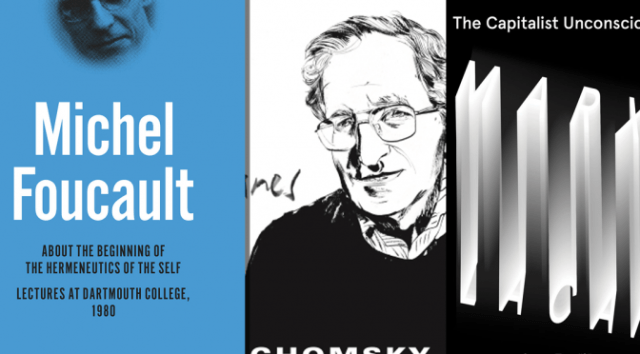
Most of these are too recent to make my best-of year list, but here’s ten books that came out in December from Critical-Theory.com – Foucault, Bataille, Couture, etc.

december-2015-critical-theory-books-672x372

Posted in Uncategorized | 1 Comment

Academic Books of 2015 – my top twenty

The vast majority of academic reading in 2015 was related to Foucault, with a lot of Shakespeare work along the way. Many of these were published some time ago. These were the twenty books published in 2015 I read and most liked.

  1. Peter Burke, The French Historical Revolution: The Annales School 1929-2014 (Polity, 2nd edition)
  2. Wendy Brown, Undoing the Demos: Neoliberalism’s Stealth Revolution (Zone)
  3. Sanjay Chaturvedi and Timothy Doyle, Climate Terror: A Critical Geopolitics of Climate Change (Palgrave)
  4. Jeffrey Jerome Cohen, Stone: An Ecology of the Inhuman (University of Minnesota Press)
  5. Jean-Pierre Couture, Sloterdijk (Polity – which I endorsed)
  6. Jacques Derrida, Séminaire La peine de mort: Volume II (2000-2001) (Galilée)
  7. Michael Dillon, Biopolitics of Security: A Political Analysis of Finitude (Routledge)
  8. Umberto Eco, How to Write a Thesis (MIT)
  9. Jenny Edkins, Face Politics (Routledge – which I endorsed)
  10. Roberto Esposito, Persons and Things: From the Body’s Point of View (Polity)
  11. Michel Foucault, Théories et institutions pénales (Gallimard/Seuil/EHESS – review in Berfrois)
  12. Michel Foucault, Language, Madness, Desire: On Literature (University of Minnesota Press – review forthcoming in Cultural Geographies)
  13. Michel Foucault, The Punitive Society (Palgrave – French original reviewed at Berfrois, and review essay in Historical Materialism)
  14. Ben Golder, Foucault and the Politics of Rights (Stanford University Press)
  15. David Farrell Krell, Phantoms of the Other: Four Generations of Derrida’s Geschlecht (SUNY Press – review forthcoming in Derrida Today)
  16. Thomas Nail, The Figure of the Migrant (Stanford University Press – which I endorsed)
  17. Lisa Smirl, Spaces of Aid: How Cars, Compounds and Hotels Shape Humanitarianism (Zed)
  18. The Wikileaks Files: The World According to US Empire (Verso)
  19. Haim Yacobi, Israel and Africa: A Genealogy of Moral Geography (Routledge)
  20. Perry Zurn & Andrew Dilts, Active Intolerance: Michel Foucault, the Prisons Information Group, and the Future of Abolition (Palgrave – which I endorsed)

There are also several good books from 2015 in one of the ‘to-read’ piles. These are the novels I read as a break from all this academic reading…

Posted in Books, David Farrell Krell, Foucault's Last Decade, Foucault: The Birth of Power, Haim Yacobi, Jacques Derrida, Jeffrey Jerome Cohen, Jenny Edkins, Judith Butler, Michael Dillon, Michel Foucault, Peter Sloterdijk, Politics, Publishing, Roberto Esposito, Theory, Wendy Brown, William Shakespeare | 14 Comments

My favourite music of 2015

Not an ordered list, but the music I liked most from this year (see also 20142013 and 2012)…

  1. Steven Wilson, Hand Cannot Erase
  2. The Neal Morse Band, The Great Experiment
  3. Lonely Robot, Please Come Home
  4. Umphreys McGee, The London Session
  5. Goblin Rebirth, Goblin Rebirth 
  6. The Dear Hunter, Act IV: Rebirth in Reprise
  7. Van der Graaf Generator, Merlin Atmos: Live Performances 2013
  8. Gavin Harrison, Cheating the Polygraph
  9. King Crimson, Live At The Orpheum
  10. Adrian Benavides, Imposters
  11. Von Hertzen Brothers, New Day Rising
  12. Stick Men featuring David Cross – Midori: Live in Tokyo (two sets, download only)
  13. The Aristocrats, Tres Caballeros
  14. Spock’s Beard, The Oblivion Particle
  15. Gazpacho, Molok
  16. Riverside, Love, Fear and the Time Machine
  17. Moonbound, Uncomfortable News from the Moon 
  18. Caligula’s Horse, Bloom
  19. King Crimson, Thrak Box
  20. Miles Davis, At Newport 1955-75: The Bootleg Series Vol. 4

Live, I enjoyed seeing Big Big Train, King Crimson, Steven Wilson, Fish, The Aristocrats, Lonely Robot and, perhaps the highlight, the two nights of Nik Bärtsch at King’s Place.

Posted in Music | 9 Comments

Novels (mainly) read in 2015

These are the novels or non-fiction I read as a break from work-related reading in 2015. Not as many as previous years, which was mainly due to a slow start.

  1. Daniel Coyle and Tyler Hamilton, The Secret Race: Inside the Hidden World of the Tour de France: Doping, Cover-ups, and Winning at All Costs (non fiction)
  2. Fred d’Aguilar, The Longest Memory
  3. Rebecca Hunt, Mr Chartwell
  4. Simon Sebag Montefiore, One Night in Winter
  5. Ned Beauman, The Teleportation Accident
  6. Mark Kurlansky, Birdseye (non-fiction)
  7. Peter Temple, Truth (set in Melbourne)
  8. Doris Pilkington/Nugi Garimara, Rabbit-Proof Fence
  9. Arundati Roy, Capitalism: A Ghost Story (non-fiction)
  10. Andrew Miller, Ingenious Pain
  11. Christopher Lee, Lord of Misrule (autobiography)
  12. Honoré Balzac, The Marriage Contract
  13. Michael Connolly, The Black Echo
  14. James Hamilton-Patterson, Seven Tenths: The Sea and its Thresholds (non-fiction)
  15. Hari Kunzru, The Impressionist
  16. Eric Rasmussen, The Shakespeare Thefts (non-fiction)
  17. Marcus Rediker, Outlaws of the Atlantic (non-fiction)
  18. Edmund White, Caracole
  19. Abdelrahman Munif, Cities of Salt
  20. Rob Kitchin, Stumped 
  21. William Golding, Pincher Martin
  22. Julian Barnes, Staring at the Sun
  23. Joan Didion, The Year of Magical Thinking (memoir)
  24. Ian McEwan, The Children Act
  25. Alan Bennett, The Madness of George III (play)
  26. Hervé Guibert, À l’ami qui ne m’a pas sauvé la vie
  27. Christopher Marlowe, Doctor Faustus and other plays
  28. A.L. Kennedy, Day
  29. William Boyd, Restless
  30. Helen MacDonald, H is for Hawk
  31. Ali Smith, The Accidental
  32. Ben Marcus, The Flame Alphabet
  33. James Kelman, How Late It Was, How Late
  34. Kate Atkinson, Life after Life
  35. Rebecca Hunt, Everland
  36. Richard Flanagan, The Narrow Road to the Deep North
  37. Val McDermid, The Skeleton Road
  38. Thomas Pynchon, Inherent Vice (again – in advance of the film, which I didn’t like)
  39. Annie Proulx, Close Range: Brokeback Mountain and Other Stories
  40. Haruki Murakami, Colorless Tsukuru Tazaki and his Years of Pilgrimage
  41. John Williams, Stoner
  42. Helen Bryan, The Sisterhood
  43. Vladimir Nabakov, Bend Sinister
  44. J. Robert Lennon, Familiar
  45. Greg Baxter, Munich Airport
  46. Chibundu Onuzo, The Spider King’s Daughter
  47. Honoré de Balzac, The Wild Ass’s Skin
  48. Kamila Shamsie, A God in Every Stone
  49. A.S. Byatt, The Matisse Stories
  50. Penelope Lively, Moon Tiger
  51. Michael Moorcock, Mother London
  52. Colm Tóibín, The Testament of Mary
  53. Anita Brookner, Hotel du Lac
  54. Valerie Martin, Property
  55. Andrea Levy, Small Island
  56. Kingsley Amis, The Old Devils
  57. Ann Patchett, Bel Canto
  58. Ellis Peters, A Morbid Taste for Bones
  59. Edmund White, The Farewell Symphony
  60. Serge Livrozet, De la prison à la révolte: Essai-témoinage (memoir)
  61. Tom Sperlinger, Romeo and Juliet in Palestine: Teaching Under Occupation (non-fiction)
  62. Benoît Peeters, Derrida (biography)
  63. Emile Zola, The Earth

I particularly liked H is for Hawk, Everland, The Narrow Road to the Deep North, Colorless Tsukuru Tazaki, Familiar and Bel Canto, and thought the Derrida biography was terrific.  I have another pile to take on holiday in a few days…

These lists tend to generate some questions or suggestions – while I am grateful for both, I say a bit about this here.

Posted in Novels read | 5 Comments

Top ten Society and Space posts of 2015

Most popular posts on the Society and Space open site in 2015.

Posted in Uncategorized | 1 Comment

2015 in review

WordPress.com has prepared a 2015 annual report for this blog.

Here’s an excerpt:

The Louvre Museum has 8.5 million visitors per year. This blog was viewed about 400,000 times in 2015. If it were an exhibit at the Louvre Museum, it would take about 17 days for that many people to see it.

Click here to see the complete report.

Posted in Uncategorized | Leave a comment