Future of Surrey’s Department of Politics Secured

I’ve just received an update on University of Surrey’s politics department, which was under serious threat in March this year – I shared the story and a couple of updates.

We are delighted to report that the Department of Politics at the University of Surrey will continue to exist as a self-standing autonomous unit and there will be no compulsory redundancies.

Following threat of closure and major job losses back in March, the Department, led by Dr Roberta Guerrina and backed by the PSA, put together a proposal for the future of the Department that has now been accepted by the University. Under terms that have been agreed by the Vice-Chancellor, the Department will continue to exist, a total of ten people will remain within the Department, all undergraduate, masters and post-graduate programmes will continue to run and the Department will maintain its research intensity.

Congratulations to all involved.

Please do feel free to share this information with colleagues.  The PSA has also published the news on our website and via Twitter here.

Yours faithfully,

James Ludley

Programme Development Officer

Political Studies Association

Posted in Politics, Universities | Leave a comment

Representations of space through colours – a request for help

An inquiry from a colleague:

How can we think about representations of space through colours? Can people refer recommended sources that examine the use of colours as metaphors for and representations of space? This is not about race – i.e. white, black or colour. Uses of colour crop up in relation to terms such as ‘red zone’, places such as ‘red square’, the ‘Pink Tide’ in Latin America, ‘black ops’, and, especially, ‘whiteness’ as a metaphor for weather (snow as the obvious referent), but also counterrevolution (thinking of El Lissitsky ‘Beat the Whites with the Red Wedge’), or whiteness (as light, as emptiness, as silence). Any thoughts or pointers on space and colour, specifically in relation to literary geographies and the representations of space?

Please add any thoughts as comments to this post. Thanks for any suggestions.

Posted in Uncategorized | 11 Comments

Governing Emergencies workshop – Emergency and Disaster Publics

Governing Emergencies event coming up in early July.

rjgordon2014's avatarGoverning Emergencies

We’re pleased to announce details of the second Governing Emergencies workshop on Emergency and Disaster Publics. It will take place in Rotterdam on the 4th and 5th June 2015. For the first day of the workshop, we will visit the Watersnoodmuseum in Ouwerkerk. The museum commemorates a flood event of 1953 in which over 1,800 people died. The museum is organised in the concrete caissons that were used to close the openings in the dykes during the floods.

View original post 311 more words

Posted in Uncategorized | Leave a comment

Christy Wampole, The Conference Manifesto in The New York Times

Christy Wampole, ‘The Conference Manifesto’ in The New York TimesIt first diagnoses a problem, then outlines some potential solutions. Here’s the beginning…

We are weary of academic conferences.

We are humanists who recognize very little humanity in the conference format and content.

We have sat patiently and politely through talks read line by line in a monotone voice by a speaker who doesn’t look up once, wondering why we couldn’t have read the paper ourselves in advance with a much greater level of absorption.

We have tried to ignore the lack of a thesis or even one interesting sentence in a 20-minute talk.

Our jaws have hung in disbelief as a speaker tries to squeeze a 30-minute talk into a 20-minute slot by reading too fast to be understood.

And here’s the first line of a proposed contract:

Acceptance to the conference could be contingent upon the speaker reading and signing an agreement to meet the following criteria in their talks

1) I understand that the conference paper should do something that an article cannot. Since it involves direct, real-time contact with other humans, the speaker should make use of this relatively rare and thus precious opportunity to interact meaningfully with other scholars.

Well worth a read, and some serious reflection. I’d be surprised if, being honest, most people didn’t recognise at least something of their own behaviour in the description of the problem. Recognising it in others is easy.

Posted in Conferences | Leave a comment

West Point and the war on Ebola

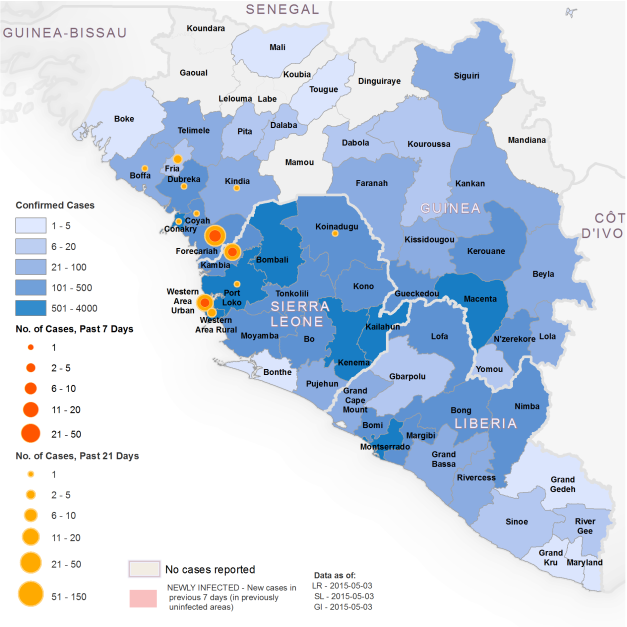
Derek Gregory with another thoughtful and strikingly illustrated post on Ebola in Liberia.

Derek Gregory's avatargeographical imaginations

I’ve taken this map from a Situation Report issued by the World Health Organisation on 6 May, which superimposes new cases of Ebola virus disease (EVD) over total confirmed cases throughout the epidemic in West Africa:

SITREP_CASECOUNT_7

Three days later the WHO declared Liberia to be free of Ebola:

Forty-two days have passed since the last laboratory-confirmed case was buried on 28 March 2015. The outbreak of Ebola virus disease in Liberia is over.

Interruption of transmission is a monumental achievement for a country that reported the highest number of deaths in the largest, longest, and most complex outbreak since Ebola first emerged in 1976. At the peak of transmission, which occurred during August and September 2014, the country was reporting from 300 to 400 new cases every week.

During those 2 months, the capital city Monrovia was the setting for some of the most tragic scenes from West Africa’s outbreak:…

View original post 2,422 more words

Posted in Uncategorized | Leave a comment

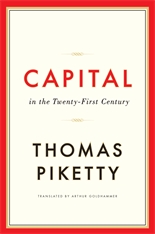
Adam David Morton on ‘Blogging as Pedagogy’ with the example of Piketty’s Capital at Progress in Political Economy

9780674430006Adam David Morton on ‘Blogging as Pedagogy‘ at Progress in Political Economy – drawing on his experience of blogging about and teaching Thomas Piketty’s Capital in the Twenty-First Century.

Posted in Uncategorized | Leave a comment

Foucault books: update 23 – working with the Semiotext(e) archive

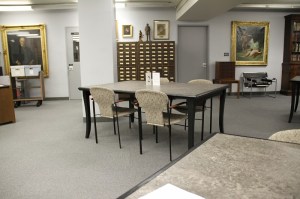
Fales

Fales reading room, via NYU Gallatin

I have now finished working through all the papers in Sylvère Lotringer’s Semiotext(e) archive in the Fales Library at New York University which have a relation to this project.

In among a lot of things that were of little interest, a few things are worth noting. The flyers, publicity materials, press reports and attendance list for the 1975 Schizo-Culture are historically intriguing. Artists, writers and musicians were there as well as theorists and activists – John Cage and William Burroughs are the most famous. One marginal note to the ‘tentative’ musician list made me laugh. Next to Keith Jarrett’s name is written in pencil: “musician, improvisation, but more formal than Charlemagne” [see, though comments below, which suggest this may instead be a reference to the artist Charlemagne Palestine]. While excellent, the recent MIT Press volumes on the event and the book maybe could have included more reproductions of these documents.

Also interesting was the material for the Michel Foucault philosophe conference in France in 1988, which Lotringer was invited to attend. The conference had a concert following, conducted by Pierre Boulez by the Ensemble intercontemporain with a programme of Stockhausen, Messiaen, Boulez, Webern, Berio, and Schoenberg.

There are some translations in these files which were never published – “Religious deviations and medical knowledge” – which later appeared, in a different translation in Religion and Culture; some of the early pages of Foucault and Arlette Farge’s Le désordre des familles – which is now finally coming out in English translation, but I’m sure that too is a different translation; and a plan to translate Foucault’s introduction to Ludwig Binswanger’s Dream and Existence for an unpublished theme issue of Semiotext(e) on panic – also long available, but this project preceded it. Also a  different translation of Deleuze’s essay on Foucault as an archivist (at least different from the one I know). I didn’t find any other translations which haven’t appeared elsewhere, but did find plenty of copies of material that was translated, some in original languages other than French.

There is some correspondence relating to the Foucault: Live book, including letters from annoyed interviewers because of a misattribution in the 1989 edition, and one from Didier Eribon asking Lotringer for an interview for the biography he is writing; John Rajchman’s paper from the book’s launch event; notes from one of Foucault’s NYU lectures in 1980 (largely transcribed as ‘Sexuality and Solitude’); large folders of notes by Lotringer on Foucault’s books; preparatory materials for The Politics of Truth; pieces by Guattari and reviews of books on Foucault. Sometimes an interesting letter would be in the middle of a pile of photocopies.

I found one typed page in a couple of different folders. It’s about recordings of the Semiotext(e) conference, but the objects it refers to are sadly nowhere to be found:

Felix [Guattari] evening speech + Ti-Grace [Atkinson] speech (Sony tape)

Felix afternoon speech, side A (TDK) Side B is Foucault speech

Foucault questions, interruptions, side A (TDK) End of side A is panel, beginning of side B is panel. Side B includes [John] Cage.

I still have —

Lyotard on two cassettes.

Deleuze, rhizome, on one.

There is also what appears to be Guattari’s notes for his lecture at the conference – blue ink on small paper. I don’t know Guattari’s handwriting, so I can’t be sure. It’s a lot neater than Foucault’s though, and not Lotringer’s hand.

There is also a brilliant letter from Columbia University Press from November 6th 1975 to Lotringer saying they could not publish a third-party’s translation of “Deleuze’s book on Nietzsche…”

I have received two opinions of the original book that lead me to say we will be unable to consider publication of the translation here. Both advisers, although conscious of the importance of Deleuze himself, felt that the work on Nietzsche was not worth doing in and of itself; they felt it was a much less exciting work than the Anti-Oedipe and that it would neither be particularly useful nor enjoy a wide sale. In the light of those remarks, therefore, I don’t feel justified in pursuing the matter further here, and I am returning herewith the sample of the translation you furnished.

The book finally appeared, with a different translator, in 1983… with Columbia University Press.

As this indicates, some of this is a bit of a mess, and the archivist’s designation of the folders – perhaps as a result of how Lotringer left them? – is a little non-specific. I’m sure there is more interesting stuff in the archive in other folders and boxes, but I’ve now been through every folder which has an obvious link to Foucault.

You can read more about these books, along with links to previous updates, here.

Posted in Arlette Farge, Felix Guattari, Foucault's Last Decade, Foucault: The Birth of Power, Gilles Deleuze, Michel Foucault | 3 Comments

David Kishik, The Manhattan Project – what would have happened had Walter Benjamin not died?

David Kishik, The Manhattan Project: A Theory of a City.

pid_23184

In The Manhattan Project, David Kishik dares to imagine a Walter Benjamin who did not commit suicide in 1940, but managed instead to escape the Nazis to begin a long, solitary life in New York. During his anonymous, posthumous existence, while he was haunting and haunted by his new city, Benjamin composed a sequel to his Arcades Project. Just as his incomplete masterpiece revolved around Paris, capital of the nineteenth century, this spectral text was dedicated to New York, capital of the twentieth. Kishik’s sui generis work of experimental scholarship or fictional philosophy is thus presented as a study of a manuscript that was never written.

The fictitious prolongation of Benjamin’s life will raise more than one eyebrow, but the wit, breadth, and incisiveness of Kishik’s own writing is bound to impress. Kishik reveals a world of secret affinities between New York City and Paris, the flâneur and the homeless person, the collector and the hoarder, the covered arcade and the bare street, but also between photography and graffiti, pragmatism and minimalism, Andy Warhol and Robert Moses, Hannah Arendt and Jane Jacobs. A critical celebration of New York City, The Manhattan Project reshapes our perception of urban life, and rethinks our very conception of modernity.

Posted in urban/urbanisation, Walter Benjamin | 2 Comments

Talking to anthropologists, urbanists and architects about territory

While Foucault and Shakespeare are my focus for new material, I’ll be giving a few talks on territory – two in New York in the next two weeks, and then one back in London in the autumn:

21 May 2015, 4.15pm, “Terrain, Territory, Volume”, Graduate Center, CUNY

26 May 2015, “Urban Territory”, Center for Urban Science and Progress, New York University

early October 2015 (date to be confirmed), “Territory – Political Technology, Volume, Terrain”, Landscape Urbanism Programme at the Architectural Association, London

Posted in Conferences, Politics, Territory, urban/urbanisation | 2 Comments

CFP – A research workshop on discourse analysis, New Materialisms and the ‘practice turn’ in the social sciences, 12 June 2015, University of Warwick

Call for papers: Mind the gap, please! – A research workshop on discourse analysis,

New Materialisms and the ‘practice turn’ in the social sciences

12 June 2015, Institute of Advanced Studies, University of Warwick

Keynote speaker: Claudia Aradau, King’s College London

Since the ‘linguistic turn’ in the social sciences, language and discourse analysis have held a privileged position for the critical investigation of social reality and human interaction. Lately however, this dominant position has been challenged by theoretical and methodological approaches that demand that greater attention is to be paid to non-linguistic elements. On the one hand, the New Materialisms literature charges that a discursive bias in poststructuralism and other critical approaches is privileging written texts at the expense of an investigation of material reality: the meaning, impact and even the agency of ‘things’, objects, the natural environment, and ‘stuff’. On the other hand, political scientists, sociologists, ethnographers, anthropologists and others have initiated a ‘practice turn’, reintroducing the question of action and agency into the equation of critical research. Here, practice is connected to but distinctive from meaning-making practices and discursive formations. Both these approaches directly challenge the primacy of discourse over matter, where material reality and physical action cannot exist independently from the politics of representation and contextualisation. This workshop now wants to invite researchers from any career stage and across the social sciences to discuss the theoretical and methodological implications of practice and materiality for their work on discourse and discourse analysis. Some of the questions the workshop aims to address are:

  • How can the divide between discourse and materiality be bridged theoretically and methodologically?
  • Can we analytically separate discursive from non-discursive practices?
  • How can a post-positivist conceptualisation of materiality be formulated?
  • Have discursive approaches and critical research designs paid too little attention to the material dimension of social reality?

We welcome both theoretical discussions and papers seeking to provide methodological solutions to bridge the discourse/materiality/practices gap.

If you wish to participate in the workshop, please send an abstract of your intended presentation (200 word limit) with your contact information and university affiliation to: e.lopez-lucia@warwick.ac.uk or g.lofflmann@warwick.ac.uk

Deadline for submission: 24 May 2015.

Posted in Uncategorized | 1 Comment