A minor Nietzsche question – what does the abbreviation ‘W.W.’ refer to?

A minor Nietzsche question – what does the abbreviation W.W. refer to? I’ve asked some of the leading Nietzsche scholars I know, and they are baffled too.

The context is two references to Nietzsche: W. W. XI, p. 268 and W. W. XII, p. 307. It seems it’s to a collected edition of Nietzsche’s writings, and one from the 1950s or before.

I’ve found both references in the Kritische Studienausgabe (they are both to passages from his notebooks), but I’m curious what the ‘W.W.’ refers to. My best guess is the Großoktavausgabe edition of his works –  edited by Elizabeth Förster-Nietzsche and others. But if it is to that, why the abbreviation W. W. when GOA is the standard for that work? I guess one ‘W’ is for Werke, and had thought the other was for ‘Weimar’ (where Nietzsche was born and the archive was) but that doesn’t make sense – the Großoktavausgabe was published in Leipzig. Any suggestions appreciated…

Update: The references do check out to the GOA – Leipzig, C.G. Naumann, 1901-12 – thanks to John Russell in comments for a link to an online searchable version. But still no clearer why WW is used to refer to this, though John suggests this is not uncommon.

Posted in Friedrich Nietzsche | 6 Comments

Linda Olson, Guide to Academic and Scientific Publication – open access book

Proof Reading Services have made what looks like a useful guide to publication available online.

Posted in Publishing | 1 Comment

Nine critical theory books from June

critical-theory-books-june-2014-672x336critical-theory.com has a round-up of recently published books – Foucault, Lefebvre, Balso, Crary, etc.

Posted in Books, Henri Lefebvre, Michel Foucault | 1 Comment

Top ten posts this week on Progressive Geographies

  1. How powerful is your passport? – infographic – the most popular post in a long time
  2. The theft of Native Americans’ land, in one animated map
  3. Five apps I find really useful for my writing and blogging
  4. The Clubs that Connect the World Cup – New York Times visualisations
  5. Kostas Axelos, On Marx and Heidegger – forthcoming with Meson Press, translated by Kenneth Mills and edited by Stuart Elden
  6. One million views of Progressive Geographies
  7. Graham Burchell – Michel Foucault, La société punitive: an editorial curiosity
  8. Boko Haram – An Annotated Bibliography
  9. The Past, Present and Future of Drones in the U.S. – the al-Awlaki memo and an infographic
  10. A Conversation between Stuart Elden and Babette Babich – Fordham University video
Posted in Uncategorized | Leave a comment

“the frustrations and the pleasures of editing”

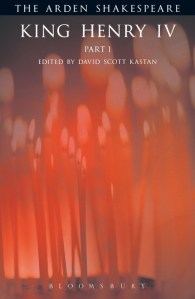
9781904271352_p0_v1_s260x420David Scott Kastan on “the frustrations and the pleasures of editing” – for him a play, but much of this works more generally:

We too often think of editing as an activity that is mechanical and objective; it is neither. Even a brilliant editor like [John Dover] Wilson, who must have known better, would sometimes juxtapose the shifting ‘sand’ of literary judgement’ and the bibliographic ‘rock of fact’ (Wilson, ‘Copy’, 185). But, in the face of what cannot be recovered from the past, those seemingly solid rocks of fact easily crumble into all too shifty grains of sand, and literary judgement becomes in the final analysis what every editor must depend upon. Editing is a mode of critical engagement with the play, though of course one ideally informed with relevant historical knowledge about the theatre, about the playwright, about the language of the period and about the various activities that enabled a play written to be acted to become a text to be read. At almost every moment editors are required to be critics, and their critical judgements construct the text that we read. The attractive solidity of the modern published edition on a bookshelf or on a desk asserts far more certainty about what is on the page than its editor can possibly feel. Our editions inevitably belie the provisional nature of the edited text, overstating the authority of what is set forth in the impressive physical form in which they appear. The sheer number of editions alone makes this point, but, even so, they remain (at least for this editor) profoundly satisfying acknowledgements of both the effort involved in their making and the long and honourable history in which they take their place.

“Introduction”, King Henry IV, Part 1, edited by David Scott Kastan, The Arden Shakespeare Third Series, 2002, p. 131.

Posted in Publishing, William Shakespeare, Writing | Leave a comment

Leon Niemoczynski and Stephanie Theodorou (eds.) Animal Experience – open access book

Leon Niemoczynski and Stephanie Theodorou (eds.) Animal Experience – open access book. An interesting, multi-media project. Details here.

File-Animalexperience-book-cover2

This “living” book about life explores the nature and meaning of the emotional lives of nonhuman animals, focusing on how those lives are communicated to other living creatures (such as human beings) via affective states. By examining the emotional lives of animals and how they are communicated, we hope to re-examine how human beings interact with, and relate to, other living creatures that are capable of experiencing emotional lives.

The property of emotion, in both human and nonhuman species, implies a level of internal conscious experience which supports and includes related cognitive activity. Insight into animal emotion can be useful for understanding the evolutionary development we share with animals in terms of the common “brain-mind.” This locus of cognitive activity in centralized nervous systems reveals to us that changes in affect accompany and enable communication and expression, facial and voice recognition of other individuals, and decision-making. These traits, in turn, suggest that most philosophically (and perhaps scientifically) traditional moral boundaries between humans and nonhuman animals may require serious rethinking. We therefore hope to address what impact a better understanding of the emotional lives of animals might have upon animal welfare and upon our deeply embedded beliefs concerning the nature of animal minds in general.


Posted in Books | 1 Comment

Balibar, Equaliberty and Rancière Now reviewed at NDPR

978-0-8223-5564-9_pr0745662560


Two interesting reviews at NDPR: Étienne Balibar, Equaliberty: Political Essays reviewed by Jonathan Joseph; and Oliver Davis (ed.), Rancière Now reviewed by Samuel A. Chambers.

Posted in Books, Etienne Balibar, Jacques Rancière | 1 Comment

The Revolution in Military Affairs: A Partial Timeline (+links)

A very helpful resource

edmundberger's avatarDeterritorial Investigations

1-DsQVZN-wu89sU1xgHjIQ6w“A Revolution in Military Affairs (RMA) is a major change in the nature of warfare brought about by the innovative application of new technologies which, combined with dramatic changes in military doctrine and operational and organisational concepts, fundamentally alters the character and conduct of military operations.” – Andrew Marshall

“The RMA depends not only on technological developments, such as computer and information systems, but also on the new forms of labor – mobile, flexible, immaterial forms of social labor… In these respects RMA is an anticipation and an extrapolation of the recent transformations of social labor, casting the economic figures into the field of battle.” – Michael Hardt and Antonio Negri, Multitude

1946

194?

  • Andrew Marshall graduates with a degree in economics at the University of Chicago.

View original post 2,713 more words

Posted in Uncategorized | Leave a comment

Getting Published Masterclass and chairing Ian Kershaw

Very enjoyable day at the Getting Published Masterclass, sponsored by the British Academy and organised by my colleague Christopher Moran. A real privilege to introduce and chair Ian Kershaw‘s keynote on ‘a life in writing’. As I said at the event, something like this would have been really useful for me fifteen years ago, but still much to learn. Particularly enjoyed the session on media work, publicity and having a literary agent.

Posted in Conferences, Publishing | 1 Comment

A Conversation between Stuart Elden and Babette Babich – Fordham University video

In the Fordham University studio copyA Conversation between Stuart Elden and Babette Babich

A long discussion at the Fordham University television studios – ranges across my work and lots of topics, including territory today and historically, Lefebvre, Nietzsche, Heidegger, Foucault, Shakespeare… Many thanks to Babette for this invitation.


Posted in Babette Babich, Boundaries, Foucault's Last Decade, Henri Lefebvre, Mapping the Present, Martin Heidegger, Michel Foucault, My Publications, Politics, Publishing, Shakespearean Territories, Speaking Against Number, Territory, Terror and Territory, The Birth of Territory, Theory, Understanding Henri Lefebvre, William Shakespeare | 2 Comments