CFP, AAG 2014: Geophilosophy and the Geo-Social

Call for papers for some interesting AAG 2014 sessions.

gapingearth's avatarGAPING EARTH

Elizabeth Johnson, Harlan Morehouse and myself are putting together some sessions at the 2014 AAG around the relationship between Geophilosophy and Geography, and particularly what we are calling the Geo-Social.

Please circulate the below CFP to anyone you think may be interested.
Many thanks

Geophilosophy and the Geo-Social

AAG 2014

Call for Panels/Papers

Elizabeth Johnson,

Harlan Morehouse, University of Minnesota

Rory Rowan, Wageningen University

There is a growing consensus that in the 21st century the planet is no longer the concern of geologists and climate scientists alone, but that philosophical and social thought must also increasingly engage with planetary concerns. Emergent literatures across the social sciences and humanities are struggling to generate new conceptual frameworks and research strategies to adequately account for the complex knots that bind social, geological, biological and technological forces together, as well as the catastrophic potentials that reside within them (see, for example: Braun and Whatmore…

View original post 825 more words

Posted in Uncategorized | Leave a comment

New Heidegger Research – book series

Call for proposals for a new book series with Rowman International.

New Heidegger Research publishes work by, about, and provoked by Martin Heidegger. The goal of the series is to promote informed and critical dialogue that breaks new philosophical ground by taking into account the full range of Heidegger’s thought as well as the enduring questions raised by his work. To this end, the series includes English translations of newly available and untranslated texts by Heidegger himself, as well as monographs and anthologies that come to grips with Heidegger’s thought or draw inspiration from it. While insisting on rigorous textual scholarship, the series will give pride of place to work that does not limit itself to explaining Heidegger, but moves Heideggerian questions in new directions and opens new lines of research in dialogue with Heidegger’s thought. As Heidegger wrote in his preface to his collected writings, “The point is to awaken the confrontation about the question concerning the topic of thinking.” New Heidegger Research takes up this challenge. 

We welcome proposals in the following categories:

Translations: We invite proposals for accurate, idiomatic, and scholarly English editions of significant texts by Heidegger that are not yet available in translation, including volumes of correspondence.

Monographs: New Heidegger Research welcomes single-author books that are largely concerned with texts by Heidegger published in recent years, that take innovative approaches to Heidegger and ask new questions about his thought, or that draw on his philosophy (either positively or negatively) in addressing new areas of inquiry.

Anthologies: Collections of essays on certain texts by Heidegger or certain issues regarding his work are appropriate for the series, as long as the proposed volumes break some new ground.

Suitable topics for monographs and anthologies include:

• Original work in ontology, epistemology, philosophy of history, philosophy of art, political philosophy, theology, or other fields that demonstrates up-to-date knowledge of Heidegger’s thought and critically engages with it

• Heideggerian or anti-Heideggerian analyses of contemporary issues, such as technology, the information age, sustainability and the environment, bioethics, terrorism, contemporary capitalism, Islamism, and other topics in religion and theology

• Heidegger’s relationship to other intellectuals and philosophers, especially as revealed in recent private writings and correspondence

• Heidegger’s private writings: their meaning, style, and significance for us

• Heidegger’s relevance to and reception in China, Japan, India, the Islamic world, Africa, and Latin America, as well as other emerging domains of Heidegger study

• Studies of Heidegger’s politics that take fresh approaches and are well-informed by the existing primary and secondary literature

Inquiries: E-mail a current CV and a book proposal to Richard Polt (polt@xavier.edu) and Gregory Fried (gfried@suffolk.edu). The proposal should describe the book, summarize its contents, explain how it fits the series, compare it to similar books in the field, and include a writing sample of approximately 20 pages. The editors are committed to the prompt review of all proposals.

Posted in Books, Martin Heidegger, Publishing | 1 Comment

The Rhythmanalysis Laboratory

Website on rhythmanalysis and its uses – thanks to Tahereh Af for the link.

Posted in Henri Lefebvre | 1 Comment

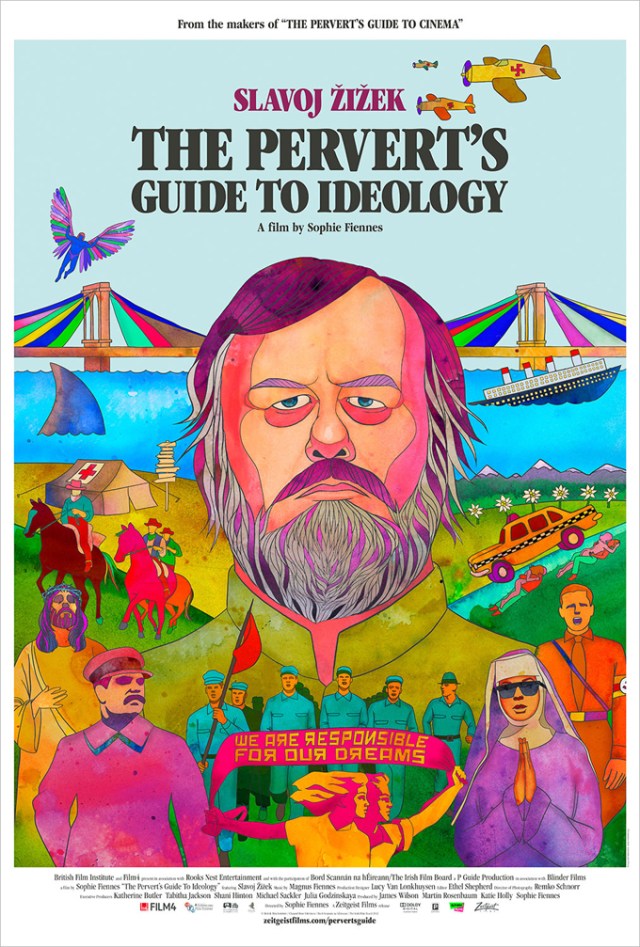
Slavoj Žižek, The Perverts’ Guide to Ideology – poster and trailer

perverts-guide-to-ideology

via critical-theory.com

Posted in Slavoj Zizek | 2 Comments

Maps of Unrealized City Plans

Wired has some very interesting images of city plans that were never put into practice. Thanks to Ben Rosamond for the link.

7-rudolph-lomex

Posted in urban/urbanisation | 2 Comments

Lisa Guenther, The Biopolitics of Starvation in California Prisons

A powerful piece on the hunger strikes in Californian prisons – the first post in a planned open site forum on prisons today.

Posted in Uncategorized | Leave a comment

Manifesto of the Groupe d’Information sur les prisons – a full translation

03_1971_03_p00008303_1971_03_p000084

This text was co-authored by Michel Foucault, Pierre Vidal-Nacquet and Jean-Marie Domenach, and was first read at a news conference on 8 February 1971. It was subsequently published in Esprit in March 1971. As far as I know, the only partial translations of this important document are found in the English edition of Didier Eribon’s biography, Michel Foucault, translated by Betsy Wing, London: Faber and Faber, 1992, pp. 224-5; and in David Macey, The Lives of Michel Foucault, London: Random House, 1993, p. 258.

These translations are very good, but both are incomplete, and there are some interesting and important elements within the text that are somewhat obscured. This manifesto was issued right in the middle of Foucault’s first course at the Collège de France, now translated as Lectures on the Will to Know. There are several important resonances in the language. The version below attempts to make these more obvious, as well as to fill in the untranslated parts. Comments and suggested alterations are welcome.

Many thanks to Graham Burchell for his comments on an earlier draft.

Stuart Elden

None of us is sure to escape prison. Today less than ever. Police control [quadrillage][i] over day-to-day life is tightening: in city streets and roads; over foreigners and young people; it is once more an offence to express opinions; anti-drug measures increase arbitrarily. We are kept under ‘close observation’ [Nous sommes sous le signe de la «garde à vue»].[ii] They tell us that the system of justice is overwhelmed. We can see that. But what if it is the police that have overwhelmed it? They tell us that prisons are over-populated. But what if it was the population that was being over-imprisoned? Little information is published on prisons. It is one of the hidden regions of our social system, one of the dark zones [cases noires] of our life. We have the right to know; we want to know [Nous avons le droit de savoir, nous voulons savoir]. This is why, with magistrates/legal officers [magistrats], lawyers, journalists, doctors, psychologists, we have formed a Groupe d’Information sur les Prisons.

We propose to make known [de faire savoir] what the prison is: who goes there, how and why they go there, what happens there, and what the life of the prisoners is, and that, equally, of the surveillance personnel; what the buildings, the food, and hygiene are like; how the internal regulations, medical control, and the workshops function; how one gets out and what it is to be, in our society, one of those who came out.

This information is not in the official reports that we have found. We will ask those who, for some reason, have an experience of the prison or a relation to it. We ask them to contact us and tell us what they know [ce qu’ils savent]. A questionnaire has been compiled which can be requested from us. As soon as we have sufficient responses, the results will be published.

It is not for us to suggest reform. We merely wish to know [connaître] the reality. And to make it known almost immediately, almost overnight, because time is short. This is to inform opinion and to keep it informed. We will try to use all means of information: daily [newspapers], weeklies, monthlies. We therefore appeal to all possible platforms.

Finally, it is good to know what threatens us, but knowledge is also good to defend oneself [Enfin, il est bon de savoir ce qui nous menace; mais il est bon aussi de savoir comme se défendre].  One of our first tasks will be to publish a small Manuel du parfait arrêté (Complete Arrest Guide), paired of course as an Avis aux arrêteurs (Note for Arrestors).

All those who want to inform us, be informed or participate in the work can write to the GIP at 285, rue de Vaugirard, Paris-XVe [Foucault’s home address].


[i]               Quadrillage is a grid-like systematic division and control of an area.

[ii]               David Macey notes that Garde à vue “refers to the common police practice of holding people without charge for a period of up to twenty-four hours” (The Lives of Michel Foucault, p. 515 n. 1). In the 1970s the British army imprisoned Northern Irish Catholics without trial in a policy known as ‘internment’. However neither detention nor internment capture the visual sense of the French term.

Posted in Michel Foucault | 11 Comments

The Groningen Lecture on Modes of Reasoning 2014

I’ve recently accepted an invitation to give the second Groningen Lecture on Modes of Reasoning. This is a series organised by Luis Lobo-Guerro as part of the History and Theory of International Relations chair group. Mick Dillon is giving the first of these in September 2013 (details here). My lecture will be in September 2014. Title and exact date to be confirmed.

Posted in Conferences | Leave a comment

Books received – including Foucault, Power, Truth, Strategy

P1000113Five interesting books. Two are older books by authors whose other work I’ve liked – Badie and Birnbaum’s The Sociology of the State and Adriana Caverero, Relating Narratives – that I got for review work. I got hold of François Jacob, The Logic of Life because of Foucault’s review of it – I discuss this briefly here. Nur Masalha’s The Zionist Bible was sent to me by the publisher. I’ve read Shlomo Sand’s The Invention of the Land of Israel and Rachel Havrelock’s River Jordan recently, and this looks in a related vein.

The discovery was an affordable copy of Michel Foucault, Power, Truth, Strategy – long out of print and often on sale for $300 or more. This contains some translations of pieces by Foucault (many are in Power/Knowledge in different translations) and three pieces by Paul Patton, Meaghan Morris and Paul Foss on Foucault’s work. The volume is introduced by a piece by François Chatelet. There is a useful ‘Fiche Technique’ with suggested amendments to existing translations, focusing on Discipline and Punish and the Swyer translation of ‘Order of Discourse’. But the most interesting thing, and as far as I know unavailable elsewhere in English (or French, though there is a German version), is ‘Power and Norm’ – notes from a lecture by Foucault in 1973. This was part of his course La société punitive. Will be interesting to see how these match up to the forthcoming course.

Posted in Books, Michel Foucault | 1 Comment

Misunderstanding Foucault — Foucault. Habermas, and the Debate that Never Was (Part III)

A very interesting post in James Schmidt’s series of examinations of the Foucault/Habermas relation.

James Schmidt's avatarPersistent Enlightenment

My last post on the so-called “Foucault/Habermas Debate” focused on the eulogy JürgenCoin_-_College_de_France_02Habermas wrote in the wake of Michel Foucault’s death. The main theoretical claim of the eulogy was that Foucault, the one-time critic of the “Enlightenment project” (a project that, for Habermas, is more or less identical with the “project of modernity”) came to realize that his theory of power ultimately undermined the normative foundations on which his critique of power relations rested. Habermas went on to argue that, in the face of this contradiction, Foucault found himself drawn “back into a sphere of influence he had tried to blast open, that of the philosophical discourse of modernity.”1 The result was a rejection of the position that Foucault had once shared with fellow “young conservatives” such as George Bataille and Jacques Derrida who, following the path blazed by Nietzsche, had sought “to appropriate the fundamental experience of…

View original post 4,286 more words

Posted in Uncategorized | Leave a comment