German Philosophy and Geography

This the session I am organising at the New York AAG (24-28 Feb 2012).

The impact of philosophers on geography, in recent years, has largely been from the French tradition—Foucault, Deleuze, Derrida, Badiou and others. There are exceptions, of course, such as Agamben, Butler and Žižek. Yet, with the obvious and crucial exception of Marx, German philosophy has made less impact. There has been some recent interest in Sloterdijk; some discussions of Heidegger; a theme issue of Acme on Nietzsche; and the recent Reading Kant’s Geography collection. But how might these be developed further, and what about other German writers who contributed to the history of geographical thought or have much to offer to its future? This session looks to include discussions of figures such as Leibniz, Kant, Hegel, and Heidegger.

The lineup is currently me on Leibniz; Eduardo Mendieta on Kant; Dean Bond on Hegel and Mikko Joronen on Heidegger. We are trying to get one more paper. Update: Rory Rowan will be speaking on Carl Schmitt.

Posted in Carl Schmitt, Conferences, Eduardo Mendieta, Friedrich Nietzsche, Georg Wilhelm Friedrich Hegel, Gilles Deleuze, Giorgio Agamben, Gottfried Leibniz, Immanuel Kant, Jacques Derrida, Judith Butler, Karl Marx, Michel Foucault, Peter Sloterdijk, Slavoj Zizek | 3 Comments

2012 talks

One of the things I’ve been working on since I got back is the schedule of talks for early 2012. I’d already agreed to give a couple of talks on ‘volume’ (part of The Space of the World project) in March in Kentucky and May in Nottingham; and had agreed a couple of dates earlier in the year (at King’s College London and Cambridge) and a talk at Università Roma Tre in early March. There were a couple of other provisional things in the diary – Istanbul to teach a mini-course in early February; and the Association of American Geographers in late February. I’ve also just been invited to give a talk in Moscow in late January.

I’ve been trying to work out what I can feasibly do for each of these, scheduling travel around Durham commitments in a way I’ve not had to do for some time; balancing a wish to give new talks as much as possible with a sense of what’s possible in terms of writing new material; and trying to link talks with things I have to (or want to) write for other purposes.

Unfortunately this meant I had to decline the invitations to Moscow and Istanbul – both places I’ve never been but wanted to go for years. But realistically I neither have the time to make those trips worthwhile – to actually see something of the place rather than just the airport/hotel/conference venue/restaurant – nor the time to write the papers. 

I debated long and hard about the AAG. A plan to organise a major lecture there didn’t work out, and I’d declined several panel invitations because of the sense that would be my main commitment. I did provisionally agree to be part of the translator-meets-critics session on Pierre Macherey’s Hegel or Spinoza, but felt that was not enough to justify the trip alone. So I considered not going; then decided that the best way forward – and which would allow me to be part of the Macherey session – was to organise a session on ‘German Philosophy and Geography’ in which I could give a paper on Leibniz as a geographer alongside some other papers on Heidegger, Hegel and Kant. I wanted a chance to talk about Leibniz to a geographical audience, and this seems like the best way to do that. I’m not sure it would work well as part of a visiting speaker seminar series.

Most of the invitations I get at the moment seem to want me to talk on territory. I’m about done with that topic, so the plan is to give a talk entitled ‘Outside Territory’ at King’s – a version of the paper for the Exterritory project in late December – and to use this as the basis for the Rome lecture too. The Cambridge talk will either be around this or on something else I’ve done on territory. In a way a paper with the title of ‘Outside Territory’ is an appropriate coda to the work I’ve been doing on this topic. As I said in the Berkeley and Tucson lectures:

Territory, for me, is not a universal. Indeed, contrary to how my interest in territory might appear, I do not think territory is that central or even general a category of geography; I have no wish to see all problems through a territorial lens; and while it is certainly of fundamental importance in the modern period, I do not think territory historically is the key concept of political theory and its relation to place.

Posted in Conferences, Georg Wilhelm Friedrich Hegel, Gottfried Leibniz, Pierre Macherey, Territory, The Space of the World, Travel | Leave a comment

‎’Governments don’t rule the world; Goldman Sachs rules the world’

This is doing the rounds on facebook – well worth three and a half minutes of your time.

Posted in Uncategorized | Leave a comment

Judith Butler on Palestine

Interesting piece by Judith Butler on the Palestine bid for statehood and the demise of the Oslo accords in the London Review of Books. One small excerpt:

If nothing else, a new set of dynamics will be inaugurated through the statehood bid, and they may prove at the present conjuncture to be more important, and more valuable, than any of us can foresee at this time. Even if a state does not immediately appear (and there are reasons to hope for an initiative that emerges directly out of a more inclusive Palestinian movement for self-determination), at least we may see an end to a ‘peace’ process that has become an excuse for Israeli territorial expansion and the permanent deferral of Palestinian aspirations. Something Obama once called ‘hope’ may well break through the temporal standstill of the occupation, expulsion, confiscation and disenfranchisement.

Thanks to Ayşe Mermutlu for the link.

Posted in Boundaries, Judith Butler, Politics, Territory | Tagged , , , | Leave a comment

Leibniz on the Death Penalty

Just come across this when looking for something else. While the justification of torture is jarring, the rest is unfortunately all-too-relevant.

The question is whether there are grounds for capital punishment if two witnesses are brought forward against a defendant, witnesses which in a civil case would be considered sufficiently trustworthy to warrant a conviction even though the defendant may firmly deny that he committed the crime.

I believe it to be against the custom and the rule of law, and in such a case the defendant should, depending on the circumstances, only be subjected either to temporal punishment or to torture in order to obtain a confession, and through a lucid and consistent confession a greater light may be obtained, by which the defendant can be so much the more safely convicted…

… more certainty will be required to impose capital punishment than to order a fine, for it is better (aside from a case of public danger) that the guilty be absolved than the innocent be condemned, and surely the word of two witnesses in a matter of such importance is very unreliable, for what is easier than that two men should conspire to defraud a single person, especially since perjuries and witnesses procured by money are today too widespread…

But if this evidence is lacking, then I think it is important for the tranquility of our conscience that nothing be pronounced about a man’s life… For the life of a man is a thing of such great value to God that the power over it which we obtain in this life can only be excused by a certain necessity.

But I think the goal of torture is not so much to obtain a bare confession as to obtain a new light from the circumstances of the confession and, through this opportunity, leading steadily to a calm, lucid and free confession through a spontaneous ratification of a confession made under torture, so that we may judge about his capital punishment with a greater peace of mind.

Leibniz, “On the death penalty (after 10 July 1697)” in The Shorter Leibniz Texts, edited and translated by Lloyd Strickland, London: Continuum, 2006, pp. 152-154.

Also worth checking out Strickland’s Leibniz Translations website which includes some other political pieces.

Posted in Gottfried Leibniz, Politics | Tagged , , | Leave a comment

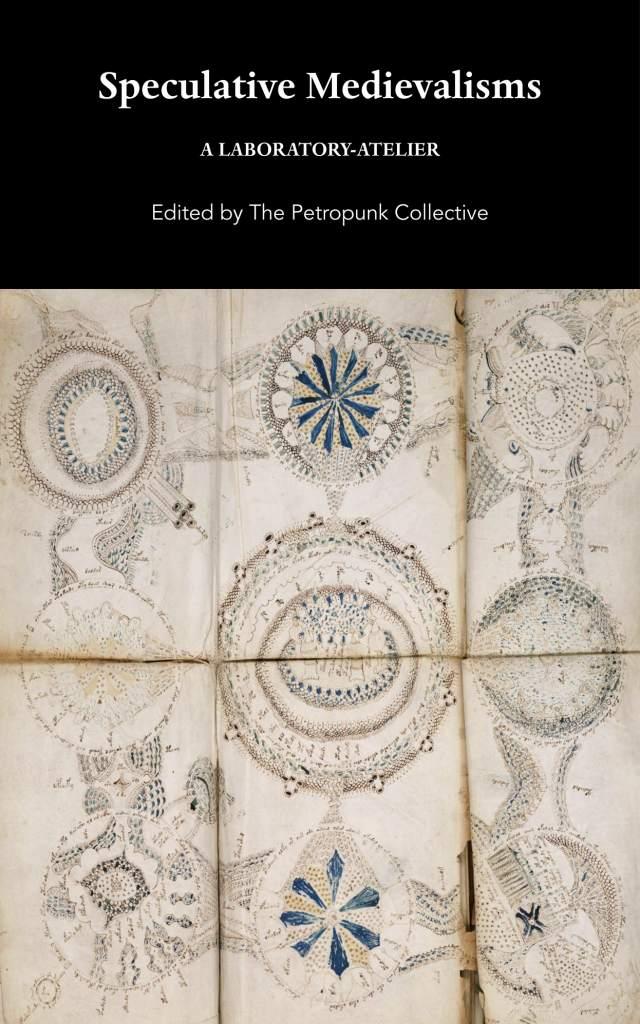
Speculative Medievalisms book

Details here of the book following the two conferences – should be good.

Posted in Graham Harman, Jeffrey Jerome Cohen, Medieval Studies | Leave a comment

Harman on Meillassoux on Mallarmé

Graham Harman has written some thoughts on Meillassoux’s new book on Mallarmé here and here. Looking forward to getting a copy.

Posted in Graham Harman, Quentin Meillassoux | 2 Comments

Tim Morton, Realist Magic and writing books

Tim Morton is writing a couple of books, under the titles Realist Magic and Hyperobjects. And he’s writing them terrifyingly fast, blogging about it as he goes. His stuff is worth reading, so it clearly works for him. Graham Harman is similarly fast, and has also blogged on book writing. People think I must write fast in order to write the amount I do. But while I can write fast; most of the stuff I’ve published has had very many hours poured into every page. There are footnotes in The Birth of Territory that I look at and remember the days getting to that point. Towards the end I estimated that each chapter of the nine took me about four-six months of full-time, no teaching, work, enabled by research leave, summers and the Leverhulme award; and that on top of all the work I did on it in parallel with other projects and while teaching.

Anyway, back to Tim Morton. The most recent entry is here. It’s a short post, so I’ll reproduce it in full. But do go to that post and follow the blog backwards. But this one is great:

Some books that I’ve written, I’ve been totally in charge. Two to be precise: Shelley and the Revolution in Taste (my first one) and The Ecological Thought (number four).
Other books have been more probing in nature, less certain:
The Poetics of Spice, Ecology without Nature, and this one, Realist Magic.
Now the ones that came out as I meant them to were very gratifying. But I learned the most from struggling through the more experimental ones. And I’m still learning from
Realist Magic. As I revise it, I keep figuring out what it’s saying, and being quite surprised, in a good way.
I know that sounds absurd. But with a project as long as book, sometimes you aren’t in charge of all of it. And, in a broader sense, why write anything at all if you know exactly what you’re going to say?
Well, there is a reason actually: love. You want to communicate something to people because you love it. The Shelley book and the second ecology book were like that. But the other three are more primordial: they are about being willing to be surprised.

I very much identify with the idea that the writing process allows you to work out what you are saying, or in this even more detached sense, what the book is saying. I’ve hated writing books when I’ve known exactly (or nearly exactly) what I was going to say – the only one I could genuinely say that of was the Lefebvre one, towards the end. I knew what was needed to finish it, but had about 60,000 words to go. I vowed never to write another book like that, but then after all my books I’ve said I’ll never done do another one like that, in process as much as content. One day I will run out of things to say, but I might run out of ways to find out how to say it first.

Posted in Graham Harman, My Publications, Publishing, The Birth of Territory, Timothy Morton, Understanding Henri Lefebvre | Leave a comment

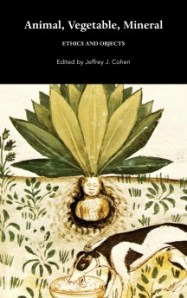
Animal, Vegetable, Mineral: Ethics and Objects

I mentioned the conference of this name before, and linked to audio recordings (here, here and here); now the book is coming out with Oliphaunt Books, an impress of Punctum Books. Jeffrey Jerome Cohen is the editor and posts more details here. It includes pieces by Cohen, Eileen Joy, Karl Steel and Jane Bennett, among others, and will be available both as print on demand and a freely available pdf.


Posted in Jane Bennett, Jeffrey Jerome Cohen, Medieval Studies, Publishing | 2 Comments

Anti-Security – edited book

Mentioning Mark Neocleous (who supervised my PhD) reminded me that he has a new edited book just out, with George S. Rigakos, entitled Anti-Security.

Posted in Mark Neocleous | Leave a comment