Top posts on Progressive Geographies in 2017


  1. Walter Benjamin’s thirteen rules for writing
  2. Foucault also struggled to get his students to do the reading…
  3. Delete your academia.edu account… (there are other ways to share your work)
  4. Michel Foucault’s acid trip in Death Valley: Interview with Simeon Wade with great archival photos (updated)
  5. The adjunct crisis – an infographic (2013)
  6. Foucault and Neoliberalism – a few thoughts in response to the Zamora piece in Jacobin (2014)
  7. Why I prioritise writing books over articles, even in an era of research assessment
  8. Foucault, History of Sexuality Vol IV, Les Aveux de la Chair scheduled for January 2018
  9. Where to start with reading Henri Lefebvre? (updated)
  10. My favourite academic books of 2017

I’d also point to some of the pages on the site, rather than just the posts. Notably the resources pages on things like Writing and Publishing, Foucault and so on, which collect a lot of posts by theme.

Posted in Uncategorized | Leave a comment

Cycling Tenerife – a ride from Caletillas to the Mount Teide observatories at Izaña

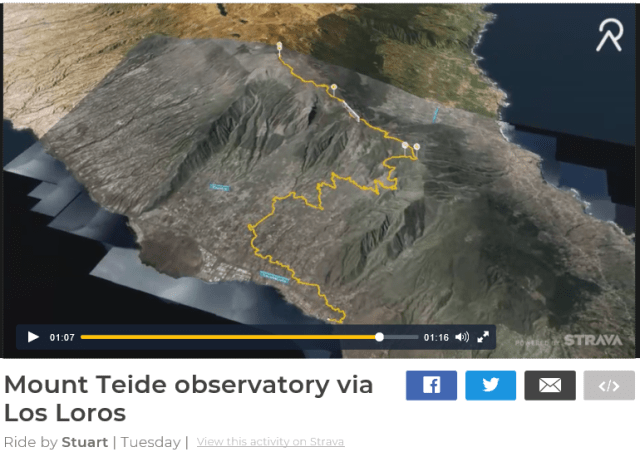
Over the Christmas and New Year period I was in Tenerife, for a holiday and some cycling. Unfortunately in the second half of the time there I was unwell, and had dizziness and balance problems, so did no further cycling. But in the first half of the time I did a few shorter rides and the big climb I’d been planning to do. This was to ride to the Mount Teide observatories at Izaña. The road reaches 2330 metres above sea level, which is the highest I’ve been on a bike, and the climb began from Caletillas on the north-east coast. It was tough.

This slideshow requires JavaScript.

On a previous trip I’d cycled up to the Teide plateau from the southwest of the island. That was very hard, but I think this was tougher. There is a ridge running roughly south-west to north-east from the plateau, and the first part of the challenge was to get onto that. The climb from Afaro to Los Loros is itself an ‘hors catégorie’ climb, and it’s only 11 miles of the total. From there it was about 8 miles to the observatory, marginally easier, but with some drops that you have to reclimb. It was 55 mile ride in total, and I came down the way I went up. If you’re interested, there is a animated map video from relive.cc

relive.png

The Mount Teide volcano itself is much higher, but there is a cable car to the top. The highest point on the paved road can only be reached by descending from where I was into the crater, and then climbing again. But I think it’s only 20 metres higher than the point I reached, and would have added about 20 miles onto the ride. Another time, perhaps.

Posted in Cycling, Travel, Uncategorized | Leave a comment

Derek Gregory’s tribute to Peter Meusburger

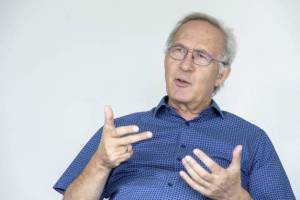
187096_1_org_image_ed7b512c0eacd027afa3a5c22da6d207Derek Gregory has a very nice tribute to Peter Meusburger, who died in December.

Posted in Uncategorized | Leave a comment

William V. Spanos (1925-2017)

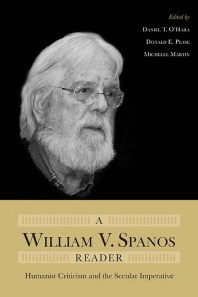
william-v.-spanos-readerLiterary critic and theorist William V. Spanos died on 29th December. His boundary 2 colleague Paul Bové has a brief report here. Although I never met him or heard him speak, I really liked his books Heidegger and CriticismThe Errant Art of Moby-Dick: The Cold War, the Canon, and the Struggle for American Literary Studies and America’s Shadow: An Anatomy of Empire.

Posted in Uncategorized | Leave a comment

Novels and biographies read in 2017

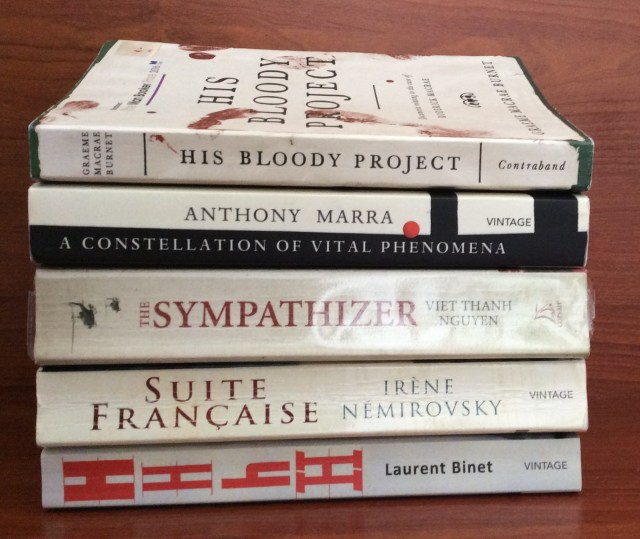
A list of the novels and biographies I read in 2017. For the most part these are the reading I do which is not related to work, though some of the biographies blur that line. A mixed bag, of which a couple of the biographies made my list of favourite academic books. Ones I particularly liked were Still Time, Eight Months on Ghazzah Street, HHhH (though The 7th Function of Language was disappointing), and His Bloody Project. I enjoyed Sher’s diaries, and am looking forward to his King Lear diary this year. I’m starting the new year with Alex Danchev’s biography of Georges Braque, having liked his Cézanne this year. For lists from previous years see here, and for some responses to questions asked about my novel reading see here.

holiday reading

Holiday reading

  1. Haruki Murakami, Pinball, 1973
  2. Salman Rushdie, Two Years, Eight Months and Twenty-Eight Nights
  3. Ben Marcus, Leaving the Sea: Stories
  4. Alexandre Koyré, The Astronomical Revolution: Copernicus, Kepler, Borelli (non-fiction)
  5. Cecilia Ekbäck, Wolf Winter
  6. Francis Hardinge, The Lie Tree
  7. Robert E. Lerner, Ernst Kantorowicz: A Life (biography)
  8. A.D. Miller, Snowdrops
  9. Paul Griffiths, The Sea on Fire: Jean Barraqué (biography)
  10. Alena Graedon, The Word Exchange
  11. Stuart Jeffries, Grand Hotel Abyss: The Lives of the Frankfurt School (biography)
  12. Brian Friel, Translations (play – a gift)
  13. Eric Hazan, A People’s History of the French Revolution (non-fiction)
  14. Tom Rob Smith, Child 44
  15. Lisa McInerney, The Glorious Heresies
  16. Mario Reading, The Nostradamus Prophecies
  17. Graeme Simsion, The Rosie Project
  18. Susanna Jones, The Earthquake Bird
  19. Tess Gerritson, Bloodstream
  20. Andrew Smith, Moon Dust: In Search of the Men who Fell to Earth (non-fiction)
  21. Gabriella Coleman, Hacker, Hoaxer, Whistleblower, Spy: The Many Faces of Anonymous (non-fiction)
  22. Jean Hegland, Still Time
  23. Linda Herrara, Revolution in the Age of Social Media: The Egyptian Popular Insurrection and the Internet (non-fiction)
  24. Jonas Jonasson, The Girl who Saved the King of Sweden
  25. Jon Krakauer, Into the Wild (non-fiction)
  26. Dot Hutchinson, The Butterfly Garden
  27. S.J. Watson, Before I go to Sleep
  28. David Downing, Masaryk Station
  29. Sarah Lotz, The Three
  30. Celeste Ng, Everything I Never Told You
  31. Hilary Mantel, Eight Months on Ghazzah Street
  32. Catherine McKenzie, Hidden
  33. Jan Rothuizen, The Soft Atlas of Amsterdam (non fiction)
  34. Isabel Allende, The Japanese Lover
  35. Ray Monk, Wittgenstein: The Duty of Genius (biography)
  36. Gabrielle Ferrières, Jean Cavaillès: A Philosopher in Time of War, 1903-1944 (biography)
  37. Francoise Gilet, Life with Picasso (autobiography)
  38. Jeannette Winterson, Gut Symmetries
  39. Val McDermid, Splinter the Silence
  40. Anne Holt, 1222
  41. Julian Young, Friedrich Nietzsche: A Philosophical Biography
  42. Vena Cork, The Lost Ones
  43. Saskia de Bodt, Children of Holland::The Image of the Netherlands in American Children’s Books (non-fiction – a gift)
  44. Aoife Clifford, All These Perfect Strangers
  45. Shari Lapena, The Couple Next Door
  46. Emily St John Mandel, Station Eleven
  47. Alex Danchev, Cézanne: A Life (biography)
  48. Trevor Noah, Born a Crime: Stories from a South African Childhood (autobiography – a gift)
  49. Deborah Levy, Hot Milk
  50. Ali Smith, How to be Both
  51. David Lagercrantz, The Girl in the Spider’s Web
  52. Iris Murdoch, The Bell
  53. Gillian Flynn, Gone Girl
  54. Sam Baker, The Woman who Ran
  55. Laurent Binet, The 7th Function of Language
  56. Sibylle Lacan, Un père: Puzzle (memoir)
  57. Claire Mackintosh, I See You
  58. Anna Castle, Murder by Misrule
  59. Antony Sher, Year of the Fat Knight: The Falstaff Diaries (non-fiction)
  60. Graeme Mcrae Burnet, The Disappearance of Adèle Bedeau
  61. Antony Sher, Year of the King: An Actor’s Diary and Sketchbook (non-fiction)
  62. Andy Weir, The Martian
  63. Alison Lurie, The War Between the Tates
  64. China Mièville, October: The Story of the Russian Revolution (non-fiction)
  65. Fiona Barton, The Child
  66. Elisabeth Roudinesco, Freud in His Time and Ours (biography)
  67. David Szalay, All That Man Is
  68. Julian Barnes, The Noise of Time
  69. John le Carré, Call for the Dead
  70. Laurent Binet, HHhH
  71. Irène Némirovsky, Suite française
  72. Viet Thanh Nguyen, The Sympathiser
  73. Graeme Macrae Burnet, His Bloody Project: Documents relating to the case of Roderick Macrae
  74. John le Carré, The Spy who Came in from the Cold
  75. Anthony Mara, A Constellation of Vital Phenomena
Posted in Novels read, Uncategorized | Leave a comment

A year in review – publications, writing, talks, etc.

This is my last day of work in 2017. Tomorrow we head to Tenerife for ten days holiday, hoping for sunshine and lots of cycling.

The last major work task I completed today was the copyediting queries for Shakespearean Territories. The book was submitted in early 2017, had two very thoughtful reports, and was resubmitted in the summer. University of Chicago Press employ really brilliant copyeditors. Several small mistakes were caught, references were tidied up, and a few unclear sentences were highlighted for me to rework. But it was not an invasive edit, and the text that it going to the printer is very much the one I submitted. The book is scheduled for publication in October 2018.

copyeditingPolitically 2017 was bleak, so I’m going to focus on other things here. 2017 began for me with the publication of Foucault: The Birth of Power, the second of my Foucault books for Polity. I spent much of the year writing the third Foucault book, The Early Foucault, which has been progressing well (see my sequence of updates here); and I also did a lot of preparatory work for a book on Georges Canguilhem for Polity’s Key Contemporary Thinkers series (a little more here). Lots of that work was informed by visits to the archives in Paris, which I plan to revisit in 2018. I anticipate Canguilhem will appear in early 2019, and The Early Foucault sometime after that, depending on publication plans of early lecture courses.

One of my most popular posts this year was about why I prioritise writing books over articles, even in an era of research assessment. But I did publish two articles in 2017 – ‘Legal Terrain: The Political Materiality of Territory’; ‘Foucault and Shakespeare: Ceremony, Theatre, Politics’ (both links are open access). An archive discussion which I edited appeared in Theory, Culture & Society – “Danger, Crime and Rights: A 1983 conversation between Michel Foucault and Jonathan Simon”.

The Birth of Territory appeared in Chinese translation, which is the first book of mine (as opposed to articles or chapters) to appear in another language. Two more Chinese translations and three in Korean are under contract. The Lefebvre rural writing translation project with Adam David Morton is progressing, albeit slowly. A lot of work this year was logistical – funding, dealing with publishers, rights, etc. Hopefully next year will see some more intellectual labour on this.

My Foucault books got some generous praise and engagement. There are reviews of Foucault’s Last Decade by Kurt Borg in Foucault Studies and in Manchester Review of Books. There is one of Foucault: the Birth of Power at the LSE Review of Books by Syamala Roberts. A review of both books can be found in The Nation by Bruce Robbins and in 3am Magazine by Peter Gratton (along with Foucault’s The Punitive Society). There is a discussion with Dave O’Brien about Foucault: The Birth of Power at New Books in Critical Theory. All the reviews and interviews are linked here.

I had a very productive visit to ACCESS Europe at the University of Amsterdam between April and June 2017, and gave lectures or seminars there, at the British Library, University of Durham, SOAS, University of Oslo, the Bartlett School at UCL, the Institute of Historical Research, at the Rose Theatre Kingston, Maynooth University, the Royal Irish Academy and the Nordic Geographers meeting at the University of Stockholm. Many thanks to all who invited me or attended talks.

I organised two workshops for the Territory sub-theme of the ICE-LAW project, one in Amsterdam and one at Warwick. My reports on these two fascinating days are here and here.

I examined two excellent PhD theses this year – Yvonne Rinkart at Aberystwyth and Rachael Squire at Royal Holloway. Two of my own PhD students, Mara Duer and Lorenzo Vianelli, defended their own theses and passed subject to revisions. Congratulations to them all. I taught the Geopolitics Today class to our MA students, and hope to teach some political theory again in 2018.

Biggest disappointment was to be shortlisted for a major research professorship, but not to get it. To be clear, this was not a post outside Warwick, but a national competition that would have bought out my time. I was encouraged to rework it for another research fellowship scheme, but decided to wait: I need to decide if that is really the next big project for me.

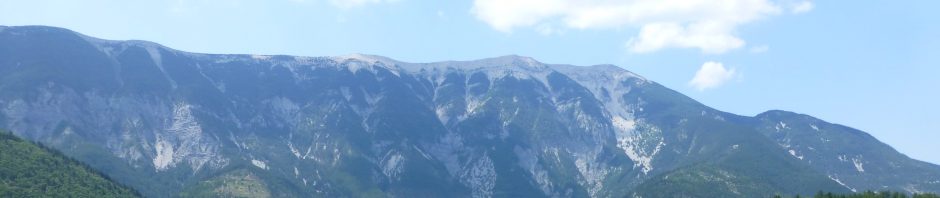
I’ve already shared the academic books and music I liked the most in 2017. I’m hoping to read a few more novels before the end of the year, so am holding back on that list. Cycling was good this year, averaging over 100 miles a week, with Mont Ventoux, Lanzarote, Brecon Beacons and the Cotswolds all highlights. I’m looking forward to Tenerife for a bit more before the year is done.

Thank you all for reading this blog this year, and more in 2018.
Posted in Canguilhem (book), Cycling, Foucault's Last Decade, Foucault: The Birth of Power, Georges Canguilhem, Michel Foucault, Music, Publishing, Shakespearean Territories, terrain, Territory, The Birth of Territory, The Early Foucault, Travel, Uncategorized, William Shakespeare, Writing | 1 Comment

My favourite music of 2017

The albums I enjoyed the most in 2017 were:-

  1. Anathema, The Optimist
  2. Arcane Roots, Melancholia Hymns
  3. Big Big Train, The Second Brightest Star (and also Grimspound)
  4. Black Country Communion, BCCIV
  5. Blackfield, V
  6. Tim Bowness, Lost in the Ghost Light
  7. Caligula’s Horse, In Contact
  8. Carptree, Emerger
  9. Daniel Cavanagh, Monochrome
  10. Dizrhythmia, Too
  11. Isildur’s Bane and Steve Hogarth, Colours Not Found In Nature
  12. King Crimson, Live in Chicago (and Sailors’ Tales 1970-1972)
  13. Lonely Robot, The Big Dream
  14. Lunatic Soul, Fractured
  15. Nova Collective, The Further Side
  16. Pain of Salvation, In the Passing Light of Day
  17. The Pineapple Thief, Where We Stood
  18. Radiohead, OKNOTOK – OK Computer 1997-2017
  19. Roger Waters, Is this the Life we Really Want?
  20. Sons of Apollo, Psychotic Symphony
  21. Steven Wilson, To the Bone (also Unreleased Electronic Music and Last Day of June OST)

IMG_3029.JPG

Live, I enjoyed Shattered Fortress, Marillion, Haken, The Pineapple Thief, Big Big Train, Steve Rothery, The Neal Morse Band, Opeth, Frost, and Fish.

See also the lists for 2016, 2015, 20142013 and 2012.

Posted in Music | 10 Comments

My favourite academic books of 2017


IBooks of 2017.JPG don’t think I read as many new books this year as previous years, and the ‘to read’ piles get ever higher… But these are the academic books published in 2017 which I particularly liked:

Update: the lists for previous years are here – 2016, 2015, 2014, 2013

  1. Jess Bier, Mapping Israel, Mapping Palestine: How Occupied Landscapes Shape Scientific Knowledge (MIT Press)
  2. Neil Brenner, Critique of Urbanization (Birkhäuser)
  3. William E. Connolly, Facing the Planetary: Entangled Humanism and the Politics of Swarming (Duke)
  4. Jacques Derrida, Théorie et pratique: Cours de l’ENS-Ulm 1975-1976 (Galilée)
  5. Arlette Farge and Michel Foucault, Disorderly Families: Infamous Letters from the Bastille Archives (Minnesota)
  6. Lisa Funnell & Klaus Dodds, Geographies, Genders and Geopolitics of James Bond (Palgrave)
  7. Stefanos Geroulanos, Transparency in Postwar France: A Critical History of the Present (Stanford)
  8. Elisabeth S. Goodstein, Georg Simmel and the Disciplinary Imaginary (Stanford)
  9. David Harvey, The Ways of the World (Oxford/Profile)
  10. Nicholas Heron, Liturgical Power: Between Economic and Political Theology (Fordham)
  11. Stuart Jeffries, Grand Hotel Abyss: The Lives of the Frankfurt School (Verso)
  12. Robert E. Lerner, Ernst Kantorowicz: A Life (Princeton)
  13. Setha Low, Spatializing Culture: The Ethnography of Space and Place (Routledge)
  14. Shannon Mattern, Code and Clay, Data and Dirt: Five Thousand Years of Urban Media (Minnesota)
  15. China Mièville, October: The Story of the Russian Revolution (Verso)
  16. Lisa Parks and Caren Kaplan (eds.) Life in the Age of Drone Warfare (Duke)
  17. Élisabeth Roudinesco, Freud in His Time and Ours (Harvard)
  18. Arianna Sforzini, Les Scènes de la vérité. Michel Foucault et le théâtre (Le Bord de l’Eau)
  19. Helen Sword, Air & Light & Time & Space: How Successful Academics Write (Harvard)
  20. Gerard Toal, Near Abroad: Putin, the West and the Contest over Ukraine and the Caucasus (Oxford)
  21. Matthew Wilson, New Lines: Critical GIS and the Trouble of the Map (Minnesota)

Such a lot of good books, it gives me faith in academic publishing and intellectual work. Books not on the above list, but published this year and which I’m looking forward to reading, include Bruno Latour, Facing Gaia: Eight Lectures on the New Climatic Regime (Polity); Ernst Jünger, The Worker: Dominion and Form (Northwestern); Eyal Weizman, Forensic Architecture: Violence at the Threshold of Detectability (Zone); Peggy McCracken, In the Skin of a Beast: Sovereignty and Animality in Medieval France (Chicago); Ethan Kleinberg, Haunting History: For a Deconstructive Approach to the Past (Stanford); Clive Barnett, The Priority of Injustice: Locating Democracy in Critical Theory (Georgia); Charles Withers, Zero Degrees: Geographies of the Prime Meridian (Harvard) and Catherine M. Soussloff, Foucault on Painting (Minnesota).

I should also mention Marcus Doel, Geographies of Violence (Sage), which is not on the list simply because it’s in a series I edit. More to look out for in 2018.

Posted in Arlette Farge, Bruno Latour, Caren Kaplan, China Mieville, David Harvey, Ernst Kantorowicz, Eyal Weizman, Jacques Derrida, Michel Foucault, Neil Brenner, Politics, Setha Low, Sigmund Freud, Theory, Uncategorized, urban/urbanisation, William E Connolly, Writing | 12 Comments

Workshop Report from Territory, Law and the Anthropocene (Warwick, 1 December 2017)

My brief Workshop Report from the Territory, Law and the Anthropocene event held at the University of Warwick, 1 December 2017 is now up at the ICE-LAW Project site.

On 1 December 2017, the Territory subgroup held its second workshop, Territory, Law and the Anthropocene at the University of Warwick (UK).

The workshop built on the discussions of the first Territory workshop, held in Amsterdam earlier this year. This specific workshop looked at how specific territories were being transformed as a result of anthropogenic climate change – coastlines, sea ice, mountains and glaciers, and deserts. More generally it asked: how do we need to rethink our way of theorising territory, and the legal-political regimes that govern it, in the light of these changes?

The speakers were Andrea Bagnato (Italian Limes project), Nigel Clark (Lancaster Environment Centre), Klaus Dodds (Royal Holloway, University of London), Stuart Elden (University of Warwick), Madeleine Fagan (University of Warwick), Marco Ferrari (Italian Limes Project), Isla Forsyth (University of Nottingham), Timo Koivurova (University of Lapland), Dora Kostakopoulou (University of Warwick), Ingrid Medby (Oxford Brookes University), Phil Steinberg (Geography, Durham University) and Davor Vidas (Fridtjof Nansen Institute, Norway/University of Leicester). There were a number of other attendees, from University of Warwick and elsewhere. [continues here]

Posted in Philip Steinberg, terrain, Territory, Uncategorized | Leave a comment

Catherine M. Soussloff, Foucault in the Contemporary Archive

soussloff_blog.jpgWhile I’m still waiting for her book, Foucault on Painting, to make it across the Atlantic, Catherine Soussloff has written a very interesting post about working on Foucault’s unpublished writings on painting to be found in the archives.

Last spring, I was in Paris as a Visiting Researcher at the Institut National d’Histoire de l’Art, with a beautiful office just steps from the “old” Bibliothèque Nationale de France (BnF), newly renovated and now containing virtually the entire national collection of art books and manuscripts. I was given access to this unparalleled repository of materials on European art and culture and the privilege of a desk in the Salle Labrouste, memorable for its newly restored ironwork arches and painted landscape lunettes. It was in this reading room that Walter Benjamin had labored on the citations that he collected in The Arcades Project, writing, “nothing in the world can replace the Bibliothèque Nationale for me.” Foucault might have said the same. This place surely fulfilled the art historian’s desire for inspiration for a new research project.

Just before I left California in mid-March I had completed the copyediting of my new Minnesota book, Foucault on Painting. I thought I was prepared to begin a fresh research project concerned with “expressivity” in art over the long 20th century, a topic in which both Paris and the BnF play central roles. But unexpectedly and as it turned out, fortuitously, Foucault continued to occupy me. [continues here]

Posted in Michel Foucault, Uncategorized | Leave a comment