From Biopower to Infopower?: A Genealogy of One Aspect of Contemporary Politics

Colin Koopman discusses the shift from biopower to infopower

http://youtu.be/QTGvaG6T_G4


Clare O'Farrell's avatarFoucault News

Colin Koopman, From Biopower to Infopower?: A Genealogy of One Aspect of Contemporary Politics


Text on youtube
Colin Koopman, an Assistant Professor of Philosophy at the University of Oregon, spoke at Oregon State University on December 3rd, 2013. A wide number of contemporary political assemblages from mass surveillance to finance capitalism to big data suggest that we may be in the midst of new political conditions. Some have sought to conceptualize these assemblages in such terms as “the information society” or “new media culture” while others would amalgamate them as part of a hybrid beast named “neoliberalism”.

In his presentation, Koopman here argues for a different conceptualization of what is at stake for us today politically. His analysis is Foucaultian in that it focuses attention away from state capacities and institutional formations toward the problems internal to emergent modes of power (or the conduct of conduct). Building off of Michel…

View original post 79 more words
Posted in Uncategorized | Leave a comment

My favourite albums of 2013

People seemed to like last year’s list, so here’s another one.

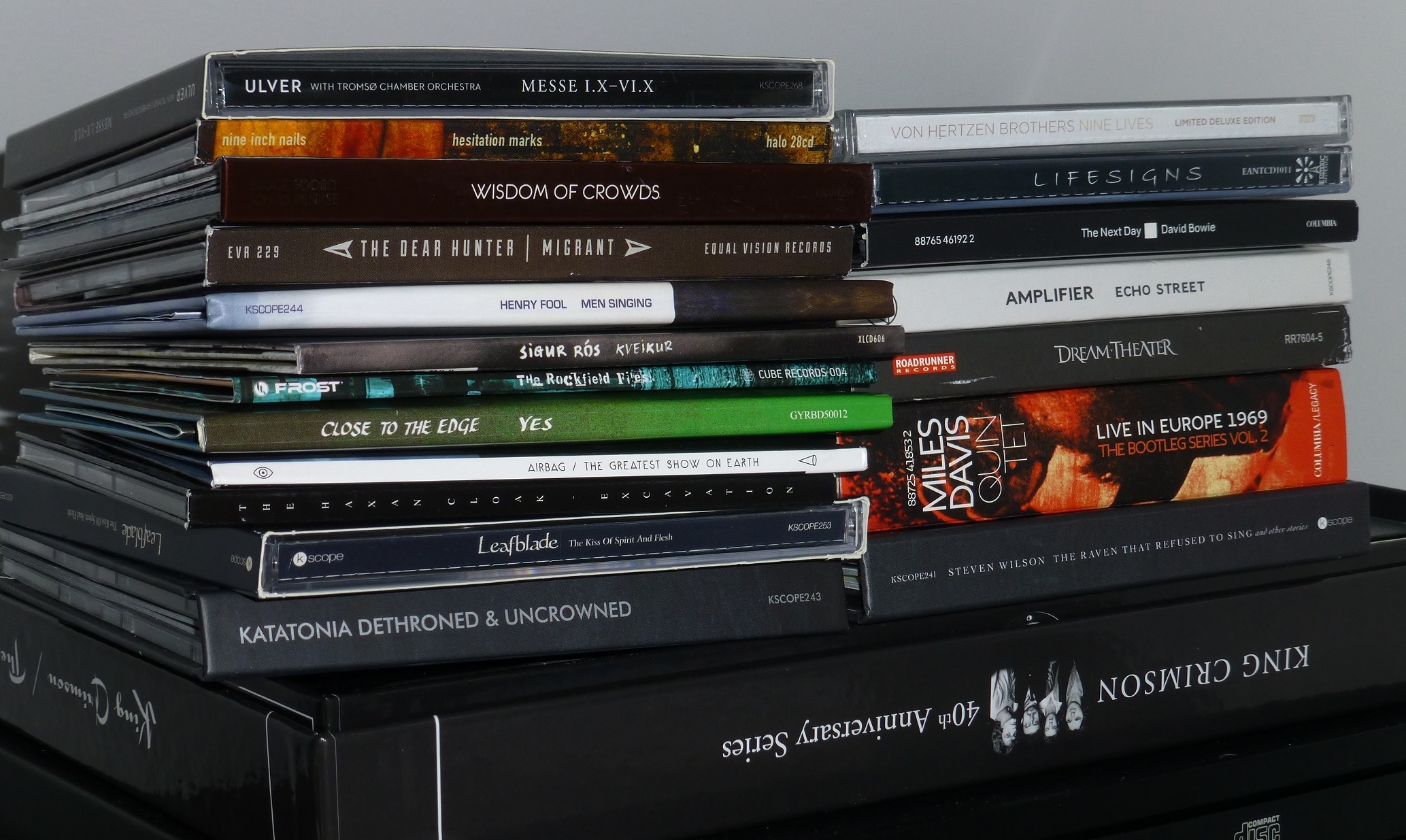
I picked up a few 2012 albums early in the year, some from other people’s lists of their favourite albums. Notable among these were Thomas Koner, Novaya Zemiya; Shearwater, Animal Joy; Kreng, Works for Abattoir Fermé 2007-2011; and Mothlite, Dark Age. The albums I liked the most of those I heard in 2013 were (unordered)…

Albums of 2013

  • Steven Wilson, The Raven That Refused to Sing and Other Stories (and the Drive Home EP)
  • The Dear Hunter, Migrant
  • Von Hertzen Brothers, Nine Lives
  • Nine Inch Nails, Hesitation Marks
  • Big Big Train, English Electric: Full Power
  • Airbag, The Greatest Show on Earth
  • Dream Theater, Dream Theater
  • Ulver with Tromsø Chamber Orchestra, Messe I.X-VI.X
  • David Bowie, The Next Day
  • Specimen 13, Echosystem EP
  • Amplifier, Echo Street
  • Bruce Soord with Jonas Renske, Wisdom of Crowds
  • The Haxan Cloak, Excavation
  • Lifesigns, Lifesigns
  • Katatonia, Dethroned and Uncrowned
  • Henry Fool, Men Singing
  • Haken, The Mountain
  • The Winery Dogs, The Winery Dogs
  • Leafblade, The Kiss of Spirit and Flesh
  • Frost, The Rockfield Files
  • Forest Swords, Engravings
  • Sigur Rós, Kveikur

And then three reissued or archive releases –

  • Yes, Close to the Edge 5.1 remaster
  • Miles Davis, Live in Europe 1969, Original Bootleg Series 2
  • King Crimson, The Road to Red
Posted in Music | 19 Comments

Novels read in 2013 part two

You can see the list from the first half of the year here. Those that I read in the second half of the year were (some brief thoughts follow):

  1. Novels shelves2Amitay Ghosh, Sea of Poppies
  2. Rob Kitchin, Killer Reels
  3. Malcolm Bradbury, To the Hermitage
  4. Ox-Tales – Fire (short-story collection)
  5. Ox-Tales – Water
  6. Ox-Tales – Air
  7. Ox-tales – Earth
  8. Julia Leigh, Disquiet
  9. Don DeLillo, The Body Artist
  10. Ben Marcus, The Age of Wire and String
  11. Ian McEwan, Atonement
  12. Bernhard Schlink, Homecoming
  13. J.M. Coetzee, The Life and Times of Michael K
  14. Carlos Ruiz Zafón, The Shadow of the Wind
  15. Andrew Miller, Pure
  16. Roberto Bolaño, 2666
  17. Dominic Pettmann, In Divisible Cities (open access from Punctum Books)
  18. Julian Barnes, Arthur and George
  19. A.S. Byatt, Ragnarok: The End of the Gods
  20. Roddy Doyle, Paddy Clarke Ha Ha Ha
  21. Henry David Thoreau, Walden, or, Life in the Woods
  22. Sebastian Faulks, Charlotte Grey
  23. Marilynne Robinson, Home
  24. Gustav Flaubert, Bouvard and Pécuchet
  25. Rachel Joyce, The Unlikely Pilgrimage of Harold Fry
  26. Kiran Desai, The Inheritance of Loss
  27. Ian McEwan, Sweet Tooth
  28. Roberto Bolaño, The Skating Rink
  29. Julian Barnes, Pulse (short stories)
  30. Barbara Kingsolver, Pigs in Heaven
  31. Patricia Duncker, The Strange Case of the Composer and his Judge
  32. Julian Barnes, England, England
  33. Jennifer Egan, short story sampler (Emerald City, The Invisible Circus, Look at Me & A Visit From the Goon Squad) and A Black Box
  34. Yevgeny Zamyatin, We
  35. Jonathan Swift, A Tale of a Tub and A Modest Proposal
  36. Sebastian Faulks, A Possible Life
  37. Jennifer Egan, A Visit from the Goon Squad
  38. A.M. Homes, May We Be Forgiven
  39. Alan Paton, Cry, the Beloved Country
  40. Honoré de Balzac, Old Goriot
  41. Honoré de Balzac, introduction to the Comedie Humaine and At The Sign of the Cat and Racket
  42. Rose Tremain, The Road Home
  43. C.J. Sansom, Dominion

Probably the best work of literature – Roberto Bolaño, 2666,  which I finally got round to. It was worth the wait, though the fourth book was very hard work.

Most peculiar, but good, book –  Ben Marcus, The Age of Wire and String

Biggest surprise to me –  Rose Tremain, The Road Home (a very moving account of immigration within the EU). I’ve started working through the Orange Prize winners (I’ve been doing this with Booker Prize winners for a while) as an attempt to discover more writing by women.

Posted in Novels read | 1 Comment

The twenty-five most important academic books to me from 2013

Some of my books of the yearNot ordered, not comprehensive, and I’m sure I’ve forgotten some – and of course there are those I’ve not yet read or am unaware of… These are all academic books published in 2013, not drawn from all the books I read in the year, and the list of novels read will follow.

  1. Jacques Derrida, The Death Penalty, Volume I , translated by Peggy Kamuf (and see my comments here)
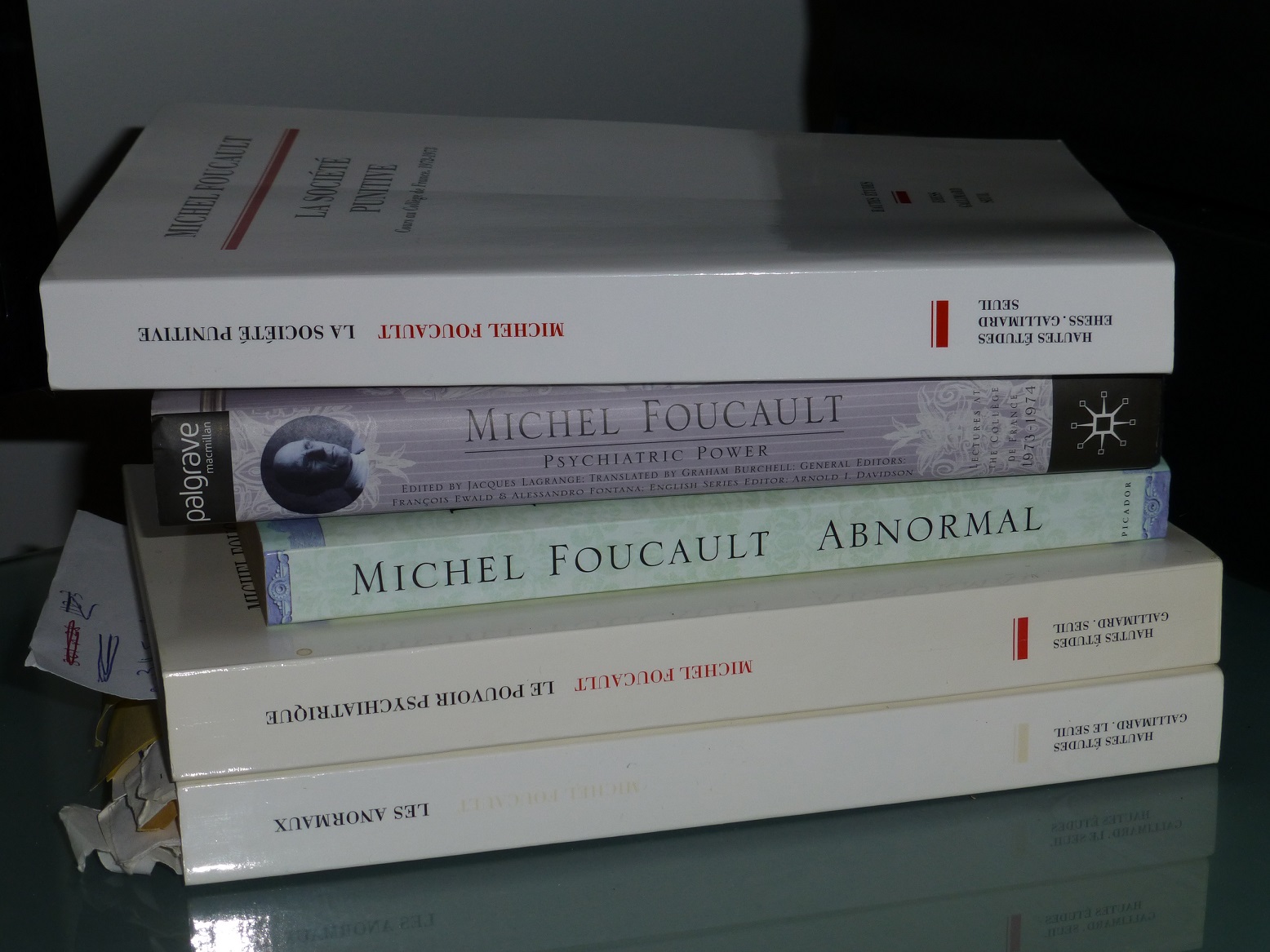
  2. Michel Foucault, La société punitive, edited by Bernard E. Harcourt (see my initial thoughts here and here; review to follow in 2014)
  3. David Harvey, A Companion to Marx’s Capital, Volume II (see here)
  4. Louise Amoore, The Politics of Possibility: Risk and Security Beyond Probability
  5. Andrew Barry, Material Politics: Disputes Along the Pipeline
  6. Bradley L. Garrett, Explore Everything: Place-Hacking the City
  7. David Farrell Krell, Derrida and our Animal Others (see here)
  8. Shiloh Krupar, Hot Spotter’s Report (and see my interview with Shiloh here)
  9. Laurence Hemming, Heidegger and Marx (which I endorsed)
  10. John Protevi, Life, War, Earth: Deleuze and the Sciences (as I did this too)
  11. Mark Purcell, The Down-Deep Delight of Democracy (see my review here)
  12. Maha Samman, Trans-Colonial Urban Space in Palestine (see my review here)
  13. Michael Dillon, Deconstructing International Politics
  14. Warren Montag, Althusser and his Contemporaries
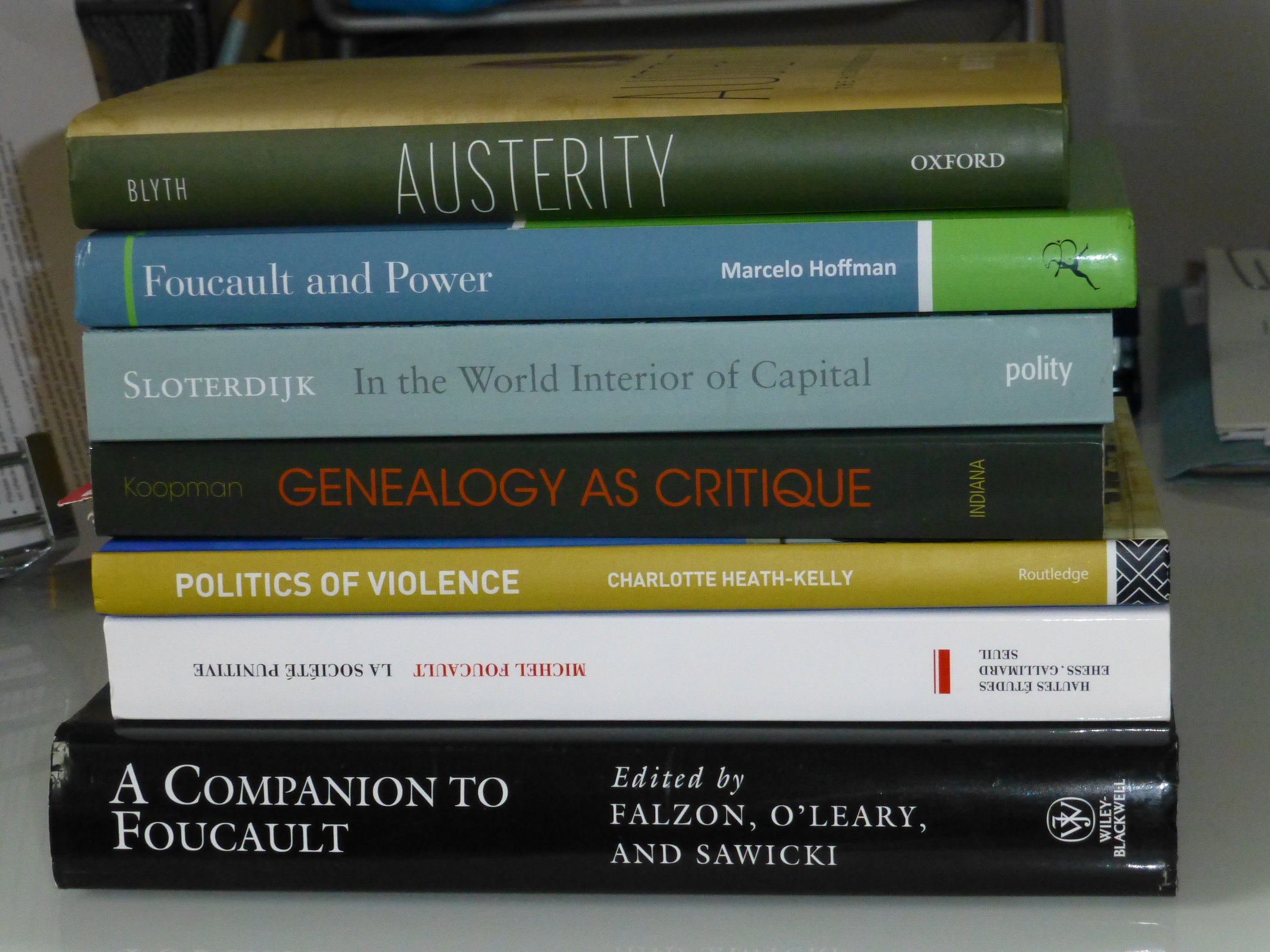
  15. Mark Blyth, Austerity: The History of a Dangerous Idea
  16. Grégoire Chamayou, Théorie du drone
  17. Marcelo Hoffman, Foucault and Power (which I endorsed)
  18. Peter Sloterdijk, In the World Interior of Capital, translated by Wieland Hoban (which I also endorsed)
  19. Immanuel Kant, Natural Science, edited by Eric Watkins (review here)
  20. Andrew McGettigan, The Great University Gamble
  21. Eric Hazan, La Barricade, histoire d’un objet révolutionnaire
  22. Christopher Falzon, Timothy O’Leary and Jana Sawicki (eds.) A Companion to Foucault (see my review here)
  23. Charlotte Heath-Kelly, Politics of Violence: Militancy, International Politics, Killing in the Name
  24. Peter Adey, Mark Whitehead and Alison Williams (eds.), From Above: War, Violence and Verticality (which I endorsed, though I’ve not seen the print version yet)
  25. Colin Koopman, Genealogy as Critique: Foucault and the Problems of Modernity – I disagree with lots of this, some fundamentally, but it’s a really important statement.

[Update: these are the ones I’m looking forward to in 2014]

Posted in Books, David Farrell Krell, David Harvey, Grégoire Chamayou, Immanuel Kant, Jacques Derrida, John Protevi, Karl Marx, Louise Amoore, Michael Dillon, Michel Foucault, Peter Sloterdijk, Politics, Publishing, Universities, urban/urbanisation | 24 Comments

25 research talks in 2013 – with links to audio versions

The talk in Halifax at ArcticNet was the 25th research talk in a really busy year. (Links in what follows are to audio recordings, where available). I gave talks on the Shakespearean territories project at the University of York, Aberystwyth University, Memorial University of Newfoundland (Grenfell Campus), University of Warwick, at the Shakespeare Birthplace Trust and in a pub in St John’s. I spoke about Nigeria and Boko Haram at the LSE, Aberystwyth, in Istanbul and in Los Angeles at the AAG  I gave overviews of my territory work at Warwick, Al Quds University and the University of Zurich, and on the new earth/geopolitics work in Tel Aviv, at the RGS-IBG, the Balsillie School in Waterloo, in Zurich and at the ArcticNet conference in Halifax, Nova Scotia. I also spoke on Sloterdijk and was in a journal editors’ session at the AAG, gave a workshop on publishing in Abu Dis, and was on a couple of panel discussions in London and Warwick. The only talk on Foucault was at Memorial University Newfoundland even though that was the focus of much of the year’s writing.

There were also trips to Jamaica, Mont Ventoux, Abuja, Accra (twice) and Tiberias and the Golan. Far too much travelling and probably too many talks. Next year looks a lot calmer, in part because I am consolidating most travel into the periods in Australia and New York, and only accepting invitations to speak that can fit with that schedule.

Posted in Conferences, Foucault's Last Decade, Michel Foucault, Peter Sloterdijk, Politics, Shakespearean Territories, Territory, William Shakespeare | Leave a comment

2013 in review – Progressive Geographies stats

The WordPress.com stats say that in 2013 this blog was viewed 380,000 times – with visitors from 191 countries. Thank you all. Click here to see the complete report.

These are some of the most popular posts in the year:

The adjunct crisis – an infographic

What Bale earns – a real-time tracker, with comparisons

How people die in Shakespeare’s tragedies

About

The Birth of Territory

Articles and Chapters

Future Projects

Books

When Heidegger met Lacan

Free Downloads

Boko Haram – An Annotated Bibliography

Where to start with reading Henri Lefebvre?

Posted in Uncategorized | Leave a comment

Four new Foucault books

Jeremy Crampton rounds up four new books on or by Foucault – and do follow the link about the first where he provides his own discussion of Foucault’s key terms.

Jeremy's avatarOpen Geography


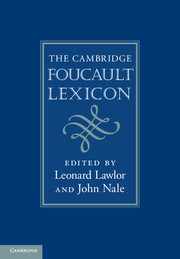
In addition to the Cambridge Foucault Lexicon (mentioned in my previous post, and which I should add has no less than 117 entries!), you may like to know of a few other Foucault books that are forthcoming in 2014.

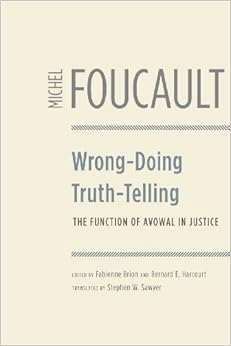
A second is Wrong Doing, Truth Telling, (Amazon) based on the 1981 lectures Foucault gave at the Catholic University of Louvain, scheduled for release in April. Here is the publisher’s blurb:

Edited by Fabienne Brion and Bernard E. Harcourt
Translated by Stephen W. Sawyer
360 pages | 6 x 9 | © 2014
Three years before his death, Michel Foucault delivered a series of lectures at the Catholic University of Louvain that until recently remained almost unknown. These lectures—which focus on the role of avowal, or confession, in the determination of truth and justice—provide the missing link between Foucault’s early work on madness, delinquency…

View original post 707 more words

Posted in Michel Foucault | Leave a comment

The missing question from Foucault’s ‘Confession of the Flesh’ interview – a translation

While looking for something else, I discovered that the important 1977 interview ‘Le jeu de Michel Foucault’ (DE no 206, Vol II, pp. 298-329) is not completely translated as ‘The Confession of the Flesh’ in Power/Knowledge, edited by Colin Gordon (pp. 194-228). Gordon notes that “A few preliminary remarks are omitted from this translation” (p. xii). This incomplete state is not, unusually, noted in Richard Lynch’s detailed bibliography of English translations of Foucault’s shorter works. The opening remarks are interesting in at least two registers: they discuss the structure of the History of Sexuality; and include a brief reflection on the shift in writing style from the earlier books to this one. This is a rough translation of the opening exchange with Alain Grosrichard.

Shortly after the publication of The Will to Knowledge [History of Sexuality Volume I] we invited Michel Foucault to spend an evening with us. From a relaxed conversation, we provide some excerpts here. A.G.

A. Grosrichard: It is time to turn to this History of Sexuality of which we have the first volume, and which you have announced will comprise six.

M. Foucault: Yes, I would first like to say that I am very happy to be here with you. This is partly why I wrote this book in this form. Up until now, I wrapped things up – I spared no citation, no reference, and threw rather heavy cobblestones [et j’avais lancé des pavés un peu lourds], which remained for the most part unanswered. From this came the idea of the book programme, a sort of gruyère cheese, with holes which could be filled in. I did not want to say ‘this is what I think’, because I am still very unsure of what I put forward. But I would like to see if it could be said, and how far it could be said, and, of course, that risks being very disappointing for you. And that there are uncertainties in what I have written is certainly uncertain. There is no trick, no rhetoric. And I’m not certain either what I will write in the following volumes. That is why I wanted to hear the effect of this hypothetical discourse, in overview. It seems to me that this is the first time I have met people who want to play the game that I propose in my book.

A. Grosrichard: Certainly. [The published English translation continues from here].

Posted in Foucault's Last Decade, Michel Foucault | 2 Comments

Foucault’s Last Decade – sixth update

Much of the recent work on this project has been continuing work on Chapter Three, especially the discussions of perverts, women and children. I keep reworking sections and adding more and more detail, well aware some of this will need to be cut back at some point. I have some more work to do here.

Update 6

Part of the reason that I didn’t get to finish this chapter was the publication of La société punitive, which had been somewhat delayed. I am committed to writing a review for Berfrois on this course, and need to integrate a discussion into Chapter One. But already my notes file is getting longer than the likely length of either of those pieces. I shared my initial thoughts on the course here and here.

Along the way I also made some notes about the lettres de cachet in Foucault’s work at this time. In The Abnormals he discusses the work that Christiane Martin was doing on these, but a note of the editors says she died before completing this work. This was an early stage of the work that Foucault and Farge would complete as Le désordre des familles, published in 1982. (Earlier this year Jeremy Crampton had the news that this book is finally being translated into English.) The lettres de cachet were a concern of Foucault’s from History of Madness until the end of his life, and they crop up in lecture courses in the 1970s fairly often, but it’s not a widely researched area.

I also wrote a couple of pages that will go at the end of Chapter Five, assessing what we know of Foucault’s original, thematic, plan for the History of Sexuality from lecture material. Foucault drafted some of the volumes of this original series, but either destroyed or abandoned the manuscripts. That section will be reworked in time, but it felt a good time to draft parts of it.

You can now read more about this book on a dedicated page, with links to all previous updates.

Posted in Arlette Farge, Foucault's Last Decade, Michel Foucault | Leave a comment

Foucault’s Last Decade – now has a page with links

I’ve created a page on this blog under Future Projects for the Foucault’s Last Decade book. This has the proposal, links to the updates I’ve posted here about the book’s progress, and links to a couple of audio recordings of papers. I’ll try to keep this updated as the writing develops.

Posted in Foucault's Last Decade, Michel Foucault | 1 Comment